
Struggle for Hindu Existence
*Hindu Rights to Survive with Dignity & Sovereignty *Join Hindu Freedom Movement to make Bharat Hindu Rashtra within this lifetime *Jai Shri Ram *Jayatu Jayatu Hindu Rashtram *Editor: Upananda Brahmachari.
US Lawmakers Warn of ‘Systematic Persecution’ of Hindus in Bangladesh Ahead of Crucial Polls.
‘Hindus won’t survive another decade…’: US groups flag Bangladesh religious persecution ahead of polls.
 Sumita Sharon | HENB | Washington D.C. | Feb 12, 2026:: Just days before Bangladesh went to the polls on February 12, concerns over the safety of its Hindu minority reverberated through the halls of the US Congress. At a high-profile briefing held in the Rayburn House Office Building, lawmakers, human rights advocates, journalists and survivors described what they characterised as escalating religious persecution under Bangladesh’s interim administration.
The event, convened by the Coalition of Hindus of North America (CoHNA) and HinduAction, drew attention to what speakers called a sustained campaign of intimidation, violence, and institutional neglect targeting Hindus and other minority communities following the political transition that led to the removal of former Prime Minister Sheikh Hasina.
Participants alleged that attacks on temples, businesses, and homes have increased over the past year, accompanied by what they termed administrative inaction and a shrinking space for minority rights. Several speakers stressed that the issue has not received proportional global media coverage, allowing the crisis to deepen largely unnoticed.
CoHNA board member Sudha Jagannathan underlined the importance of documenting survivor testimonies, arguing that silence from the international community emboldens perpetrators and weakens democratic accountability.
‘Hindus won’t survive another decade’
One of the most striking testimonies came from a witness identified only as “SriRam” for security reasons. He alleged that Islamist groups forcibly occupied his family-run hospital and that traditional national celebrations, including Victory Day, passed without customary Hindu participation due to fear.
“Hindus will not survive another decade in Bangladesh,” he warned, describing what he believes is a long-term pattern of displacement and systematic marginalisation.
Lawmakers present at the session called for stronger US engagement. Among the measures proposed were public condemnation of minority-targeted violence, Congressional hearings, and diplomatic pressure. Some advocated designating Bangladesh as a “Country of Particular Concern” for religious freedom violations and imposing targeted sanctions under the Global Magnitsky Human Rights Accountability Act against officials deemed responsible for abuses.
The Magnitsky Act empowers the US government to freeze assets and restrict visas of foreign individuals implicated in serious human rights violations.
‘Major parties not contesting Bangladesh elections’
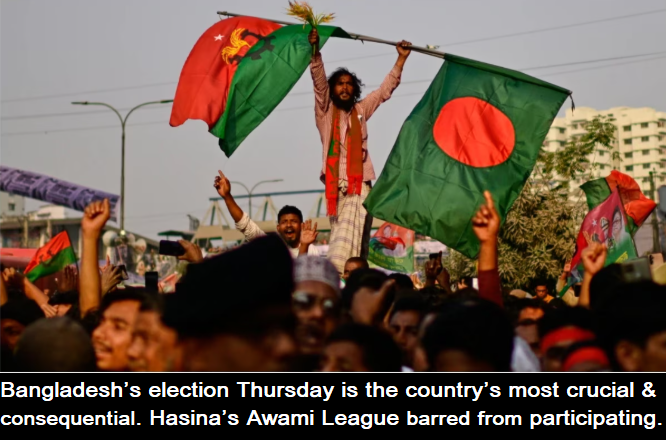
Beyond religious freedom, speakers questioned the overall democratic credibility of the February 12 elections. US Representative Suhas Subramanyam raised concerns over whether the vote could be considered genuinely competitive, noting the absence of Sheikh Hasina’s Awami League, which has been barred from participating.
Four principal alliances entered the contest — the Bangladesh National Party (BNP), the 11-Party Alliance, the National Democratic Front, and the Greater Sunni Alliance — though analysts described the race primarily as a contest between the BNP and the 11-Party bloc.
Observers argued that minority insecurity and political exclusion risk undermining voter confidence and weakening democratic institutions.
‘Act Now’: Global Body Flags Rise In Violence Against Hindus In Bangladesh Ahead Of Polls
In parallel with the Congressional briefing, a broad international coalition issued an urgent appeal warning of worsening conditions for Hindus in Bangladesh.
The Hindus Advancing Human Rights Initiative (HAHRI) coordinated a letter endorsed by more than 125 organisations and individuals across 15 countries. The signatories urged the United Nations, United States, European Union, India, and other international actors to move beyond symbolic concern and adopt enforcement-based mechanisms to ensure minority protection.
The coalition cited what it described as a pattern of systematic attacks since August 2024, including killings, arson, vandalism of temples, and alleged land grabs. It warned that repeated incidents, combined with impunity, risk long-term demographic consequences.
At the centre of international outrage was the December 18, 2025 lynching of Dipu Chandra Das, reportedly following blasphemy allegations. Graphic footage of the killing circulated online, intensifying calls for accountability. Advocacy groups argue that the incident exemplifies a broader climate of mob violence and weak legal deterrence.
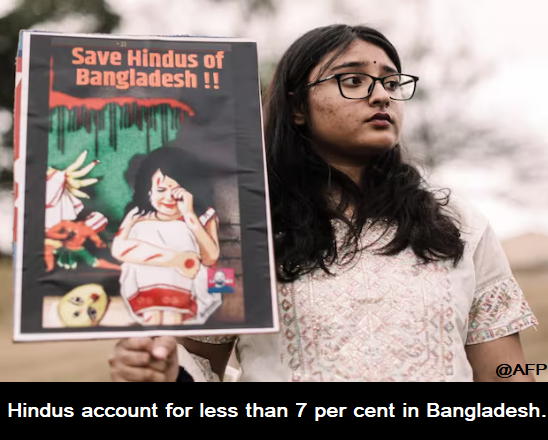
According to figures referenced in the alliance’s communication, Hindus — who comprised roughly 22 percent of Bangladesh’s population in 1951 — now account for less than 7 percent. Activists attribute this decline to decades of intimidation, migration under duress, and recurring communal unrest.
Ajay Shah, Executive Chair of HinduPACT, stated that “a minority does not diminish at this scale without sustained pressure,” adding that minority protection is integral to democratic integrity.
Rallies were reportedly organised in more than 25 US cities, where demonstrators described the situation as a gradual erosion of an indigenous community’s presence.
HAHRI has also submitted a petition to UN High Commissioner for Human Rights Volker Türk, requesting an independent monitoring mechanism and investigation into alleged misuse of blasphemy accusations.
Hindu Man Killed In Bangladesh On Election Eve, Hands And Legs Were Tied
Fresh anxiety gripped minority communities after the body of 28-year-old Ratan Shuvo Kar was discovered in Moulvibazar district a day before voting.
Kar, an employee at Champara Tea Garden, was found with his hands and feet bound and visible injury marks on his body. Local residents alerted authorities after spotting the body in the garden during the morning hours.
According to media reports, the family had been searching for him since the previous evening. His elder brother, Laxman Kar, said the family was unaware of any motive behind the killing.
Police confirmed that the body was sent for autopsy and that an investigation is underway. While some locals speculated about a possible election link, officials have not confirmed any political motive.
Violence Against Hindus In Bangladesh
The incident follows other reported killings of Hindu individuals in recent weeks. In Mymensingh district, 62-year-old rice trader Sushen Chandra Sarkar was reportedly murdered by unidentified attackers. Earlier, Dipu Chandra Das was lynched and burned in a separate case that sparked widespread condemnation.
Human rights observers state that since the August 2024 political transition, reports of intimidation, forced displacement, and communal attacks have increased. Allegations of blasphemy, often unverified, have been cited in several mob incidents targeting minority households and businesses.
International bodies, including the US Commission on International Religious Freedom (USCIRF), have documented a rise in threats and violence directed at religious minorities throughout 2025.
As Bangladesh navigates a politically sensitive electoral phase, the safety and participation of its minority citizens remain under scrutiny. Advocacy groups argue that the credibility of democratic processes depends not only on voter turnout but also on whether vulnerable communities can live — and vote — without fear
India’s Inaction on Bangladesh Hindu Persecution
India’s response to the reported persecution of Hindus and other minorities in Bangladesh has drawn criticism from sections of the diaspora and human rights advocates, who argue that New Delhi has not exercised sufficient diplomatic pressure despite escalating incidents. The BJP-led government, which positions itself as a pro-Hindutva administration committed to safeguarding Hindu interests globally, has so far limited its engagement to statements of concern and routine diplomatic channels, critics say. Questions have also been raised about the role of influential Hindu organisations such as the RSS and VHP, with observers asking whether stronger advocacy or coordinated international outreach could have been pursued. While India maintains that bilateral ties and regional stability require careful handling, detractors contend that the absence of visible, firm measures has contributed to perceptions of inaction at a time when minority communities in Bangladesh report growing insecurity.
…
_Agency Inputs.


 Struggle for Hindu Existence
[…] [Disclaimer: The content in this RSS feed is automatically fetched from external sources. All trademarks, images, and opinions belong…
[…] [Disclaimer: The content in this RSS feed is automatically fetched from external sources. All trademarks, images, and opinions belong…
[…] [Disclaimer: The content in this RSS feed is automatically fetched from external sources. All trademarks, images, and opinions belong…
[…] it is essential to get all Hindus to the booths to defeat Mamata Banerjee since there is … Continue…
[…] [Disclaimer: Content from RSS feeds is provided for informational purposes only. We do not own or guarantee the accuracy…