
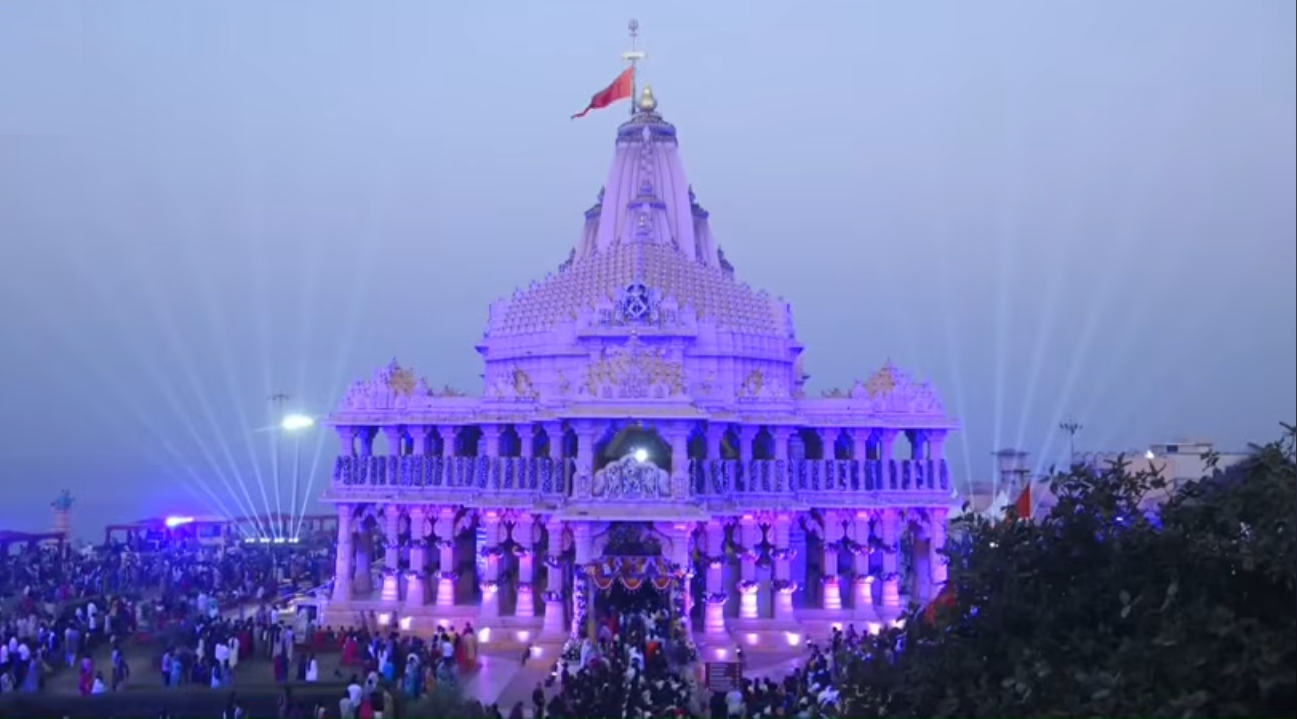
Maha Shivratri 2026: Lakhs of Devotees Flock to Temples Across India and Nepal.
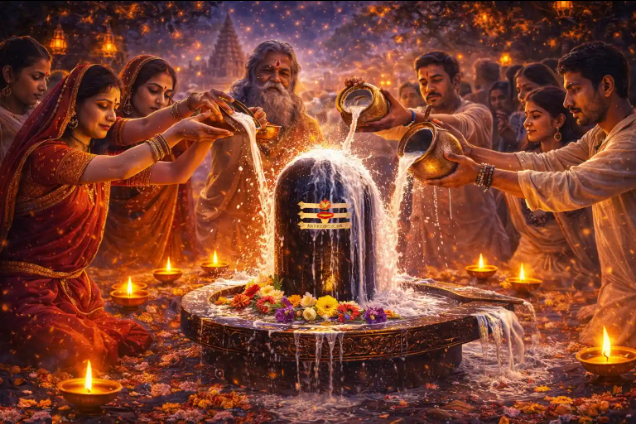 Upendra, Jyotika & Shivani | HENB | New Delhi/Varanasi/Kathmandu | Feb 15, 2026:: Maha Shivratri 2026 is being celebrated with highest devotion and spiritual fervour across India and Nepal, as lakhs of devotees thronged major Shiva temples to offer prayers, perform rituals, and participate in night-long vigils dedicated to Lord Shiva. From the western shores of Gujarat to the Himalayan foothills of Nepal, chants of “Har Har Mahadev” and “Bam Bam Bhole” reverberated through temple corridors and city streets.
Maha Shivratri
Maha Shivratri, one of the most sacred festivals in Hinduism, is observed annually on the 14th night of the dark fortnight in the month of Phalguna (February–March). The festival is dedicated to Lord Shiva and symbolizes spiritual awakening, self-discipline, and the triumph of light over ignorance. Devotees observe day-long fasts, perform Jalabhishek and Rudrabhishek by offering water, milk, honey, and bel leaves to the Shivling, and remain awake throughout the night in prayer, meditation, and chanting of “Om Namah Shivaya.” The night is considered especially powerful for inner transformation, as it is believed to mark the divine cosmic dance (Tandava) of Lord Shiva and, according to some traditions, his sacred marriage to Goddess Parvati. It is also regarded as an auspicious time for self-awakening through yoga, meditation, and the spirit of renunciation, reflecting Shiva’s role as the supreme yogi and ascetic.
Spiritual Fervour at Jyotirlingas and Sacred Shrines
At the iconic Somnath Temple in Gujarat, one of the twelve Jyotirlingas, the temple premises were illuminated with elaborate lighting and floral decorations. Devotees began arriving before dawn for Jalabhishek and special Rudrabhishek rituals. Long queues extended beyond the temple complex as security and administrative teams worked to manage the influx.
Similarly, the historic Lingaraj Temple in Odisha witnessed massive footfall. The temple’s towering spire was adorned with lights, while traditional priests conducted sacred ceremonies accompanied by Vedic chants.
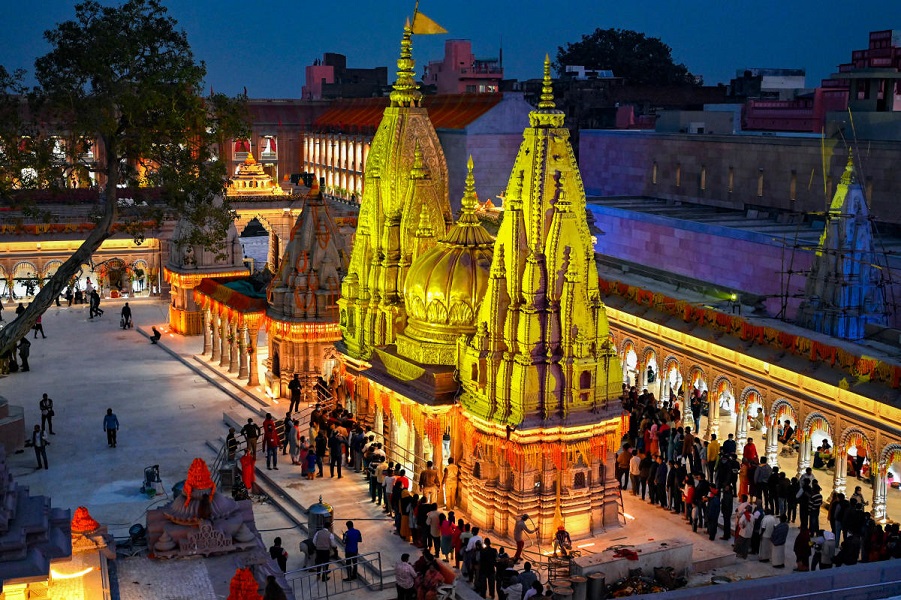
In Varanasi, the spiritual capital of India, an ocean of devotees gathered at the revered Kashi Vishwanath Temple. The entire city appeared immersed in devotion, with pilgrims lining the ghats of the Ganga before proceeding for darshan. Authorities implemented elaborate crowd-control measures to ensure smooth access to the sanctum.
At the sacred Mahakaleshwar Jyotirlinga in Ujjain, grand celebrations marked the occasion. The famous Bhasma Aarti, a pre-dawn ritual unique to this shrine, was performed following the traditional Panchamrit Abhishek. Devotees described the ceremony as spiritually uplifting, as temple bells and chants filled the air.
Devotion Spreads Nationwide
In Junagadh, Gujarat, heavy crowds were seen at the ancient Bhavnath Mahadev Temple, where local fairs and religious gatherings are customary during Maha Shivratri. Sadhus and pilgrims from across the region assembled for special prayers at the foothills of Mount Girnar.
Southern India too witnessed remarkable participation. At the sacred island shrine of Ramanathaswamy Temple—associated with Setuband Rameshwaram—devotees performed ritual baths in the temple’s 22 holy wells before offering prayers. The temple, another Jyotirlinga site, was beautifully decorated, and special night-long bhajans were organised.
In eastern India, thousands gathered at Baidyanath Temple, also known as Baba Baidyanathdham, one of the twelve Jyotirlingas. Continuous streams of pilgrims carried holy water for abhishek, maintaining the centuries-old tradition associated with the shrine.
Nepal Joins the Celebrations
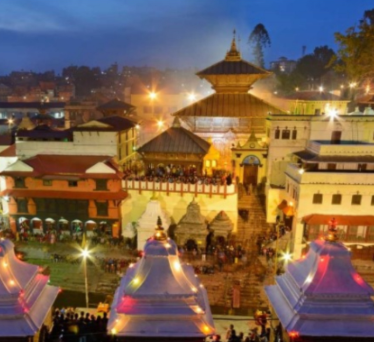
Across the border in Nepal, the revered Pashupatinath Temple witnessed extraordinary turnout. Devotees lined up from early morning, while sadhus from India and Nepal congregated along the Bagmati River. The temple complex became a focal point of cross-border spiritual unity, highlighting the shared cultural reverence for Lord Shiva.
Rituals, Significance and Administration
Maha Shivratri, observed on the 14th night of the dark fortnight in the Hindu month of Phalguna, commemorates the cosmic dance (Tandava) of Lord Shiva and symbolises spiritual awakening and overcoming darkness. Devotees observe day-long fasts, perform Jalabhishek with water, milk, honey, and bel leaves, and remain awake through the night in prayer and meditation.
Authorities across states deployed additional security personnel, medical teams, and traffic arrangements to handle the surge in pilgrims. Many temples also arranged live telecasts of special aartis for devotees unable to attend physically.
As night-long bhajans and kirtans continue, Maha Shivratri 2026 stands as a vivid testament to the enduring faith and cultural continuity that binds millions in collective devotion to Lord Shiva.
Grand Online celebrations of Maha Shivratri
**1. Maha Shivratri Celebration with Sri Sri Ravi Shankar at The Art of Living International Center, Bengaluru
An all-night spiritual programme featuring rituals, meditation, chantings, satsang (spiritual discourse) and midnight meditation was hosted by Sri Sri Ravi Shankar of the Art of Living at their Bengaluru International Centre on 15–16 February 2026. The event included Maha Rudrabhishekam, Satsang with Gurudev, and midnight meditation emphasizing inner peace and the awakening of the Shiva tattva within. The celebrations were webcast live on social platforms for devotees worldwide.
YouTube livestream and celebration links:
🎥 LIVE : महाशिवरात्रि उत्सव 2026 | Maha Shivratri Celebrations with Gurudev – Art of Living International Center (Bengaluru)
👉 https://www.youtube.com/watch?v=9wW2iVo2Yrs
📌 Note: This livestream captures the ambience and talks around Shivratri night with Sri Sri Ravi Shankar and the Art of Living community.
**2. Maha Shivratri Night with Sadhguru at Isha Yoga Center, Coimbatore
At the iconic Isha Yoga Center (Adi Yogi) in Coimbatore, Sadguru Jaggi Vasudev presided over a major Maha Shivratri 2026 celebration that went on overnight from 15 February (6 PM IST) to early morning (6 AM IST) and was streamed globally. The programme included Yogeshwara Linga Maha Abhishekam (a rare sacred abhishekam performed for the first time), guided meditations, cultural performances, music, Adiyogi Divya Darshanam (light & sound presentation), and deep midnight meditation — enabling participation from millions of attendees online and on YouTube.
YouTube livestream link:
🎥 LIVE : Celebrate Maha Shivratri with Sadhguru | Isha Yoga Center
👉 https://www.youtube.com/watch?v=vZabqz_EJqs
📌 The stream featured Yogeshwara Linga Abhishekam and extended meditative events all through the auspicious night.
..
_Agency Inputs.


 Struggle for Hindu Existence
Well done but to no effect
I wholeheartedly support the movement of ABVP
This is a common concern in almost all the states in India, as anti-Hindu, anti-Indian terrorist forces are very active…
In Manipur, India, kukis are training child terrotists, taught them to hate and kill the Indigenous people of Manipur.
[…] FIR Filed after Hindus Object to Group of Muslims Breaking Ramzan Fast on Disputed Land in Pune […]