
Struggle for Hindu Existence
*Hindu Rights to Survive with Dignity & Sovereignty *Join Hindu Freedom Movement to make Bharat Hindu Rashtra within this lifetime *Jai Shri Ram *Jayatu Jayatu Hindu Rashtram *Editor: Upananda Brahmachari.
Decades Later, US Resolution Seeks Justice for 1971 Bangladesh Genocide, Highlights Targeting of Hindus.
US Congressional Resolution Seeks Recognition of 1971 Bangladesh Genocide; Condemns Pakistan Army, Jamaat-e-Islami.
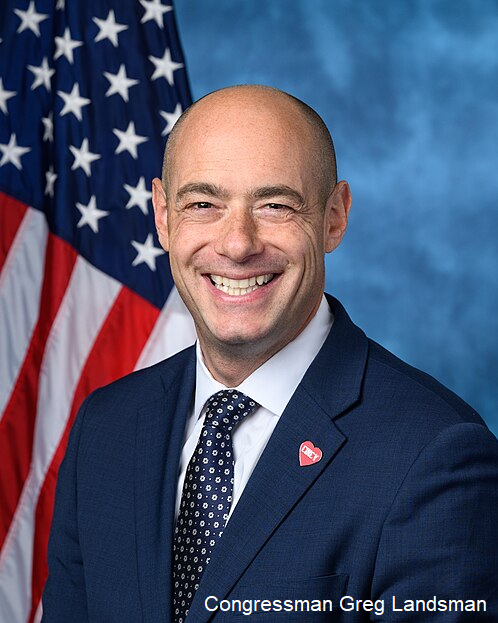 Utpal Pal | HENB | Washington, D.C., | March 20, 2026:: In a significant move with far-reaching historical and geopolitical implications, U.S. Congressman Greg Landsman has introduced a resolution in the House of Representatives formally recognizing the Bangladesh Genocide of 1971 and calling for accountability for those responsible.
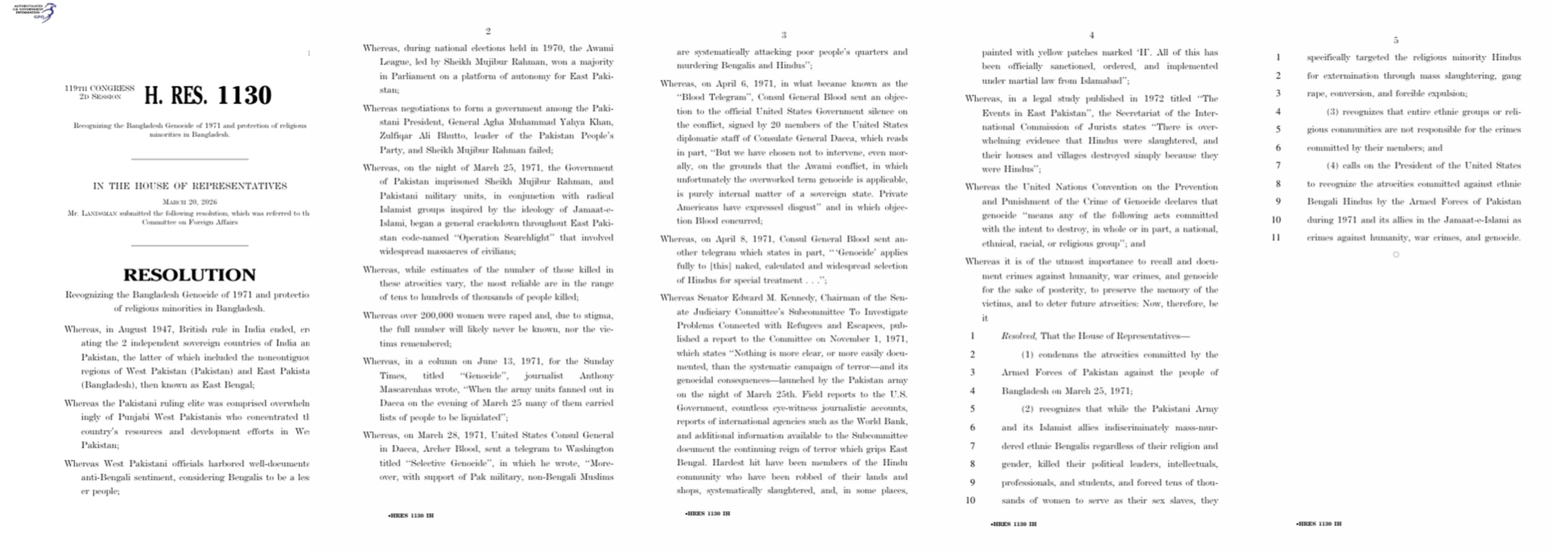
The resolution, titled H.Res.1130 – Recognizing the Bangladesh Genocide of 1971 and Protection of Religious Minorities in Bangladesh, has been referred to the United States House Foreign Affairs Committee for consideration. It urges the United States government to officially acknowledge the atrocities committed during the 1971 conflict and to hold the Pakistan Army and Islamist group Jamaat-e-Islami accountable for war crimes and crimes against humanity.
Recognition of a Long-Debated Tragedy
The resolution specifically condemns the actions carried out during Operation Searchlight, a military campaign launched on the night of March 25, 1971, in what was then East Pakistan, now Bangladesh. The operation marked the beginning of widespread violence against civilians, particularly targeting ethnic Bengalis.
While acknowledging that people of multiple faiths were victims, the resolution highlights that Hindus were systematically singled out for persecution, including mass killings, sexual violence, forced conversions, and displacement. At the same time, it explicitly rejects the notion of collective guilt against any ethnic or religious group.
Speaking on the resolution, Congressman Landsman stated that the events of 1971 meet the criteria of genocide under international law. “History demands truth,” he said, emphasizing that the systematic targeting of civilians, especially Bengali Hindus, warrants formal recognition by the United States.
Advocacy and Community Response
The initiative has received support from advocacy groups and diaspora communities. Utsav Chakrabarti, Executive Director of HinduACTion, noted that the resolution is the result of sustained efforts by activists working alongside the Bangladeshi diaspora and American Hindu community.
He stressed that recognition of the genocide is essential not only for historical justice but also for safeguarding religious minorities in present-day Bangladesh, where concerns over violence, land disputes, and discrimination persist.
Historical Context: Roots of the Conflict
The origins of the 1971 conflict trace back to the aftermath of the Partition of India, which created Pakistan as two geographically and culturally distinct regions—West Pakistan and East Pakistan—separated by over 1,000 miles of Indian territory.
Political tensions escalated after the 1970 general elections, when the Awami League, led by Sheikh Mujibur Rahman, secured a majority on a platform advocating autonomy for East Pakistan. The refusal of West Pakistan’s leadership to transfer power triggered mass unrest, culminating in the military crackdown.
Documented Atrocities and Evidence
The resolution draws on a wide range of historical sources to substantiate claims of genocide. Estimates suggest:
- Tens to hundreds of thousands of civilians were killed
- More than 200,000 women were subjected to sexual violence
- Millions were displaced internally or fled as refugees
- Widespread destruction of homes, villages, and religious institutions
Several contemporary accounts support these findings. U.S. diplomat Archer Blood famously described the events as “selective genocide” in the Blood Telegram, signed by multiple American officials protesting U.S. inaction.
Journalist Anthony Mascarenhas reported that military units operated with pre-prepared lists of individuals targeted for execution. Similarly, U.S. Senator Edward M. Kennedy observed that the Hindu community was disproportionately affected.
A 1972 report by the International Commission of Jurists concluded that there was overwhelming evidence that Hindus were targeted specifically because of their religious identity.
Push for Official U.S. Recognition
Despite extensive documentation, the United States has not formally recognized the 1971 events as genocide. The newly introduced resolution seeks to change that by calling on the President to officially designate the atrocities as genocide, war crimes, and crimes against humanity.
The resolution also emphasizes the importance of such recognition in preventing future atrocities and ensuring accountability. It argues that historical denial can contribute to recurring patterns of violence, particularly against vulnerable minority communities.
Key Provisions of the Resolution
The resolution outlines several key actions:
- Condemns the atrocities committed by the Pakistan Army and Jamaat-e-Islami
- Recognizes the targeted persecution of Bengali Hindus
- Rejects collective blame against any community
- Urges formal U.S. recognition of the events as genocide and crimes against humanity
Broader Significance
Observers note that the resolution carries not only symbolic weight but also potential policy implications. Formal recognition could influence U.S. foreign policy, educational discourse, and international human rights advocacy.
As the resolution moves through the legislative process, it is expected to reignite global discussions about the events of 1971 and the continuing need for historical acknowledgment and justice.
HinduACTion Urges Nationwide Support for Genocide Resolution
 In a parallel effort to build momentum for the resolution, HinduACTion has launched a coordinated outreach initiative, urging citizens and community members across the United States to actively engage with their elected representatives. Through its campaign, HinduACTion is calling on individuals to contact their Members of Congress and seek co-sponsorship of H.Res.1130, emphasizing that this is a critical moment for those who have voiced concern over the condition of Hindus and other minorities in Bangladesh. The organization highlighted that the resolution not only seeks formal recognition of the 1971 genocide carried out by the Pakistan Army and Jamaat-e-Islami, but also draws attention to the continued challenges faced by religious minorities today. Stressing the importance of collective action, the group described the initiative as a joint effort involving the diaspora, advocacy networks, and concerned stakeholders to ensure both historical justice and stronger protections for vulnerable communities.
Ask your member of Congress to co-sponsor H. Res 1130: Recognizing the Bangladesh Genocide of 1971 and protection of religious minorities in Bangladesh: Click this link.
e
 __
__


 Struggle for Hindu Existence
Well done but to no effect
I wholeheartedly support the movement of ABVP
This is a common concern in almost all the states in India, as anti-Hindu, anti-Indian terrorist forces are very active…
In Manipur, India, kukis are training child terrotists, taught them to hate and kill the Indigenous people of Manipur.
[…] FIR Filed after Hindus Object to Group of Muslims Breaking Ramzan Fast on Disputed Land in Pune […]