
Struggle for Hindu Existence
*Hindu Rights to Survive with Dignity & Sovereignty *Join Hindu Freedom Movement to make Bharat Hindu Rashtra within this lifetime *Jai Shri Ram *Jayatu Jayatu Hindu Rashtram *Editor: Upananda Brahmachari.
Only Hindus, Sikhs and Buddhists Eligible for SC Status: Supreme Court.
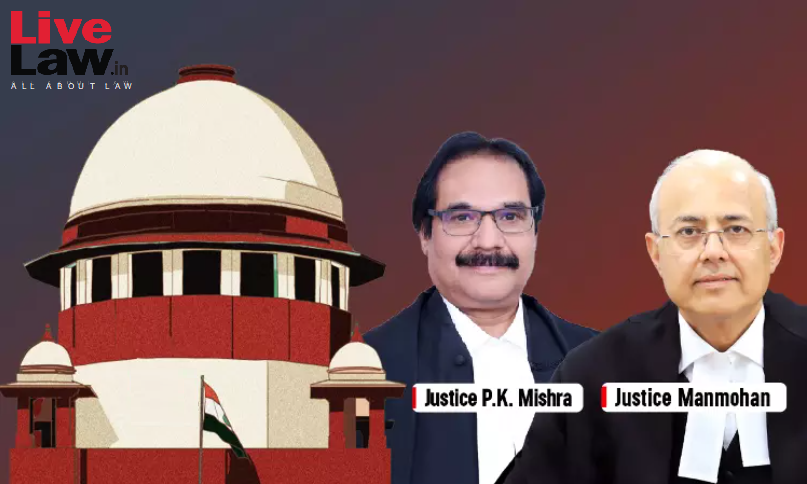
Supreme Court Rules Only Hindus, Sikhs, Buddhists Can Claim Scheduled Caste Status; Conversion Leads to Immediate Loss of Benefits.
Upananda Brahmachari | HENB | New Delhi | March 24, 2026:: In a significant judgment reinforcing the legal framework governing Scheduled Caste (SC) status, the Supreme Court of India on Tuesday (March 24, 2026) held that only individuals professing Hinduism, Sikhism, or Buddhism are entitled to claim SC status. The Court clarified that conversion to any religion outside these three results in the immediate and complete loss of Scheduled Caste recognition and associated constitutional protections.
Bench Upholds Andhra Pradesh High Court Verdict
A bench comprising Justice Prashant Kumar Mishra and Justice Manmohan upheld a 2025 ruling of the Andhra Pradesh High Court, which had denied SC status to a man who had converted to Christianity and was functioning as a pastor.
The case arose from an appeal filed by Chinthada Anand, who alleged caste-based abuse and violence and sought protection under the SC/ST (Prevention of Atrocities) Act. However, the accused contended that Anand, having converted to Christianity and actively practicing as a pastor, was no longer eligible for SC protections.
Conversion Nullifies SC Status: Court
Delivering its judgment, the Supreme Court stated unequivocally:
“No person who professes a religion other than Hindu, Sikh or Buddhist shall be a member of the Scheduled Caste. Conversion to any other religion results in loss of Scheduled Caste status.”
The Court emphasized that this disqualification is rooted in Clause 3 of the Constitution (Scheduled Castes) Order, 1950, which explicitly restricts SC status to followers of the three specified religions. The bench described this bar as “absolute” and not subject to exceptions.
SC/ST Act Protection Denied After Conversion
The Court ruled that individuals who convert to religions such as Christianity or Islam cannot claim protection under the Scheduled Castes and Scheduled Tribes (Prevention of Atrocities) Act if they are no longer legally recognized as members of a Scheduled Caste.
In Anand’s case, the Court noted that he had been functioning as a pastor for over a decade and was conducting prayer meetings at the time of the alleged incident. It found no evidence of reconversion or re-acceptance into his original caste community, concluding that he remained a practicing Christian.
High Court Observations Upheld
Earlier, Justice N. Harinath of the Andhra Pradesh High Court had quashed the FIR in April 2025, holding that caste distinctions are not recognized in Christianity and that conversion effectively nullifies SC status. The possession of an SC certificate, the High Court noted, does not override the legal consequences of conversion.
Key Legal Principles Clarified
The Supreme Court elaborated several guiding principles in its ruling:
- Religion-Based Eligibility: Only Hindus, Sikhs, and Buddhists can be recognized as Scheduled Castes under the 1950 Presidential Order.
- Absolute Bar: Conversion to any other religion leads to immediate disqualification from SC status, regardless of birth.
- Loss of Benefits: All constitutional safeguards, reservations, and statutory protections linked to SC status cease upon conversion.
- Mutual Exclusivity: A person cannot simultaneously profess another religion and claim SC status.
- Reconversion Criteria: To regain SC status after reconversion, an individual must prove:
- Original caste identity,
- Genuine reconversion and abandonment of the other religion,
- Acceptance by the original caste community.
The burden of proof, the Court said, lies entirely on the claimant and must be supported by “clear, cogent, and unimpeachable evidence.”
Distinction with Scheduled Tribes
Importantly, the Court clarified that the same religion-based restriction does not apply to Scheduled Tribes. Under the Constitution (Scheduled Tribes) Order, 1950, tribal status is not determined solely by religion but by factors such as community practices, cultural identity, and social recognition.
Constitutional Backing
The ruling reiterates the constitutional position under Article 341 and the Constitution (Scheduled Castes) Order, 1950, which governs SC classification. Clause 3 of the Order clearly states that individuals professing religions other than Hinduism, Sikhism, or Buddhism cannot be deemed members of Scheduled Castes.
Broader Implications
This judgment reinforces the long-standing legal interpretation that Scheduled Caste status is intrinsically linked to religious identity under the constitutional scheme. It underscores that conversion is a decisive factor in determining eligibility for caste-based protections and benefits, with no scope for dual claims.
The verdict is expected to have far-reaching implications for cases involving caste status, religious conversion, and the applicability of protective laws such as the SC/ST Act across India.
Far-reaching social and legal implications
This landmark ruling by the Supreme Court of India is expected to have far-reaching social and legal implications, particularly in the context of religious conversions. By firmly reiterating that conversion to religions outside Hinduism, Sikhism, or Buddhism results in the immediate loss of Scheduled Caste status and all associated constitutional benefits, the judgment may act as a significant deterrent to conversions undertaken by members of these communities.
The clear and uncompromising interpretation of the Constitution (Scheduled Castes) Order, 1950 underscores that such a shift in religious identity carries tangible legal consequences. As a result, the verdict is likely to influence decisions around conversion among Scheduled Caste individuals, especially in cases where access to reservations, protections, and welfare benefits forms a critical consideration. Observers note that the ruling could reshape ongoing debates around religious conversion, social identity, and affirmative action in India, while reinforcing the constitutional framework governing caste-based entitlements.
Read Verdict for the Related Case in the Supreme Court (Via. Indain Kanoon). Click link below.
Chinthada Anand vs State Of Andhra Pradesh on 24 March, 2026
Corrigendum
It has come to our notice that an inadvertent error occurred in our earlier report regarding the composition of the bench of the Supreme Court of India that delivered the judgment on Scheduled Caste status.
The report had incorrectly mentioned Justice N. V. Anjaria as part of the bench. The correct bench comprised Justice Prashant Kumar Mishra and Justice Manmohan.
..
_Agency Inputs including Live Law and Indian Kanoon.


 Struggle for Hindu Existence
[…] False Claim of Waqf Exposed in Pune, Maharashtra; Row Escalates in Karnataka’s Gokak […]
[…] NHRC seeks urgent report from J&K Police on ‘targeted’ Hindu killings. […]
[…] [Disclaimer: The content in this RSS feed is automatically fetched from external sources. All trademarks, images, and opinions belong…
Well done but to no effect
I wholeheartedly support the movement of ABVP