
Struggle for Hindu Existence
*Hindu Rights to Survive with Dignity & Sovereignty *Join Hindu Freedom Movement to make Bharat Hindu Rashtra within this lifetime *Jai Shri Ram *Jayatu Jayatu Hindu Rashtram *Editor: Upananda Brahmachari.
‘We don’t need this filth here,’ says Nitesh Rane on the attacks on Ram Navami celebrations.
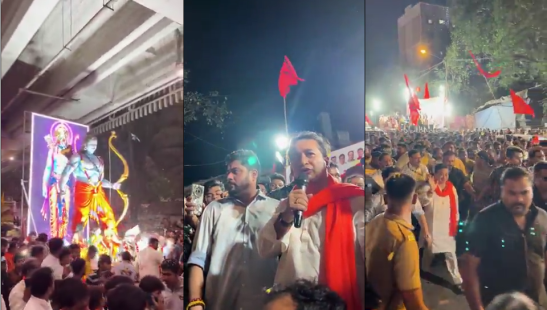
Stone-Pelting on Ram Navami Rallies by Muslims…
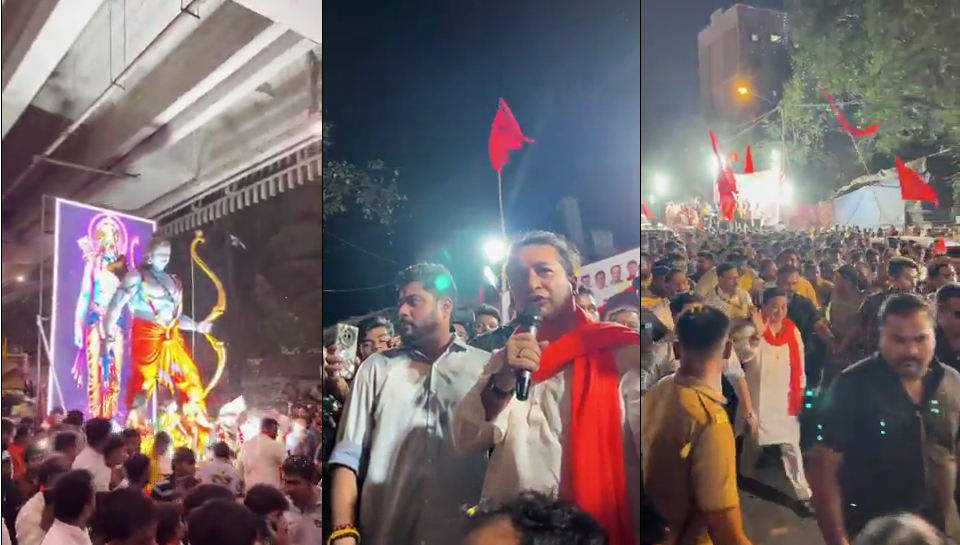
Maharashtra Minister Nitesh Rane Sparks Row with Remarks on Ram Navami Clashes, Calls for ‘Equal Rules’ Across Festivals.
Hridaya Bharti | HENB | Mumbai | March 30, 2026:: Maharashtra Minister Nitesh Rane on Sunday stirred controversy with sharp remarks following incidents reported during Ram Navami celebrations, including allegations of stone-pelting at processions in parts of the state.
Rane was speaking after participating in a grand Ram Navami procession in Oshiwara, Andheri, where a large number of devotees had gathered to mark the festival. Addressing reporters, he drew a pointed comparison between the observance of Eid and Ram Navami, alleging differences in how the two occasions are conducted.
“I simply said that whenever the festival of Eid comes, no one from the Hindu community pelts stones or causes any trouble. But when the Ram Navami celebrations began, these people did not allow our saffron flag to be hoisted and threw stones at Ram devotees,” he said.
Calling for parity in administrative handling of religious events, Rane argued that if all religions are treated equally in India, then similar regulatory frameworks should be applied across festivals.
“So, if according to them, all religions are possible in our country, then the same rules and regulations that you impose during Eid should be imposed during Ram Navami as well,” Rane said.
He further escalated his rhetoric with a controversial remark:
“If anyone feels burned by this, they should go to Pakistan. Anyway, we don’t need this filth here.”
Stone-Pelting Incident Under Probe
Meanwhile, law enforcement authorities confirmed that a case has been registered in connection with a stone-pelting incident during a Ram Navami procession at Syed Baba Chowk in Shrirampur. According to officials, around 10 to 12 unidentified individuals allegedly hurled stones at a Shri Ram flag procession, injuring three people.
Police have launched an investigation and stated that efforts are underway to identify and apprehend those involved in the incident.
Earlier Warnings and Political Messaging
Rane’s remarks also echo his earlier statements made in January, when he had issued a stern warning against disruptions during Hindu festivals while addressing an election rally for the Vasai Municipal Corporation.
“No one can look at the Hindu community with ill intentions. We will stand with you with full strength. If anyone tries to create mischief during a Hindu festival, they won’t even be able to return on Friday, that much I guarantee. No one can look at you with malice. We will stand firmly behind you,” Rane had said.
Reiterating his ideological stance, Rane asserted that the Maharashtra government leadership follows a Hindutva-oriented approach and emphasized the need for unity among Hindus.
“The Maharashtra government, our Chief Minister, and even the city mayor have a Hindutva-oriented mindset. We must celebrate ‘I Love Mahadev’. Only those who chant ‘Jai Shri Ram’ should be visible in our city. Others, those who claim ‘I love Mohammed’, should be sent to their fathers in Pakistan. We need to clear them from here. Therefore, you must remain united as the Hindu community,” he said.
Political and Social Implications
Rane’s statements come at a time when religious processions and festival-related tensions have drawn heightened political attention in several states. His remarks are likely to intensify the ongoing debate over communal harmony, freedom of religious expression, and the role of state authorities in ensuring law and order during religious events.
Authorities, meanwhile, have urged restraint and emphasized that investigations into the Shrirampur incident are ongoing, with a focus on maintaining peace and preventing escalation.
Nationwide Pattern of Disruptions During Ram Navami Celebrations
In recent years, incidents of disruption and violence during Ram Navami celebrations have been reported from multiple parts of India, raising recurring concerns over law and order during religious processions. Similar tensions have been observed in West Bengal, particularly in districts like Murshidabad, where clashes, arson, and allegations of stone-pelting during rallies have periodically drawn political and administrative attention. Reports from the region detail incidents ranging from vandalism and imposition of prohibitory orders to multiple arrests following violence, reflecting a pattern of recurring friction during the festival.
See Wesr Bengal reports:
- Ram Navami clashes in Murshidabad spark arson, Section 144 imposed
- Clashes break out at multiple locations in Murshidabad during Ram Navami processions
- Violence erupts in Murshidabad during Ram Navami procession
- Stone-pelting, vandalism reported during Ram Navami in Murshidabad
- 29 arrested after Ram Navami rally violence in Murshidabad
Beyond West Bengal, disturbances during Ram Navami 2026 were reported across several other states, especially in Jharkhand. In Hazaribag, violence during processions led to two deaths and hundreds of injuries, highlighting the scale of clashes (Report). In Dhanbad, stone-pelting incidents resulted in at least 18 arrests, triggering political reactions over police handling (Report). Similarly, in Garhwa district, clashes over religious flags and firecrackers escalated into stone-pelting, with around 20 people arrested and several injured, including police personnel (Report). In Khunti district’s Murhu area, tensions rose after stone-pelting triggered clashes between two groups, prompting deployment of additional security forces (Report).
Additional incidents were reported in parts of Jharkhand where processions faced route restrictions, leading to confrontations with police and injuries to personnel. Isolated cases of violence were also reported from Rajasthan, including in Jodhpur, where disputes during processions allegedly led to clashes and stone-pelting.
Taken together, these incidents indicate that disturbances during Ram Navami processions are not confined to any single region but have emerged across multiple states, particularly in eastern and central India. In most cases, authorities have responded with heightened security deployments, arrests, and restrictions such as Section 144 to prevent escalation, while repeatedly appealing for restraint and communal harmony. At the same time, such developments continue to fuel sharp political reactions and broader debates over the conduct, regulation, and protection of religious processions in the country.
..
_Agency Inputs.


 Struggle for Hindu Existence
[…] [Disclaimer: The content in this RSS feed is automatically fetched from external sources. All trademarks, images, and opinions belong…
Well done but to no effect
I wholeheartedly support the movement of ABVP
This is a common concern in almost all the states in India, as anti-Hindu, anti-Indian terrorist forces are very active…
In Manipur, India, kukis are training child terrotists, taught them to hate and kill the Indigenous people of Manipur.