
Bangladesh General Election 2026: Landslide Victory for BNP Amid Democratic Concerns, Minority Crisis, Slashed Hindu Represenation, and Regional Security Implications.
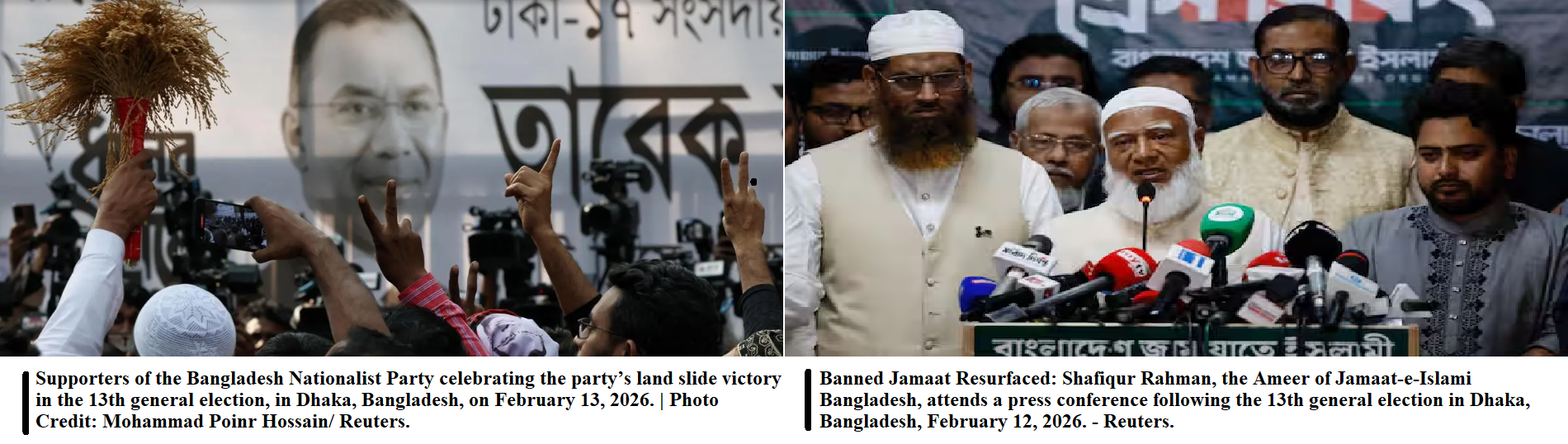
 Upananda Brahmachari | HENB | New Delhi | Feb 14, 2026:: The 2026 Bangladesh General Election has delivered a decisive victory for the Bangladesh Nationalist Party (BNP)-led alliance. However, the outcome has triggered serious debate over the democratic process, the status of Hindu and other minorities, and the broader geopolitical implications for India, particularly along the sensitive border with West Bengal and the Northeast.
According to the Bangladesh Election Commission, the BNP-led alliance secured 212 of the 297 declared seats in the 13th National Parliament elections. The Bangladesh Jamaat-e-Islami-led alliance won 77 seats, while Islami Andolan Bangladesh secured one seat and independent candidates won seven. Results in a few constituencies remain pending due to court cases.
Decisive Victory, Contested Democratic Space
While the BNP’s victory appears numerically overwhelming, critics argue that the electoral field was fundamentally uneven due to the exclusion of the Awami League, which had governed Bangladesh for over a decade under Sheikh Hasina before her ouster in September 2024.
Sheikh Hasina Rejects BNP Victory, Calls Vote a ‘Sham’
In her first public statement since the announcement of results in Bangladesh’s 13th National Parliamentary Election, exiled former Prime Minister Sheikh Hasina strongly rejected the outcome, describing the February 12 vote as a “disgraceful chapter in Bangladesh’s democratic history.” She alleged that the election was neither competitive nor reflective of the people’s mandate, but instead shaped by “administrative manipulation and numerical fraud.” Hasina maintained that the exclusion of her party and the broader political environment undermined the legitimacy of the electoral process.
Allegations Against the Interim Yunus Government
The interim administration led by Muhammad Yunus has faced allegations from sections of civil society and political observers that it curtailed democratic freedoms in the transitional phase following the July 2024 uprising.
Critics claim that:
- The interim government failed to ensure a level playing field for all political stakeholders.
- Law enforcement actions disproportionately targeted Awami League leaders, including many from minority communities.
- Radical student leaders and Islamist groups allegedly gained space and influence amid weakened institutional controls.
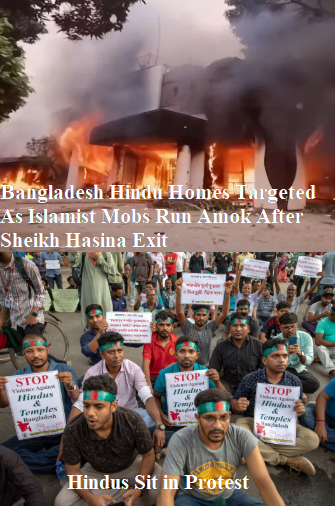
- Targeted killings of Hindus increased, and Hindu homes were burned even during the election period.
- Banned Jamaat returns with the help of Yunus.
The interim administration led by Muhammad Yunus has faced mounting criticism from minority rights activists, sections of civil society, and pro-Awami observers. They allege that during the transitional period following the July 2024 uprising and the ouster of Sheikh Hasina, state institutions failed to prevent targeted violence against Hindu minorities.
Several incidents have been cited by critics as evidence of alleged targeted attacks and over two dozen killings, including the killings of:
- Dipu Chandra Das
- Amrit Mondal (Samrat)
- Khokon Chandra Das
- Bajendra Biswas
- Rana Pratap Bairagi
- Mani Chakraborty
- Samir Das
- Praloy Chaki
- Mithun Sarkar
- Chanchal Bhowmik
Minority advocacy groups claim these killings were part of a broader pattern of intimidation and communal violence in the post-uprising phase. They further allege that the interim administration did not act decisively to curb extremist elements.
There have also been reports that during the election period, homes belonging to Hindu families were set ablaze in certain districts by Islamist perpetrators. Rights observers argue that such incidents created an atmosphere of fear among minority voters and political workers.
While the interim government has denied institutional bias and maintained that law enforcement acted where evidence existed, critics contend that weakened governance structures and political instability emboldened radical elements. The Dhaka-based academic report “Rupture, Reform, and Reimagining Democracy” had earlier described the transition as marked by chaotic governance and the failure to establish strong rule-of-law safeguards.
Aftermath of the 2024 Uprising
The political turbulence traces back to the July 2024 uprising that led to the collapse of the elected government and the ouster of Prime Minister Sheikh Hasina. Hasina later went into exile in New Delhi.
A Dhaka-based BRAC university’s Institute of Governance and Development (BIGD) report titled “Rupture, Reform, and Reimagining Democracy: Navigating the Agony of Transition” assessed the post-uprising period as one of incomplete transformation. According to co-author Mirza M. Hassan, the anticipated structural overhaul of the political system did not materialize. Instead, the country experienced “chaotic governance,” a weak interim authority, and a failure to institutionalize rule of law reforms.
The report further noted that the political vacuum enabled previously suppressed Islamist groups to re-emerge with renewed strength—an observation that many analysts link to the altered electoral landscape of 2026.
Sharp Decline in Hindu and Minority Representation
One of the most significant developments in the 2026 election is the drastic reduction in Hindu and minority representation in the Jatiya Sangsad.
In the 11th Jatiya Sangsad under Awami League rule, minority representation included the following Members of Parliament:
- Ramesh Chandra Sen (Thakurgaon-1)
- Manoranjan Shill Gopal (Dinajpur-1)
- Sadhan Chandra Majumder (Naogaon-1)
- Ranajit Kumar Roy (Jessore-4)
- Swapan Bhattacharjee (Jessore-5)
- Biren Sikder (Magura-2)
- Panchanan Biswas (Khulna-1)
- Narayon Chandra Chanda (Khulna-5)
- Dhirendra Debnath Shambhu (Barguna-1)
- Pankaj Nath (Barisal-4)
- Manu Majumdar (Netrokona-1)
- Ashim Kumar Ukil (Netrokona-3)
- Mrinal Kanti Das (Munshiganj-3)
- Dr. Joya Sengupta (Sunamganj-2)
- Pran Gopal Datta (Comilla-7, by-election 2021)
- Kujendra Lal Tripura (Khagrachari)
- Dipankar Talukdar (Rangamati)
- Bir Bahadur Ushwe Sing (Bandarban)
- Basanti Chakma (Reserved Women’s Seat-9)
- Aroma Dutta (Reserved Women’s Seat-11)
All were elected on Awami League tickets, underscoring the party’s dominant role in minority inclusion.
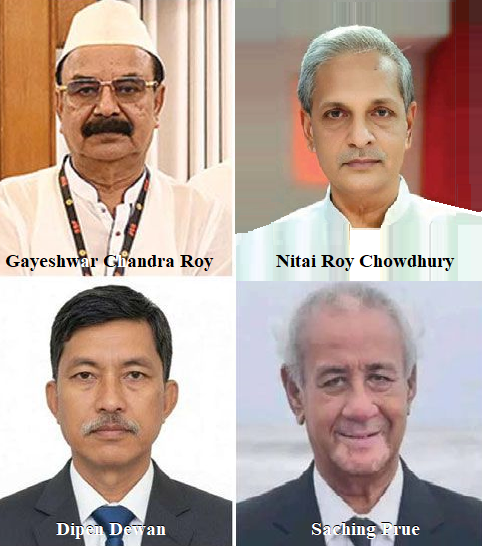
In contrast, the 2026 election saw only four minority candidates elected in general seats, all from BNP:
- Gayeshwar Chandra Roy (Dhaka-3)
- Nitai Roy Chowdhury (Magura-2)
- Dipen Dewan (Rangamati)
- Saching Prue (Bandarban)
Although additional minority representation may emerge from the 50 reserved women’s seats, the overall number remains significantly below proportional expectations. With Hindus constituting around 8% of Bangladesh’s population, analysts suggest that roughly 25 members in a 350-seat parliament (including reserved seats) would reflect fair representation.
Notably, 79 minority candidates contested the polls across party lines and as independents, but only a small fraction secured victory. Both Jamaat and the National Citizen Party nominated one Hindu candidate each; neither was elected.
Many former Hindu Awami League leaders reportedly faced arrests following the 2024 upheaval, and some were allegedly prevented from contesting in 2026 due to the party’s exclusion. Rights observers have expressed concern that this contraction of minority representation signals deeper structural challenges.
Political analysts describe this as a sharp contraction in minority voice within national policymaking.
Chicken’s Neck Concern: Islamist Gains Along the India Border
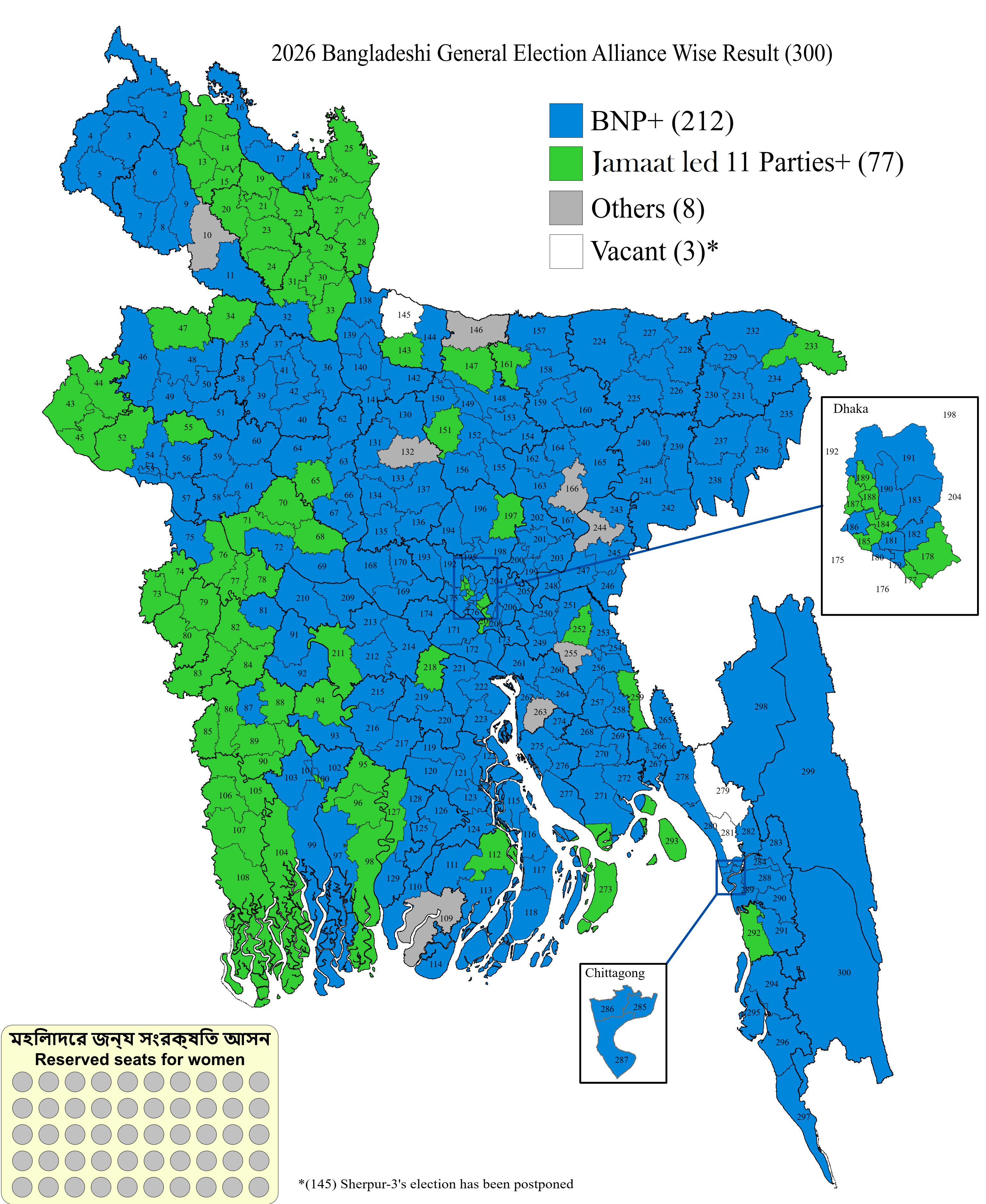
Although the BNP secured a national majority, the geographical distribution of Jamaat’s 77-seat success has drawn strategic attention in India.
The Bangladesh Jamaat-e-Islami gained significant ground in Rangpur and Khulna divisions—both bordering India. Rangpur lies near India’s Siliguri Corridor (“Chicken’s Neck”), a narrow strategic link to the Northeast. Khulna borders West Bengal’s 24 Parganas districts.
The Jamaat also made gains in Rajshahi division, forming a north-south belt along the India-Bangladesh frontier.
Security analysts warn that strengthened Islamist political presence in these regions may:
- Intensify cross-border ideological influence.
- Exacerbate infiltration concerns.
- Complicate India’s border management and internal security dynamics.
From India’s perspective, the 2026 Bangladesh election results are concerning not because of the overall performance of Bangladesh Jamaat-e-Islami at the national level, but because of where it made significant gains. Although not dominant nationwide, Jamaat secured a record 77 seats, with strong victories in border districts such as Thakurgaon, Rangpur, Rajshahi, Nilphamari, Satkhira, Chapainawabganj, and Chuadanga—many of them adjacent to West Bengal.
The party consolidated its presence in Rangpur and Khulna divisions, both bordering India. Rangpur lies near the strategically sensitive Siliguri Corridor (“Chicken’s Neck”), while Khulna borders West Bengal’s 24 Parganas. With extremist groups like JMB and Ansar Bangla Team previously active in West Bengal, analysts warn that Jamaat’s strengthened foothold along the frontier could heighten risks of radicalisation, infiltration, and cross-border security challenges for India.
Possible Impact on the 2026 West Bengal Assembly Election
The Jamaat’s rise along the West Bengal–Bangladesh border could have political reverberations in India’s 2026 West Bengal Assembly elections.
Border constituencies in West Bengal—many with significant Muslim populations—are already politically sensitive. Observers note concerns over ideological radicalisation and cross-border narratives influencing local electoral politics.
In this context, a relatively new political formation, the Janata Unnayan Party led by Humayun Kabir, has emerged as a stakeholder in certain border constituencies. Analysts suggest that evolving dynamics across the border may indirectly shape campaign rhetoric, voter mobilisation strategies, and communal polarisation in West Bengal.
A Crossroads for Democracy and Regional Stability
The 2026 election has placed Bangladesh at a critical juncture.
Existential Concerns for Hindus
Human rights observers and advocacy groups have raised alarms over what they describe as an “existential threat” facing Hindus and other minorities in Bangladesh amid shifting political currents. Some US congressional groups and diaspora organisations have warned that continued demographic decline and insecurity could drastically reduce the Hindu presence in the country over the coming decade.
Bangladesh has historically witnessed a steady decline in its Hindu population percentage over decades due to migration, socio-political pressures, and communal tensions. Critics argue that the current political reconfiguration may accelerate this demographic shift if minority protections weaken further.
At the same time, demographic anxieties are also part of political discourse in India’s West Bengal, where debates over population change, migration, and electoral arithmetic are increasingly prominent.
A Fragile Democratic Transition
With the exclusion of a major political force, the consolidation of Islamist actors in key regions, and diminished minority representation, Bangladesh’s democratic transition appears fragile.
For India, the outcome presents a dual challenge:
- Managing diplomatic engagement with a BNP-led government.
- Addressing security and demographic concerns along its eastern frontier.
The 2026 Bangladesh General Election, therefore, represents more than a routine political shift. It signals a moment of recalibration—where democracy, minority rights, and regional stability intersect in ways that will shape South Asian geopolitics in the years ahead.
Indo–Bangladesh Relations Ahead
Following the election outcome, Indian Prime Minister Narendra Modi congratulated BNP leader Tarek Rahman on the party’s decisive victory, signaling New Delhi’s intent to maintain functional diplomatic engagement with the new dispensation in Dhaka.
I convey my warm congratulations to Mr. Tarique Rahman on leading BNP to a decisive victory in the Parliamentary elections in Bangladesh.
This victory shows the trust of the people of Bangladesh in your leadership.
India will continue to stand in support of a democratic,…
— Narendra Modi (@narendramodi) February 13, 2026
However, the political transition has been accompanied by renewed calls within Bangladesh for the extradition of Sheikh Hasina, the Awami League chairperson who has been in exile in New Delhi since her ouster on September 5, 2024. Shafiqur Rahman, chief of Bangladesh Jamaat-e-Islami, has also demanded her extradition, although he has publicly expressed willingness to maintain stable ties with India under the new regime.
For India, the evolving situation presents a complex diplomatic and security challenge. While political engagement with the BNP-led government will continue, concerns remain over cross-border security and infiltration issues, particularly in light of Jamaat’s ideological positioning and alleged links—both overt and covert—with radical Islamist networks active in parts of India and the wider South Asian region.
The coming years are therefore likely to test the resilience of Indo–Bangladesh relations, balancing diplomatic pragmatism with heightened security vigilance.
…
_Inputs from Agencies.


 Struggle for Hindu Existence
reconversion to Hinduism should be the primary goal of Hindu society today. Rest of the goals and actions of society…
[…] Hindu temple in Peterborough wins first round fight over sale to mosque […]
Dear Majumder Ji, Namaskar. Please send some donation / contribution for this site to run our activities. Donation link: http://paypal.me/hinduexistence…
[…] Protest against UGC Bill: Ghaziabad police halt Yati Narsinghanand’s yatra to Delhi’s Jantar Man… […]
[…] Tilak Ban at Pune School Sparks Strong Protest by Hindutva Groups Against Ambedkarite Headmaster. […]