

[…] core is narrow: Congress leader Digvijay Singh directed critical remarks at the RSS and VHP; Ayodhya seers rejected his…

Struggle for Hindu Existence
*Hindu Rights to Survive with Dignity & Sovereignty *Join Hindu Freedom Movement to make Bharat Hindu Rashtra within this lifetime *Jai Shri Ram *Jayatu Jayatu Hindu Rashtram *Editor: Upananda Brahmachari.
Madras HC: Prove Hindu Return for Scheduled Caste Status.
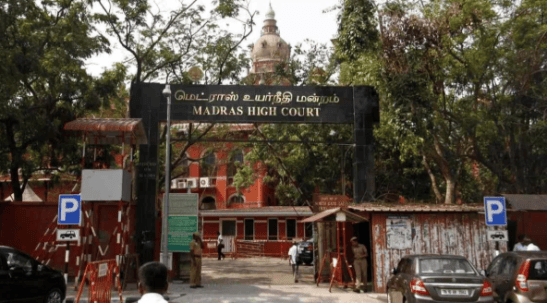
Return to Hinduism Must Be Established by Evidence: Madras HC Orders Fresh Scrutiny of Adi Dravidar Certificate.
Court finds flaws in vigilance committee’s reasoning, rejects reliance on physical appearance and language as indicators of religious identity.
B Upendran | HEN | Chennai | Sept 24, 2026:: The Madras High Court has ordered a fresh examination of the Hindu Adi Dravidar community certificate of a retired Customs officer whose eligibility came under scrutiny because his father had converted to Christianity before the petitioner was born and the petitioner later claimed to have returned to Hinduism.
Justice D. Bharatha Chakravarthy, while dealing with M. Ravikumar v. District Level Vigilance Committee and Others, set aside the order of the Tiruvannamalai District Level Vigilance Committee that had rejected Ravikumar’s community certificate. The court found that parts of the committee’s reasoning were based on irrelevant considerations and that some of its conclusions, particularly regarding acceptance of the petitioner by the Adi Dravidar community, were not adequately supported by evidence.
The September 11, 2026 order has consequently directed the authorities to reconsider the matter after giving Ravikumar an opportunity for a personal hearing and allowing him to produce additional material in support of his claim.
Religious status at the centre of the dispute
The case has broader significance because Scheduled Caste status under the Constitution (Scheduled Castes) Order, 1950 is expressly linked to religious affiliation. Paragraph 3 of the Order provides that a person professing a religion other than Hinduism, Sikhism or Buddhism cannot be treated as a member of a Scheduled Caste.
That provision has also been central to continuing debates over the status of persons from Scheduled Caste backgrounds who have converted to Christianity or Islam and later seek recognition of their ancestral Scheduled Caste status. The legal question in Ravikumar’s case, however, is narrower: whether a person whose family had moved from Hinduism to Christianity can establish a genuine return to Hinduism and acceptance into the original Scheduled Caste community.
The distinction is important because the legal framework does not impose an identical religious qualification on Scheduled Tribes, while OBC reservation is governed by separate lists and eligibility criteria. Government material has specifically noted that members of Scheduled Tribes may profess any religion for purposes of Central Government service reservation.
From Christianity to Hinduism
According to the case record as described before the High Court, Ravikumar’s father originally belonged to the Hindu Adi Dravidar community but converted to Christianity in 1960. Ravikumar was born in 1966.
Ravikumar’s case was that he and his father subsequently returned to Hinduism in 1983 through ceremonies conducted at an Arya Samaj centre in Chennai. He thereafter obtained a Hindu Adi Dravidar community certificate in December 1986. The certificate itself reportedly recorded the family’s earlier conversion to Christianity and the subsequent return to Hinduism.
Ravikumar subsequently joined the Customs Department on the basis of the certificate.
The certificate remained in existence for several decades, but its validity was questioned shortly before his scheduled retirement in May 2026. The Tiruvannamalai District Level Vigilance Committee, by an order dated May 4, rejected his claim.
Evidence of Hindu religious practice
Before the High Court, Ravikumar relied on various materials concerning his family’s religious practices. These included photographs of his marriage, ceremonies conducted for his children and photographs relating to his daughter’s marriage. His counsel argued that such material demonstrated that the family had been living according to Hindu customs after the claimed reconversion.
The State, however, questioned whether the return to Hinduism was genuine and whether Ravikumar had actually been accepted by the community whose Scheduled Caste status he claimed.
Counsel appearing for the Customs Commissioner also referred to official records in which the petitioner and his father continued to be identified by names associated with their earlier religious identity.
The vigilance committee had additionally relied upon the fact that Ravikumar’s father was buried in a Christian cemetery. It concluded that the Adi Dravidar community had not accepted Ravikumar after his alleged return to Hinduism.
Court questions ‘physical appearance’ reasoning
One of the more unusual aspects of the vigilance committee’s reasoning came under judicial scrutiny. The committee had referred to Ravikumar’s complexion, height, physique, curly hair and ability to speak Tamil and English while examining his claim.
The High Court found such characteristics incapable of establishing whether a person genuinely practised Hinduism or belonged to a particular caste community. Physical appearance and proficiency in a language, the court’s reasoning indicates, cannot serve as reliable evidence of a person’s religious identity.
The court therefore required the authorities to focus on relevant evidence concerning the petitioner’s religious practice and his relationship with the ancestral community.
Supreme Court precedent on reconversion
In examining the dispute, the High Court considered the Supreme Court’s ruling in K.P. Manu v. Chairman, Scrutiny Committee for Verification of Community Certificate, decided in 2015.
In that case, the Supreme Court considered the claim of a person whose ancestors belonged to the Hindu Pulaya Scheduled Caste but whose family had converted to Christianity. The petitioner had subsequently reconverted to Hinduism and sought recognition of his original caste status.
The Supreme Court held that three elements were significant: there must be clear evidence that the ancestors belonged to a Scheduled Caste recognised under the Constitution (Scheduled Castes) Order, there must have been reconversion to the original religion, and there must be evidence that the person was accepted by the community.
The Supreme Court’s ruling therefore did not make reconversion alone automatically sufficient. Community acceptance was also identified as an important element in determining whether the original caste status could be restored.
Questions over documentary evidence
The Madras High Court also found problems in some of the documentary reasoning used against Ravikumar.
Among the matters considered was a reference to his daughter allegedly being described as Christian in a 1994 ration card. Ravikumar’s side questioned the relevance of that entry by submitting that his daughter was actually born only in 1998.
The High Court also found that the vigilance committee had not adequately explained the factual basis for its conclusion that the Adi Dravidar community had not accepted Ravikumar after his claimed return to Hinduism.
Thus, rather than conclusively accepting Ravikumar’s claim, the court held that the existing order was insufficiently reasoned and required a proper reconsideration based on relevant evidence.
Fresh inquiry ordered
The High Court accordingly set aside the vigilance committee’s order and directed a fresh examination.
Ravikumar was granted four weeks from the receipt of the web copy of the order to appear before the committee and produce supporting material. The committee was then directed to complete the fresh determination within eight weeks of his appearance.
The ruling does not finally declare Ravikumar’s community certificate to be valid. Instead, it requires the competent authority to reconsider the matter in accordance with the applicable legal principles and after examining relevant evidence.
The fresh inquiry is therefore expected to focus on two interconnected questions: whether Ravikumar has genuinely returned to and practised Hinduism, and whether he has been accepted into the ancestral Adi Dravidar community.
A legal test rather than an automatic restoration
The judgment places the dispute within a broader legal framework governing the relationship between religion, caste identity and Scheduled Caste entitlements. The Constitution (Scheduled Castes) Order currently restricts Scheduled Caste recognition to persons professing Hinduism, Sikhism or Buddhism.
At the same time, the Supreme Court’s precedent makes clear that a claim based on reconversion requires more than a formal ceremony. In K.P. Manu, the Court emphasised the need for evidence concerning ancestral caste identity, reconversion and acceptance by the relevant community.
The Madras High Court’s latest order consequently leaves the final determination to the vigilance committee, while requiring it to discard irrelevant indicators and give a reasoned decision based on demonstrable facts.
The case thus highlights the evidentiary questions that can arise when a person from a Scheduled Caste background claims to have returned to Hinduism after a family conversion to Christianity and subsequently seeks recognition of the ancestral Scheduled Caste identity.
No Reservation to Non-Hindus” Debate Gains Fresh Focus
The case also comes against the backdrop of a wider debate over the religious basis of reservation benefits, particularly Scheduled Caste reservations. Various SC, ST and OBC organisations and advocacy groups have raised concerns over whether individuals or families who have converted from Hinduism to Christianity or Islam should continue to claim benefits associated with their ancestral caste identity, while others have demanded clearer safeguards against what they describe as misuse of reservation provisions. The issue has gained renewed attention amid calls for “No Reservation to Non-Hindus” and demands for stricter verification of caste certificates. Against this backdrop, the Madras High Court’s order assumes particular significance: rather than treating a claimed return to Hinduism as sufficient by itself, the court has required the competent authority to examine the evidence of the petitioner’s religious practice and, importantly, his acceptance by the ancestral Adi Dravidar community. The final determination, therefore, remains subject to the fresh scrutiny ordered by the court.
..
_Agency Inputs.
One comment on “Madras HC: Prove Hindu Return for Scheduled Caste Status.”
Leave a comment


Pingback: Hindu Reconversion and Scheduled Caste Status: What to Prove – DharmaRenaissance Blog