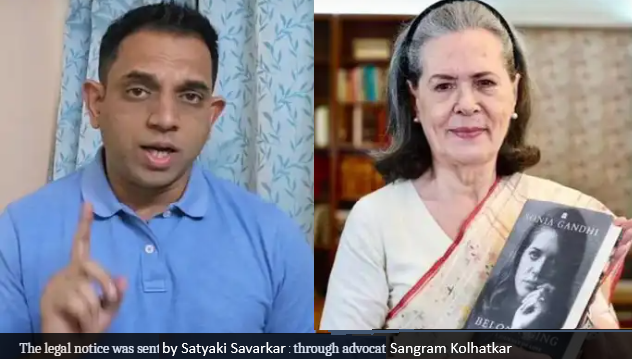


[…] established event is narrow but significant: a member of Savarkar’s family sent Sonia Gandhi a legal notice alleging that…

Struggle for Hindu Existence
*Hindu Rights to Survive with Dignity & Sovereignty *Join Hindu Freedom Movement to make Bharat Hindu Rashtra within this lifetime *Jai Shri Ram *Jayatu Jayatu Hindu Rashtram *Editor: Upananda Brahmachari.
Legal Notice to Sonia Gandhi Over ‘Distorted’ Savarkar Portrayal in Memoir.
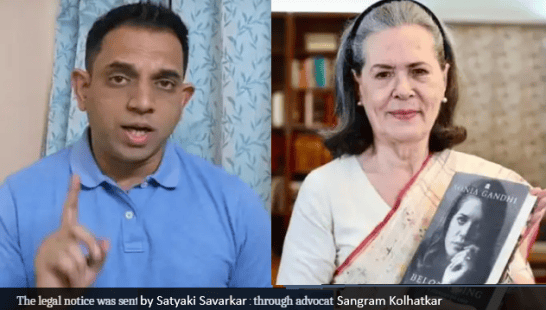
Savarkar’s Kin Sends Legal Notice to Sonia Gandhi Over ‘Distorted’ Portrayal of the Freedom Fighter in Memoir.
Seeks unconditional apology, historical clarification and correction of allegedly misleading references to freedom fighter on pages 201 and 443 of Sonia’s book ‘Belonging: A Journey of Love’.
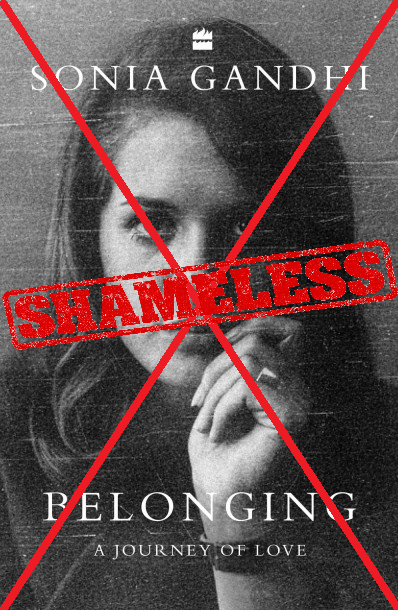 Upananda Brahmachari | HENB | New Delhi | Nov 25, 2026:: A legal controversy has erupted over the portrayal of Hindutva ideologue and freedom fighter Vinayak Damodar Savarkar in Congress leader Sonia Gandhi’s memoir Belonging: A Journey of Love, with his grandnephew, Satyaki Savarkar, serving her a legal notice demanding an unconditional apology, clarification and corrections to what he describes as a historically distorted and derogatory account of the revolutionary leader.
The legal notice, issued through advocate Sangram Kolhatkar on behalf of Satyaki Savarkar, specifically challenges two passages appearing on pages 201 and 443 of the book, published by HarperCollins Publishers India and reportedly released on November 10.
The notice alleges that the statements contain factual inaccuracies, misleading historical interpretations and an unfair characterisation of Savarkar’s role in India’s freedom struggle and his political and ideological philosophy. It maintains that the passages, when read together, present a distorted picture of his contribution, beliefs and legacy, potentially misleading readers and damaging his historical reputation.
Satyaki Savarkar has given Sonia Gandhi 15 days from the receipt of the notice to respond to the demands. It warns that failure or refusal to comply could compel him to initiate appropriate legal proceedings and seek remedies before a competent court or authority.
According to the notice, Satyaki Savarkar recently came across the memoir and was deeply disturbed by the references concerning his great-granduncle, particularly the manner in which his imprisonment, petitions submitted during British rule and ideological convictions have been presented.
Objection to References to Mercy Petitions and Alleged British Collaboration
One of the principal objections concerns a passage on page 201 of the memoir, which states:
“While Congress freedom fighters were enduring assaults and imprisonment at the hands of the British rulers, senior ideologues of the RSS like Vinayak Damodar Savarkar were writing mercy petitions to their colonial masters, and their members were colluding with the British authorities as informers.”
The legal notice strongly disputes the implication arising from this statement, arguing that it creates an impression that Savarkar was associated with, or responsible for, informing upon Indian freedom fighters and collaborating with the British colonial administration against the country’s independence movement.
It categorically rejects such an insinuation, maintaining that it is unsupported by the historical circumstances surrounding Savarkar’s imprisonment, political activities and struggle against British colonial rule.
The notice points out that Savarkar endured prolonged incarceration and severe hardships under British rule, including his imprisonment in the notorious Cellular Jail in the Andaman Islands, where political prisoners were subjected to extremely harsh conditions.
It argues that references to petitions submitted by Savarkar during his imprisonment cannot be examined in isolation or presented without considering the circumstances of his incarceration, the conditions prevailing inside the prison and the broader political and historical context.
According to the notice, presenting these petitions without examining the surrounding circumstances amounts to an incomplete and distorted account of Savarkar’s life and political struggle.
It further objects to placing Savarkar’s name alongside allegations of collaboration and informing without providing specific historical substantiation, arguing that such a presentation unfairly associates him with activities detrimental to the freedom movement.
Dispute Over Characterisation of Savarkar’s Hindutva Ideology
The second objection relates to a passage on page 443, which discusses the ideological differences between Mahatma Gandhi and Savarkar.
The passage reads:
“A contrary vision, articulated by Gandhiji’s contemporary Vinayak Damodar Savarkar, the founder of the ideology known as Hindutva, views India as primarily a nation where Hindus are supreme—an outlook espoused by the RSS, the BJP, and their numerous affiliates across the country known collectively as the ‘Sangh Parivar,’ or ‘Family of the RSS’.”
The legal notice objects to the description of Savarkar’s political and ideological philosophy as envisioning India as a nation where Hindus are supreme.
It characterises this formulation as an oversimplification and misrepresentation of his ideological position, arguing that his writings, speeches and political thought must be examined in their proper historical, intellectual and political context rather than reduced to a single characterisation.
The notice maintains that Savarkar’s philosophy cannot be accurately understood through what it describes as a sweeping and prejudicial interpretation of Hindutva.
It further argues that the passage presents an inadequate account of the ideological foundations of Savarkar’s political thought and creates a misleading impression about his vision of India.
According to Satyaki Savarkar, the two disputed passages, when considered together, project an adverse and distorted image of the freedom fighter—both regarding his participation in the independence movement and his ideological convictions.
The notice contends that such a portrayal has the potential to influence public understanding of an important historical personality through statements that, in its assessment, lack adequate historical context and substantiation.
Indira Gandhi Government’s Recognition of Savarkar Cited
In support of its objections, the legal notice invokes several official actions undertaken during the tenure of former Prime Minister Indira Gandhi, as well as her personal contribution towards commemorating Savarkar.
It argues that these instances demonstrate that the Government of India under Indira Gandhi had formally acknowledged Savarkar’s stature as a patriot and freedom fighter.
Among the instances cited are:
- Commemorative postage stamp: The Government of India issued a special postage stamp honouring Vinayak Damodar Savarkar, recognising his historical significance.
- Indira Gandhi’s personal contribution: The notice refers to a contribution of Rs 11,000 made by Indira Gandhi from her personal bank account towards the Swatantryaveer Savarkar Rashtriya Smarak.
- Bhaganagar Unarmed Resistance Movement: The notice cites the recognition of activists who suffered imprisonment during the Bhaganagar (Hyderabad) Unarmed Resistance Movement led by Savarkar as freedom fighters.
- Official biographical documentary: It also refers to the commissioning of a biographical documentary on Savarkar by the Films Division of India in 1983, during the centenary year of his birth.
According to the notice, these official acts and Indira Gandhi’s personal contribution constitute significant documentary evidence of the recognition accorded to Savarkar’s patriotism and historical standing by the government led by the Congress party.
The notice specifically asks Sonia Gandhi to explain how the characterisation of Savarkar in her memoir, particularly the allegations and implications appearing on page 201, can be reconciled with these documented instances of official recognition during the tenure of her mother-in-law, Indira Gandhi.
It argues that the historical record should be considered in its entirety rather than selectively presenting events in a manner that could create misconceptions about a prominent figure in India’s freedom struggle.
Demand for Unconditional Apology and Public Clarification
The legal notice sets out specific demands that Sonia Gandhi is expected to fulfil within 15 days of receiving it.
These include:
- Unconditional apology: A written, unequivocal and unconditional apology for the statements and characterisations concerning V D Savarkar appearing on pages 201 and 443 of the memoir.
- Public clarification: A detailed public explanation of the historical basis, context and intended meaning of the disputed statements.
- Acknowledgement of inaccuracies: An acknowledgement and correction of any factual inaccuracies or misleading implications contained in the passages.
- Correction in future editions: Appropriate steps, in consultation with HarperCollins Publishers India, to correct, suitably qualify or withdraw the objectionable statements from subsequent editions, reprints and electronic versions of the book.
The notice also calls upon Sonia Gandhi to substantiate the assertions through authentic historical material or acknowledge the alleged inaccuracies and take appropriate corrective measures.
It expresses concern that publishing such statements without adequate historical explanation or supporting evidence could perpetuate misconceptions among readers and adversely affect public understanding of Savarkar’s contribution to the national movement.
Legal Recourse if Demands Are Not Met
The notice makes it clear that Satyaki Savarkar reserves the right to pursue appropriate legal remedies if Sonia Gandhi fails to respond satisfactorily within the stipulated 15-day period.
It warns that a refusal to apologise, clarify or correct the disputed passages could lead to further proceedings before the competent judicial or legal authority.
The dispute has brought renewed attention to the continuing political and historical contestation surrounding V D Savarkar, whose role in the freedom struggle and the ideological foundations of Hindutva remain subjects of sharply differing interpretations in India’s political discourse.
While the legal notice represents Satyaki Savarkar’s objections to the memoir’s account, the central issue now concerns whether the disputed statements can be substantiated through historical records and whether the author and publisher will consider the requested corrections.
The notice seeks to make the controversy a matter of historical accountability, insisting that Savarkar’s imprisonment, political activities and ideological contributions should be assessed through their full historical context rather than through what it describes as selective and misleading portrayals.
Sonia Gandhi and HarperCollins Publishers India’s response to the legal notice, if any, will be significant in determining the next course of the dispute.
..
_Agency Inputs.
One comment on “Legal Notice to Sonia Gandhi Over ‘Distorted’ Savarkar Portrayal in Memoir.”
Leave a Reply


Pingback: The Savarkar Portrayal Dispute: How to Judge the Claims – DharmaRenaissance Blog