

Government Of India should stop the grants immediately. Let them get finance from elsewhere. Sincerely, Rajalakshmi Paramasivam

Struggle for Hindu Existence
*Hindu Rights to Survive with Dignity & Sovereignty *Join Hindu Freedom Movement to make Bharat Hindu Rashtra within this lifetime *Jai Shri Ram *Jayatu Jayatu Hindu Rashtram *Editor: Upananda Brahmachari.
Can BJP’s ‘Hindutva Politics’ Conquer the South After Annamalai’s Exit?
Annamalai’s Exit Is a Huge Loss for the BJP: Has the Dream of Conquering South India Suffered a Major Blow?
The Departure of BJP’s Southern Poster Boy Raises Difficult Questions About Hindutva’s Future in Tamil Nadu.
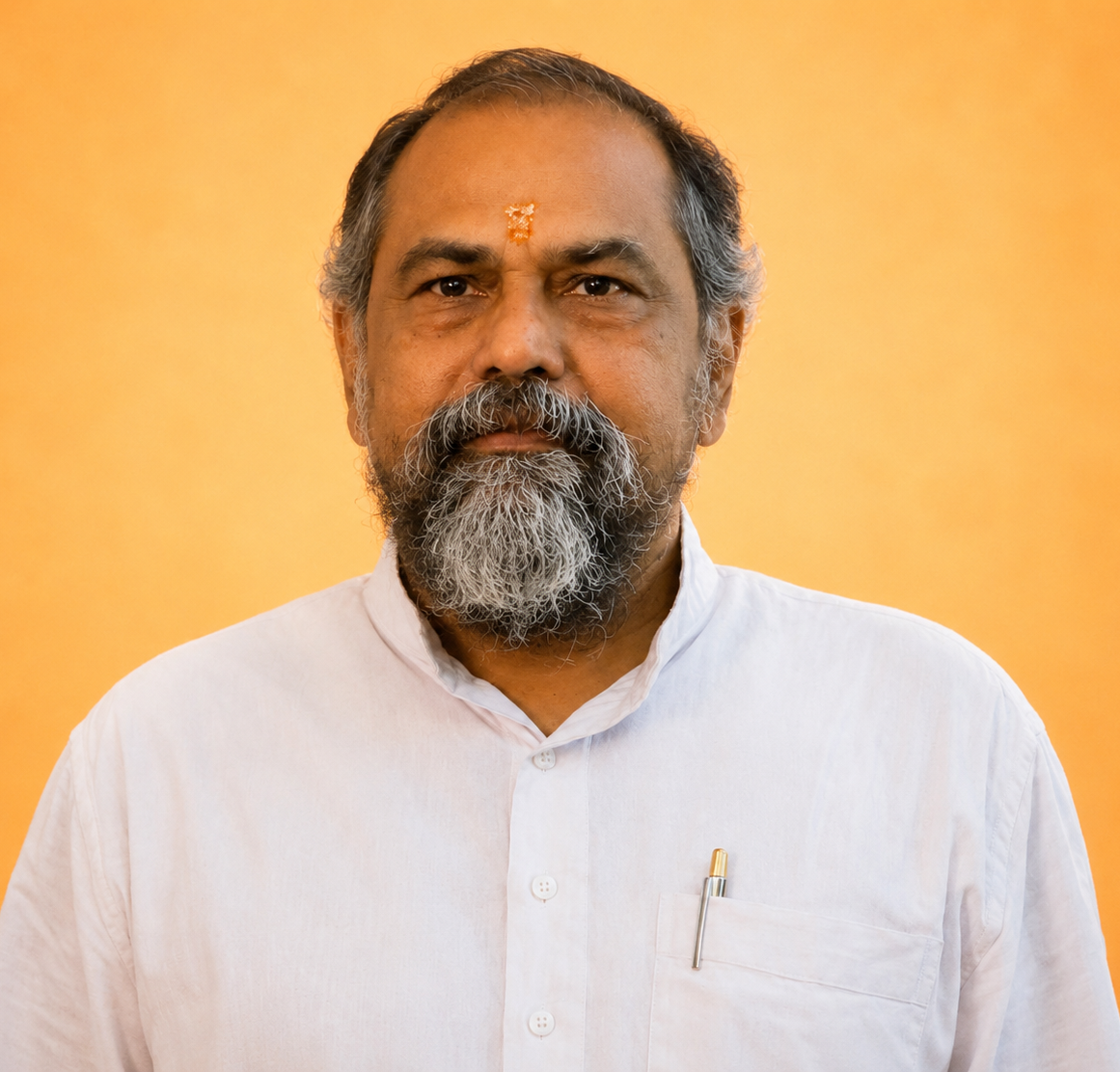 Upananda Brahmachari | HENB | New Delhi | June 5, 2026:: For nearly four years, K. Annamalai embodied the Bharatiya Janata Party’s ambitions in Tamil Nadu. A former IPS officer with a reputation for integrity, a charismatic public speaker, and an aggressive political campaigner, Annamalai emerged as the most recognizable BJP face the state had seen in decades.
To many within the BJP, he represented something larger than a state leader. He was the vehicle through which the party hoped to finally establish a durable presence in Tamil Nadu—the one major state that has consistently resisted the BJP’s rise.
His resignation from the party on June 5, 2026, therefore, is not merely the departure of a politician. It raises fundamental questions about the BJP’s strategy in Tamil Nadu and, more broadly, its long-term prospects across South India.
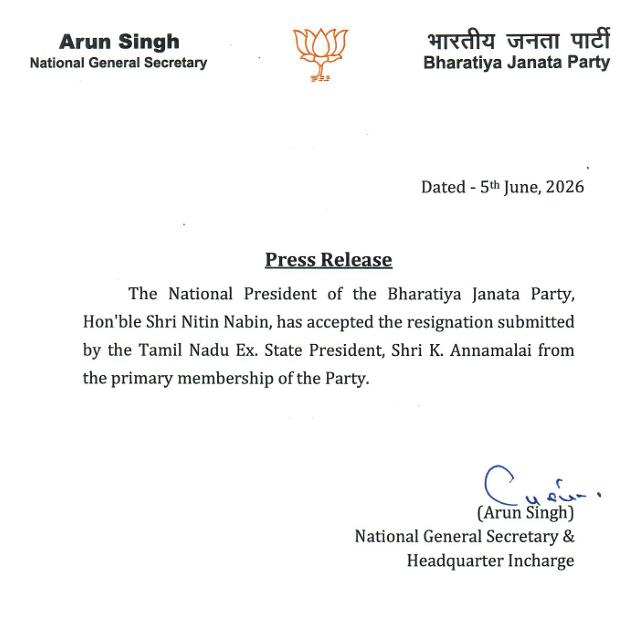
At a time when the BJP has established itself as India’s dominant national force, the South remains its most challenging frontier. Annamalai’s exit threatens to expose the weaknesses of a project that has consumed enormous political energy and resources for more than a decade.
Why Annamalai’s Resignation Matters
The significance of Annamalai’s departure lies not simply in his individual popularity but in what he represented.
Following the BJP’s failure to win a single Lok Sabha seat in Tamil Nadu in 2024, many expected the party leadership to replace him. Instead, the central leadership publicly backed him, signaling continued confidence in his ability to expand the BJP’s footprint in the state.
Yet beneath the surface, tensions were reportedly growing.
The immediate trigger appears to have been the BJP’s decision to revive its alliance with the AIADMK ahead of the 2026 Tamil Nadu Assembly elections. Annamalai had increasingly argued that the BJP could not become a serious political force by remaining permanently dependent on regional allies. He believed the party needed to build an independent grassroots organization and contest Tamil Nadu politics on its own terms.
The central leadership disagreed.
From Delhi’s perspective, electoral arithmetic demanded a partnership with the AIADMK. From Annamalai’s perspective, such alliances merely delayed the difficult but necessary task of building an autonomous BJP base in Tamil Nadu.
His resignation—and the launch of his youth-focused “We The Leaders” movement—suggests that the disagreement was no longer tactical but strategic.
The BJP chose immediate electoral calculations. Annamalai chose the longer route of independent political expansion.
BJP’s Long and Difficult Journey in Tamil Nadu
The BJP’s struggles in Tamil Nadu did not begin with Annamalai.
The party and its predecessor, the Jan Sangh, have existed in the state for decades. Yet genuine electoral success has remained elusive.
Its best performance came during the late 1990s when it was allied with the AIADMK.
- 1998 Lok Sabha Election: 3 seats
- 1999 Lok Sabha Election: 4 seats
Those remain the BJP’s best parliamentary results in Tamil Nadu. That credit goes to Dr. Subramanian Swamy and the alliance politics of the Vajpayee-Advani duo. However, the present Modi-Shah combination has shattered alliance politics in a brazen manner, from Punjab to Maharashtra and now in Tamil Nadu.
After the alliance collapsed, the party steadily declined. Even during the peak of the Narendra Modi wave in 2014, the BJP failed to make meaningful inroads. Its vote share remained marginal, and parliamentary victories proved impossible.
The Assembly elections tell a similar story.
In 2016, the BJP contested virtually the entire state and failed to win a single seat. In 2021, it managed four seats, but its vote share remained below 3 percent.
Despite increased visibility and media attention under Annamalai, Tamil Nadu continues to be one of the BJP’s weakest states electorally.
The Southern Puzzle: Where Does the BJP Stand?
Tamil Nadu is not the only challenge. Across South India, the BJP’s fortunes vary dramatically.
Karnataka: The Lone Success Story
Karnataka remains the BJP’s only genuine southern stronghold.
The party first formed a government there in 2008 under B. S. Yediyurappa and has returned to power multiple times since.
Its success rests on three pillars:
- Strong organizational backing from the RSS.
- Support from influential Lingayat communities.
- A robust cadre network in coastal and central Karnataka.
Yet even Karnataka presents challenges.
The BJP suffered a major defeat in the 2023 Assembly elections and continues to grapple with a post-Yediyurappa leadership transition. The absence of a universally accepted regional face remains a concern.
Kerala: A Historic Breakthrough, But Limited Growth
Kerala’s political landscape has traditionally been dominated by two alliances:
- The Congress-led UDF
- The Left-led LDF
For decades, the BJP struggled to break this duopoly.
The party made history in 2024 when Suresh Gopi became the first BJP candidate to win a Lok Sabha seat from Kerala.
However, many analysts attribute that victory more to personal popularity than organizational strength.
Kerala’s demographic structure also poses unique challenges. Large Muslim and Christian populations, combined with strong traditions of social reform and secular politics, have limited the appeal of conventional Hindutva messaging.
Andhra Pradesh: Dependent on Alliances
Politics in Andhra Pradesh remains dominated by regional forces.
The primary contest continues to revolve around:
- N. Chandrababu Naidu and the TDP
- Y. S. Jagan Mohan Reddy and the YSR Congress
The BJP has found success only when allied with stronger regional partners.
Without such alliances, its independent vote base remains extremely limited.
The party’s 2024 gains were achieved through cooperation with the TDP and Jana Sena rather than through its own organizational strength.
Telangana: Promise Without Power
Among southern states, Telangana currently offers the BJP its most significant growth opportunity.
The party has steadily increased its vote share and legislative presence since 2018.
Strong performances in urban centers, particularly Hyderabad, have demonstrated that the BJP can emerge as a serious political force.
Yet significant obstacles remain.
While leaders such as Bandi Sanjay Kumar and G. Kishan Reddy have built regional profiles, neither commands the statewide influence once enjoyed by figures like K. Chandrashekar Rao.
Why Does Hindutva Face Resistance in South India?
The answer lies not merely in electoral politics but in history, culture, and identity.
Tamil Nadu’s Dravidian Barrier
Tamil Nadu presents perhaps the most formidable ideological challenge to Hindutva politics.
The Dravidian movement, shaped by the ideas of Periyar E. V. Ramasamy, transformed the state’s political consciousness during the twentieth century.
The movement challenged:
- Brahminical dominance
- Social hierarchy
- Religious orthodoxy
- Perceived North Indian cultural domination
As a result, Tamil identity developed as a powerful political force independent of religious identity.
Many Tamil voters remain deeply religious and regularly visit temples. Yet they often view political Hindutva differently, seeing it as an external ideological project rather than an extension of Tamil culture.
This distinction has consistently frustrated BJP strategists.
The Language Question
Another obstacle is language.
The BJP’s opponents have repeatedly portrayed it as a vehicle for Hindi expansion.
Whether justified or not, concerns about Hindi imposition resonate strongly in southern states, particularly Tamil Nadu.
Regional language pride often outweighs national cultural narratives.
Social Justice Politics
South India has long been shaped by movements advocating:
- Reservation policies
- Backward caste empowerment
- Minority rights
- Social justice
Many voters perceive Hindutva politics as insufficiently aligned with these priorities.
As a result, social justice narratives often overshadow religious polarization in electoral contests.
BJP’s Biggest Weakness: Lack of Regional Faces
Political analysts frequently point to a recurring problem.
The BJP possesses nationally recognized leaders such as:
- Narendra Modi
- Yogi Adityanath
- Shivraj Singh Chouhan
However, outside Karnataka, the party lacks comparable regional icons in South India.
Annamalai appeared capable of filling that gap in Tamil Nadu.
His departure therefore creates a vacuum that the BJP currently struggles to fill.
Possible successors include:
- Tamilisai Soundararajan
- H. Raja
Yet neither currently commands the statewide momentum that Annamalai generated.
The Modi Paradox in Tamil Nadu
Annamalai’s departure creates another challenge for the BJP.
For years, opponents have sought to portray the Modi government as indifferent—or even hostile—to Tamil interests.
Ironically, few prime ministers have invested as much effort in celebrating Tamil language and culture as Narendra Modi.
Among the initiatives frequently highlighted by the central government are:
Promotion of Tamil Language
- Launch of the Kashi Tamil Sangamam initiative.
- Support for Tamil learning programs in Varanasi.
- Repeated public references to Tamil as one of the world’s oldest languages.
- Advocacy for medical education in Tamil.
- Support for international Tamil studies chairs and academic programs.
Celebration of Tamil Heritage
- Participation in commemorations marking 1,000 years of Rajendra Chola’s maritime achievements.
- Repatriation of Chola-era artefacts from Europe.
- Promotion of Tamil philosophical and literary traditions internationally.
- Publication of works related to Tamil saints, temples, and historical figures.
Development Projects
The central government also points to significant investments in:
- Railway modernization.
- Airport expansion.
- National highways.
- Port infrastructure.
- Industrial corridors.
- Semiconductor and technology initiatives.
The BJP argues that these efforts demonstrate genuine engagement with Tamil Nadu.
Yet electoral returns have remained limited.
This disconnect between development claims and voting behavior remains one of the biggest mysteries confronting BJP strategists.
Has the BJP’s Southern Dream Been Derailed?
The answer is both yes and no.
Annamalai’s resignation unquestionably represents a major setback.
He was arguably the BJP’s most effective communicator in Tamil Nadu and one of the few leaders capable of attracting attention beyond the party’s traditional support base.
At the same time, declaring the BJP’s southern ambitions dead would be premature.
The party remains competitive in Karnataka.
It is growing in Telangana.
It has achieved a breakthrough in Kerala.
It continues to gain influence through alliances in Andhra Pradesh.
The greatest challenge remains Tamil Nadu.
Whether the BJP can eventually succeed there depends on a question Annamalai himself repeatedly raised: should the party seek short-term gains through alliances, or endure years of struggle to build an independent political identity?
That debate now lies at the heart of the BJP’s southern strategy.
Conclusion: More Than a Resignation
K. Annamalai’s departure is not simply the exit of a state leader. It represents a moment of reckoning for the BJP’s broader South India project.
His resignation has exposed the tension between electoral pragmatism and organizational expansion, between alliance politics and independent growth, and between national messaging and regional identity.
For the BJP, the battle in South India has never been solely about winning elections. It has been about earning trust, building local acceptance, and adapting to political cultures very different from those that propelled its rise in northern India.
Annamalai believed that Tamil Nadu could eventually be won only through a patient, independent grassroots movement. The BJP leadership appears to believe alliances remain the more practical route.
History will determine which strategy was correct.
For now, one conclusion is difficult to avoid: among all the political setbacks the BJP has faced in recent years, the loss of K. Annamalai may prove to be one of the most consequential for its long-term ambitions in South India.
Postscript
There is another interesting speculation emerging from certain political circles. Tamil Nadu has historically shown a preference for strong regional parties over national parties headquartered in New Delhi. Given this political reality, some observers believe that the BJP may be allowing Annamalai to chart an independent course through his resignation and the launch of the “We The Leaders” movement.
According to this theory, Annamalai could eventually build a powerful regional political platform rooted in Tamil Nadu’s aspirations and identity. If such a movement succeeds in expanding its influence across the state, the BJP may choose to realign with him in the future, thereby benefiting from a stronger local partner rather than attempting to grow independently.
Supporters of this view argue that such a development could create a new political alternative in Tamil Nadu and strengthen the position of Hindu society in the state. However, they also point to the example of Uddhav Thackeray in Maharashtra. Once a long-standing ally of the BJP through the Shiv Sena, Uddhav eventually parted ways with the party and formed a government with ideological rivals, including the Congress and the NCP. For many BJP supporters, this remains a cautionary tale about how political expediency can transform long-standing alliances and alter ideological alignments.
As a result, those who view Annamalai as a future regional force hope that, even if he builds an independent political platform, he will continue to remain broadly aligned with the principles and causes that have defined his public career. They believe he should avoid a trajectory similar to that of Uddhav Thackeray, whose political journey is often cited by BJP supporters as an example of a regional leader distancing himself from the broader Hindutva political camp.
Whether this speculation ultimately proves correct remains to be seen. Nevertheless, it highlights the significance of Annamalai’s departure and the uncertainty surrounding the future of both Tamil Nadu politics and the BJP’s long-term strategy in South India.
Millions of Annamalai’s followers and BJP supporters continue to hope that, whatever political path he ultimately chooses, he will remain committed to the broader ideals of Hindu civilizational identity and Hindutva that have defined his public and political journey thus far.
..
The author can be contacted at upananda.br@gmail.com
2 comments on “Can BJP’s ‘Hindutva Politics’ Conquer the South After Annamalai’s Exit?”
Leave a Reply

[…] immediate dispute is framed as a demand to shut Jamia Millia Islamia if alleged anti-Hindu and anti-national activity persists.…
[…] Akhil Bharatiya Sant Samiti, Ganga Mahasabha and Akhada Parishad plan to frame a Hindu Code of Condu…. This establishes…
[…] from a government that speaks in its name. In fact, the dignity of the Kumbh requires both. The Dhami…
[…] discipline matters because Left parties allege obstruction and vandalism of their bookstalls during Durga Puja events across We…. Allegation,…


Pingback: After Annamalai’s Exit, Can BJP’s Hindutva Strategy Crack the South? Risks, Data, Paths Ahead – DharmaRenaissance Blog
Pingback: BJP’s Southern Strategy Beyond Annamalai: What Must Change – DharmaRenaissance Blog