

[…] concrete case shows why precision matters. On 9 October 2026, Hindu protesters in the Dum Dum area were reported…

Struggle for Hindu Existence
*Hindu Rights to Survive with Dignity & Sovereignty *Join Hindu Freedom Movement to make Bharat Hindu Rashtra within this lifetime *Jai Shri Ram *Jayatu Jayatu Hindu Rashtram *Editor: Upananda Brahmachari.
Khariji Madrasas Under Scanner as WB Govt Orders Strict Monitoring.
Agnimitra Paul Orders Strict Surveillance of Unrecognised Madrasas Across West Bengal.
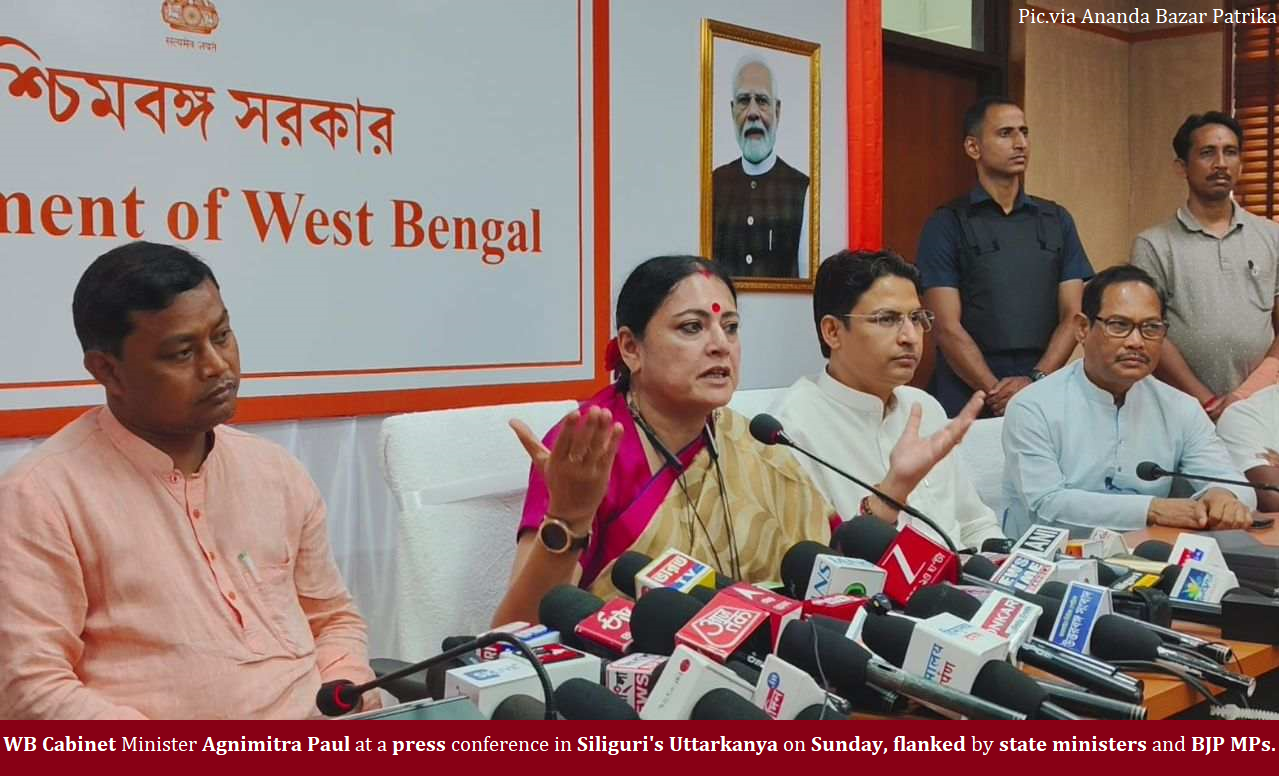
Sankirtan Das | HENB | Uttarkanya, Siliguri | June 7, 2026:: The West Bengal government has directed law enforcement agencies to intensify monitoring and investigations into Khariji (unrecognised/private) madrasas operating across the state, while simultaneously strengthening oversight of recognised madrasa institutions to ensure educational quality and compliance with established standards.
The announcement was made on Sunday by Minister Agnimitra Paul from Uttarkanya, the administrative headquarters of North Bengal. According to the minister, the government has instructed the police to maintain strict surveillance over Khariji madrasas—independent Islamic educational institutions that function without official government recognition, approval, or financial assistance.
Addressing the issue, Paul stated that the administration considers effective monitoring of unrecognised institutions essential for maintaining transparency, accountability, and adherence to legal and educational norms. Police authorities have been directed to conduct necessary investigations into the functioning of such establishments and keep a close watch on their activities.
The move forms part of a broader effort by the state government to strengthen oversight within the educational sector. While the focus is on unrecognised institutions, recognised madrasas will also come under enhanced monitoring. Authorities plan to introduce stronger mechanisms to ensure that these institutions maintain proper educational standards, provide a conducive learning environment, and comply with prescribed regulations.
Government officials indicated that the initiative is aimed at safeguarding students’ interests and ensuring that educational institutions operate within an appropriate regulatory framework. The enhanced monitoring system is expected to evaluate various aspects of madrasa administration, including infrastructure, academic practices, student welfare, and overall institutional functioning.
Khariji madrasas, unlike government-recognised institutions, operate independently and are not subject to the same level of administrative oversight. The government’s decision to increase surveillance reflects concerns regarding accountability and the need for greater supervision of educational establishments functioning outside the recognised system.
The announcement is likely to generate discussion among educational stakeholders, religious organisations, and local communities regarding the balance between institutional autonomy and regulatory oversight. Authorities have not yet disclosed specific timelines or operational details regarding the implementation of the surveillance measures, but officials indicated that the directives have already been communicated to relevant agencies.
The state government maintains that the initiative is intended to ensure transparency, improve educational governance, and uphold standards across all institutions engaged in imparting education to students.
Madrasa Survey Underway, July 5 Deadline Set
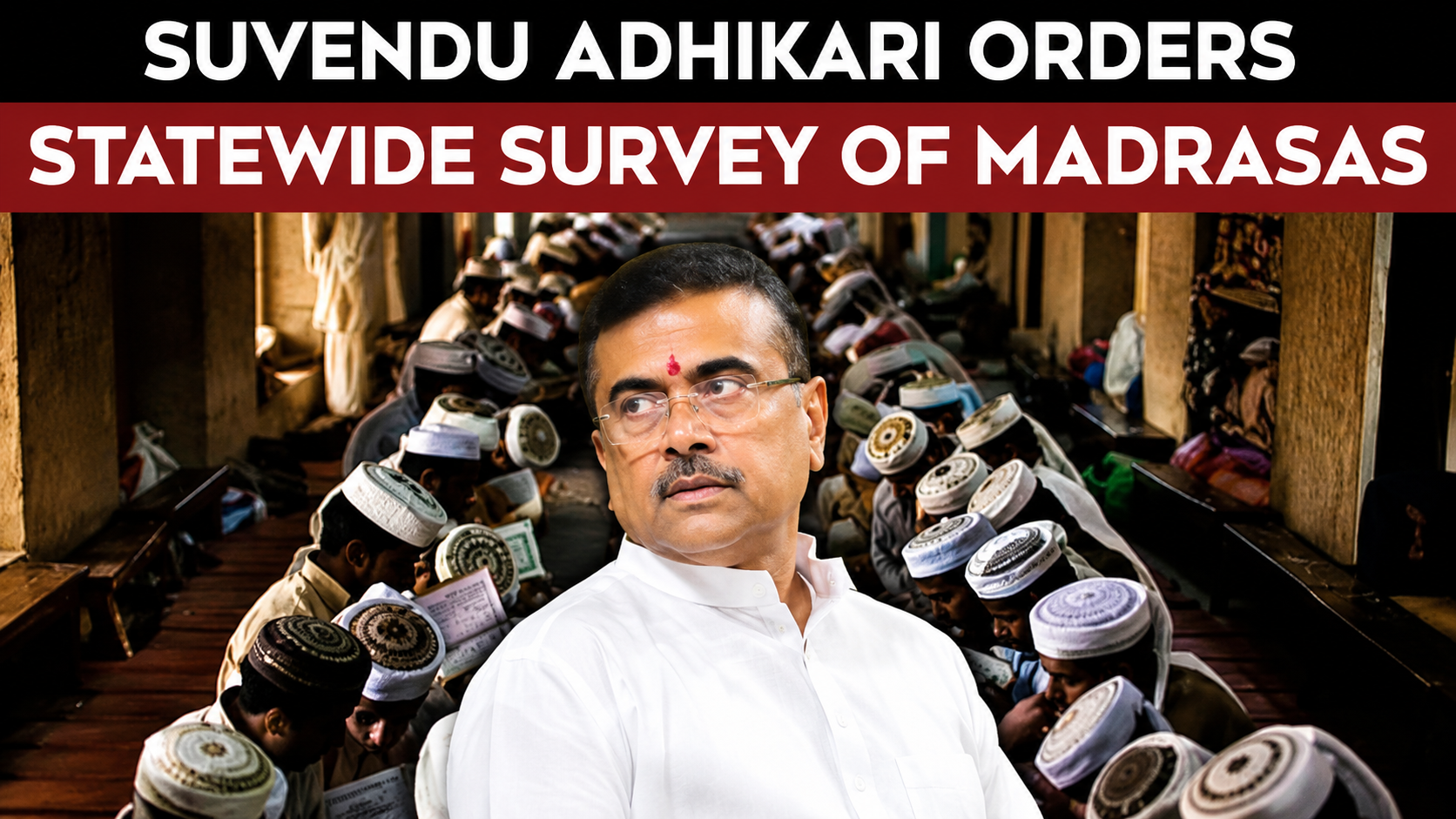
The government’s latest move comes against the backdrop of an ongoing statewide survey of madrasas ordered by the West Bengal government under Chief Minister Suvendu Adhikari. As part of the exercise, all district magistrates have been directed to submit detailed district-wise reports by July 5. According to a notification issued by the Department of Minority Affairs and Madrasa Education on June 5, district administrations have been asked to collect information on the location of madrasas, their year of establishment, registration status, aided or non-aided, found sources, availability of valid documents, and the number of students, teachers, and non-teaching staff.
The survey will also require officials to specify whether the institutions are residential, privately aided, or unaided, along with details of the courses being offered. Officials said the exercise is intended to create a comprehensive database of madrasa institutions across the state, assess their functioning and legal status, and ensure compliance with existing educational and regulatory norms. The findings are expected to play an important role in shaping future policy decisions regarding oversight, educational standards, and monitoring of both recognised and unrecognised madrasas.
Security Concerns Surrounding Unrecognised Madrasas Resurface
The state government’s decision to intensify surveillance of Khariji (unrecognised) madrasas has once again brought into focus long-standing security concerns surrounding some unregulated religious educational institutions operating in border districts of West Bengal.
For years, intelligence agencies, security experts, and political leaders have expressed concerns that certain unrecognised madrasas located along the India-Bangladesh border could be vulnerable to exploitation by extremist networks. The issue has remained a subject of political and security debate, particularly in districts bordering Bangladesh.
Former Chief Minister Buddhadeb Bhattacharjee had, during his tenure, reportedly warned about the growth of fundamentalist elements in some border regions and raised concerns regarding activities in certain madrasas situated along the international border. His remarks later became part of a wider political debate over security and cross-border infiltration.
The issue gained national attention following the 2014 Khagragarh (Burdwan) blast, in which investigators uncovered links between the accused and a madrasa in Simulia village of East Burdwan district. According to reports at the time, the National Investigation Agency (NIA) examined whether the institution had been used as a centre for radicalisation and recruitment by members of the banned Jamaat-ul-Mujahideen Bangladesh (JMB). Investigators reportedly seized documents and literature during searches, while probe agencies explored allegations that some of the accused had been exposed to extremist ideology through networks operating in the area.
The Khagragarh blast investigation subsequently revealed the presence of a wider JMB module that was allegedly involved in bomb-making, maintaining hideouts, and planning terrorist activities in India and Bangladesh. The case intensified scrutiny of border districts and renewed calls for stronger monitoring of unregulated institutions.
Security analysts argue that the concern is not with recognised madrasa education as a whole but with institutions operating outside formal regulatory frameworks, where authorities may have limited visibility regarding funding sources, curriculum, administration, or external influences. Supporters of stricter oversight contend that greater transparency and regular inspections are necessary to prevent any misuse of educational institutions by extremist elements.
Against this backdrop, Minister Agnimitra Paul’s announcement regarding stricter surveillance of Khariji madrasas is being viewed by many observers as part of a broader security and regulatory initiative aimed at ensuring accountability, monitoring suspicious activities, and maintaining educational standards across the state’s madrasa system.
However, madrasa boards and Muslim community leaders have consistently maintained that the overwhelming majority of madrasas function as legitimate educational institutions and should not be stigmatized because of allegations involving a small number of individuals or institutions. They have called for evidence-based investigations while avoiding generalisations about religious education.
As authorities move forward with enhanced monitoring measures, the debate is likely to continue over the balance between national security concerns, educational regulation, and the rights of religious institutions to operate freely within the framework of the law.
Temple Development and Women’s Economic Empowerment Initiatives
At the same press conference held at Uttarkanya on Sunday, Minister Agnimitra Paul announced a series of developmental initiatives aimed at promoting religious tourism and strengthening local economic opportunities in North Bengal. She stated that the administration has been directed to prepare, by the 20th of this month, a comprehensive list of temples that attract large numbers of devotees across the region. The exercise is part of the state government’s plan to undertake extensive infrastructure and development projects at these religious sites, with the objective of improving facilities for pilgrims and boosting tourism-related economic activity.
The minister also revealed that the government is planning to establish incense stick (agarbatti) manufacturing units in various parts of North Bengal. The initiative is intended to promote self-employment and economic empowerment among local women by creating sustainable livelihood opportunities. According to Paul, the state government is also exploring several other small-scale industrial and cottage-industry projects to generate employment, encourage entrepreneurship, and strengthen the rural economy. These measures, she said, form part of a broader strategy to combine cultural development with grassroots economic growth across the region.
..
_Agency Inputs
2 comments on “Khariji Madrasas Under Scanner as WB Govt Orders Strict Monitoring.”
Leave a Reply

[…] Gwalior, Bajrang Dal held a Trishul Diksha ceremony followed by a bike rally, with participating youth pledging to uphold…
Ok. Thank You brother for sharing this inmpoirtant information. Upananda Brahmachari, Editor in Chief, Struggle For Hindu Existence Website.
Great reporting! Just wanted to add a bit more context here. The Sarvjan Sanatan Party isn't actually a brand-new outfit—it…
[…] CBI director M. Nageswara Rao took charge as the party’s national president in Varanasi on 8 October 2026 while…


Pingback: West Bengal Orders Strict Monitoring of Unrecognised Madrasas to Safeguard Children and Standards – DharmaRenaissance Blog
Pingback: West Bengal Madrasa Oversight: A Child-First Standard – DharmaRenaissance Blog