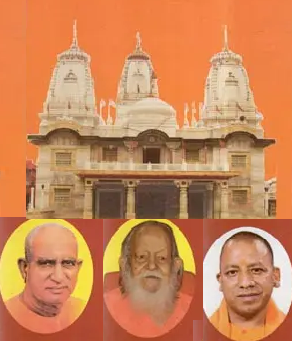


[…] modern political lineage is commonly framed as running from Mahant Digvijaynath through Mahant Avaidyanath to Yogi Adityanath. The significance…

Struggle for Hindu Existence
*Hindu Rights to Survive with Dignity & Sovereignty *Join Hindu Freedom Movement to make Bharat Hindu Rashtra within this lifetime *Jai Shri Ram *Jayatu Jayatu Hindu Rashtram *Editor: Upananda Brahmachari.
Gorakshpeeth’s Hindutva Legacy, Unloved by the RSS: From Mahant Digvijaynath to Yogi Adityanath.
“Continuation of the Same Legacy”: CM Yogi Pays Tribute to Mahant Avaidyanath.
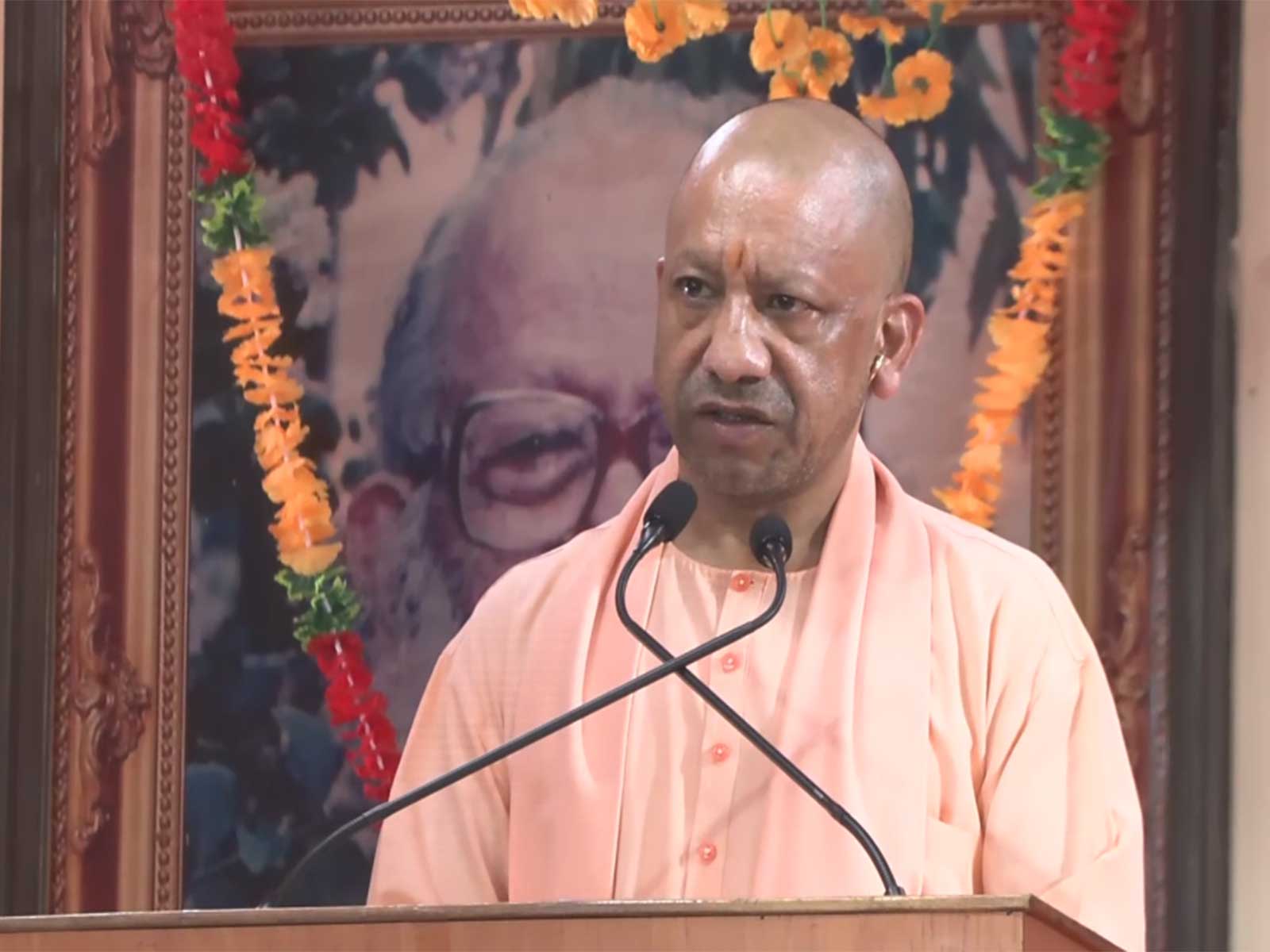 Upananda Brahmachari | HENB | Gorakhpur | Oct 1,. 2026:: Uttar Pradesh Chief Minister Yogi Adityanath on Wednesday attended a tribute ceremony in Gorakhpur marking the death anniversary of Mahant Avaidyanath. Speaking at the event, the Chief Minister said the observance represented a continuation of the legacy of the Gorakhnath Peeth and its commitment to public welfare and social harmony.
“Yesterday, we paid humble tributes to Mahant Digvijay Nath Ji,” Yogi Adityanath said, recalling the contributions of the spiritual leaders who shaped the legacy of the Gorakshpeeth.
He said the ideals of public welfare and social harmony established by Mahant Digvijay Nath continued unbroken until Mahant Avaidyanath attained eternal samadhi on Ashwin Krishna Chaturthi in 2014.
The Chief Minister highlighted the contribution of three generations of the Gorakshpeeth to the Ram Mandir movement in Ayodhya, describing their role as having been “etched in golden letters.” According to him, Mahant Digvijay Nath gave the movement revolutionary momentum, which was later carried forward with full force by Mahant Avaidyanath.
During the 1990s, under Mahant Avaidyanath’s leadership, the Ram Mandir movement reached a decisive stage, spreading from village to village and bringing saints, political leaders and ordinary people together around the Ram Janmabhoomi cause.
As president of the Ram Janmabhoomi Mukti Yagna Samiti and the Shri Ram Janmabhoomi Nirman Uchchadhikar Samiti, Mahant Avaidyanath played a significant organisational role in the movement and provided direction to its activities.
Yogi Adityanath also referred to the construction of the Ram Mandir, saying it was a matter of pride that, after a wait of five centuries, the grand temple was constructed under the supervision of his disciple.
Beyond the temple movement, Mahant Avaidyanath dedicated his life to promoting social harmony. As a religious leader, he campaigned against untouchability and caste discrimination within Hindu society.
As president of the Akhil Bharatvarshiya Avadhoot Bhesh Barahapanth Yogi Mahasabha, he mobilised saints across the country around the cause of social equality and harmony.
Deeply affected by the mass conversion of Dalits in Meenakshipuram, Mahant Avaidyanath entered politics alongside his religious activities, seeking to strengthen Hindu unity and social cohesion.
Through the Sahbhoj campaign, he promoted social equality by sharing meals in Dalit localities. He also sent a message of social harmony by dining with saints at the residence of Dom Raja in Kashi.
He further emphasised inclusivity by ensuring that the first brick of the Ram Mandir was laid by Dalit leader Kameshwar Chaupal.
In his teachings, Mahant Avaidyanath frequently cited examples from the life of Lord Ram to underline his vision of an inclusive society. He referred to Lord Ram accepting Shabari’s fruits, embracing Nishadraj and maintaining friendship with forest-dwelling communities.
He also explained that the eight arms of Goddess Durga symbolised the combined strength of the four varnas, conveying the message that unity is the true source of strength and power.
Mahant Avaidyanath also made a significant mark in electoral politics. He was elected five times as an MLA from Maniram and four times as a Member of Parliament from Gorakhpur.
He also held key positions in the Akhil Bharatiya Hindu Mahasabha, including vice president and general secretary. Through these roles, he combined spiritual leadership with social reform, political engagement and public service.
The tribute ceremony thus recalled Mahant Avaidyanath’s multifaceted legacy—as a religious leader, social reformer, political figure and prominent participant in the Ram Janmabhoomi movement—and underlined the continuity of that legacy through the Gorakshpeeth.
The Continuing ABHM Legacy of Gorakshpeeth
In the same tradition of the Gorakshpeeth, Mahant Yogi Adityanath carries forward the political and ideological legacy associated with his Guru, Mahant Avaidyanath, and his Dadaguru, Mahant Digvijaynath. The wider political lineage also connects the Jana Sangh, founded in 1951 under the leadership of Dr. Syama Prasad Mookerjee, with the BJP, which was formally established in 1980 after the political reorganisation of the former Jana Sangh stream.
From this perspective, the Jana Sangh may be described metaphorically as the “father” of the present BJP, while the earlier Hindu political tradition represented by the Hindu Mahasabha can be viewed by its proponents as an important antecedent in the evolution of Hindu political thought. However, the precise organisational lineage is more complex than a simple family-tree analogy: the BJP itself formally traces its immediate political heritage to the Jana Sangh.
Against this historical backdrop, the continuing role of the Gorakshpeeth—from Mahant Digvijaynath and Mahant Avaidyanath to Yogi Adityanath—represents a distinct strand of Hindu religious, social and political engagement that has evolved across generations.
In the tradition of the Gorakhpur Math, Mahant Adityanath carries the same legacy of his Guru and Dadaguru in Hindutva politics. From the ABHM, the Jana Sangh was formed in 1951, and the BJP emerged from the Jana Sangh in 1980. In other words, the Jana Sangh is the “father” of the BJP, and the ABHM is the “grandfather” of the present BJP. Unfortunately, the present BJP often tends to deny the legacy of the Hindutva politics of the ABHM.
The Hindutva Legacy Unloved by the RSS
As RSS failed to control the ABHM and the Jana Sangh’s Hindutva politics, it formed the BJP to open its own political platform for Hindutva and seek influence over Hindu voters. This, critics argue, represents a bitter chapter in the history of Hindutva politics associated with the RSS.
Gorakshpeeth’s Hindutva legacy was never loved by the RSS; Hence, Yogi Adityanath still faces problems within the BJP over his projection as India’s Next Hindutva Prime Minister.
…
_Inputs from ANI.
One comment on “Gorakshpeeth’s Hindutva Legacy, Unloved by the RSS: From Mahant Digvijaynath to Yogi Adityanath.”
Leave a comment


Pingback: How to Read Gorakshpeeth’s Political and Hindutva Legacy – DharmaRenaissance Blog