
Struggle for Hindu Existence
*Hindu Rights to Survive with Dignity & Sovereignty *Join Hindu Freedom Movement to make Bharat Hindu Rashtra within this lifetime *Jai Shri Ram *Jayatu Jayatu Hindu Rashtram *Editor: Upananda Brahmachari.
Dissident Bangladeshi Author Taslima Nasrin’s Event in Kolkata Triggers Intolerance Debate: Why Do Staunch Hindutva Activists Welcome Taslima Nasrin?
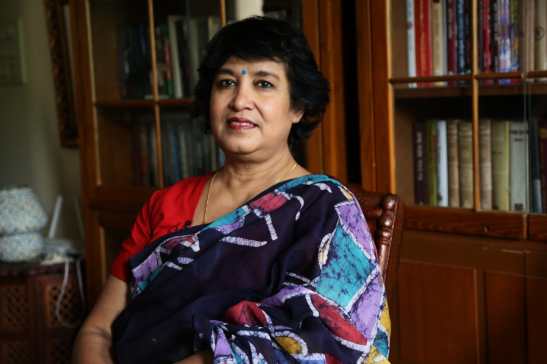
Exiled Bangladeshi Author Taslima Nasrin’s Return to Kolkata Reignites Debate on Free Speech, Secularism and Political Intolerance; Hindutva Groups Extend Welcome After 19 Years.
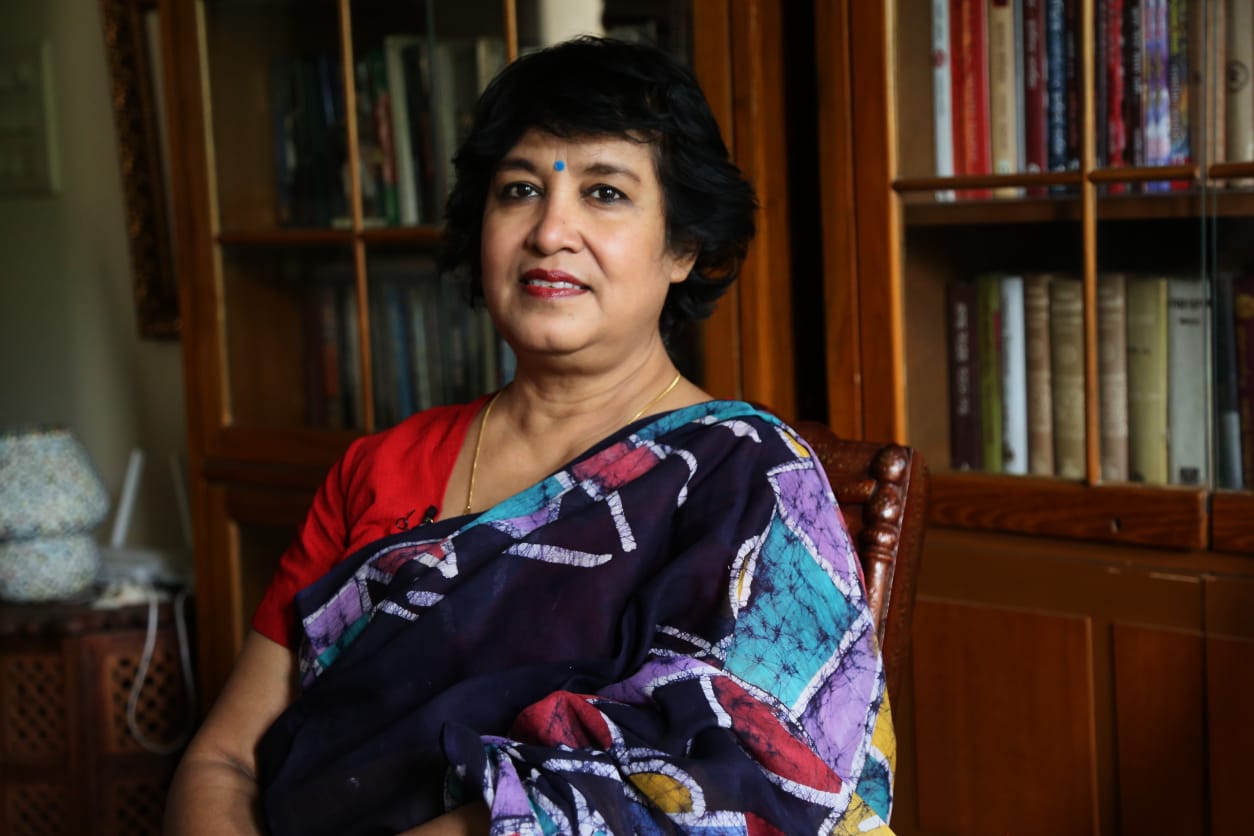
Sankirtan Das | HENB | Kolkata | July 26, 2026:: The scheduled return of exiled Bangladeshi author Taslima Nasrin to Kolkata on August 1—nearly 19 years after she was forced to leave the city amid violent protests by Islamist groups—has revived an intense debate over freedom of expression, religious intolerance, secular politics, and the changing political landscape of West Bengal.
Nasrin, a Bangladeshi-born writer, physician, feminist, and self-declared atheist, has lived in exile since 1994 after the publication of her novel Lajja (“Shame”), which portrayed the persecution of Hindus in Bangladesh following the demolition of the Babri Masjid in India. The book provoked widespread outrage among Islamist organisations in Bangladesh, leading to a fatwa, death threats, and eventually her exile. She later acquired Swedish citizenship and has spent years living across Europe, the United States, and India.
Kolkata: A City She Considered Home
Among all Indian cities, Kolkata has held a special emotional significance for Nasrin due to its linguistic, literary and cultural ties with Bangladesh. She shifted to Kolkata in 2004 hoping to rebuild her life among Bengali readers.
However, even before her arrival, the then Left Front government banned her autobiography Dwikhandito (“Split in Two”), arguing that its contents could disturb communal harmony. Islamist organisations consistently opposed her presence in the city, accusing her of insulting Islam.
The controversy reached its peak in November 2007, when violent protests erupted in Kolkata. The Left Front government eventually relocated Nasrin from the city and she was later shifted to Delhi under Central Government protection. Since then, successive governments in West Bengal, including the Trinamool Congress (TMC), did not facilitate her return despite repeated appeals.
August 1 Event Marks Political and Symbolic Return
Nasrin is now scheduled to participate in a public programme in Kolkata on August 1, organised jointly by:
- Poschimbonger Jonyo
- Secular Mission Trust
- Human Rights Beyond Frontiers Foundation (HRBFF)
The event assumes political significance because West Bengal is now governed by the BJP, and Chief Minister Suvendu Adhikari is expected to attend.
Supporters describe the occasion as a symbolic correction of what they consider a historical injustice committed in 2007, when a globally recognised writer was forced out of Kolkata due to threats from Islamist groups.
Why Are Hindutva Activists Welcoming Taslima Nasrin?
The enthusiastic support extended by several Bengali Hindutva organisations has surprised many observers because Nasrin has historically identified herself as a feminist, atheist and liberal intellectual rather than a political conservative.
However, organisers argue that their support stems from two principal reasons.
Speaking to HENB, Bengali Hindutva activist Upananda Brahmachari said every Bengali Hindu should welcome Nasrin for two reasons.
First, he said, she was “inhumanly driven out of Kolkata by Islamist pressure with the support of the then administrative machinery,” and therefore her return represents the restoration of a long-denied democratic right.
Secondly, Brahmachari argued that Nasrin consistently highlighted the persecution of Hindus and other minorities in Bangladesh through works such as Lajja and repeatedly exposed religious extremism, discrimination against women and systemic oppression under Islamist influences.
According to him, irrespective of ideological differences, writers who defended persecuted minorities deserve public support.
Mohit Roy: “The Beginning of Another Era”
Among the principal organisers is Mohit Roy, head of Poschimbonger Jonyo, a Hindu nationalist think tank. Roy previously led the BJP’s refugee cell and has long campaigned for the rights of Bengali Hindu refugees from Bangladesh through the Campaign Against Atrocities on Minorities of Bangladesh (CAAMB).
Roy argues that Nasrin’s expulsion in 2007 represented the moment when Bengal’s celebrated secularism surrendered before what he calls “fatwa culture.”
“When Taslima Nasrin was driven out, a few intellectuals protested briefly. But later no one demanded her return or insisted that the government protect her freedom of expression,” Roy has said.
According to him, her return under the present government demonstrates that the state is no longer willing to capitulate to religious fundamentalist pressure.
The Organisers
Besides Poschimbonger Jonyo, the programme is being organised by Secular Mission Trust, headed by advocate Osman Gani Mallick, and Human Rights Beyond Frontiers Foundation (HRBFF), headed by Hindutva activist Shantanu Sinha, who has also been associated with Hindu Samhati, founded by late Fire-brand Bengali Hindutva leader Tapan Ghosh.
Advocate Osman Gani Mallick is known for advocating reforms within Muslim society and has publicly supported several contentious policy decisions, including the Citizenship Amendment Act (CAA), the abrogation of Article 370 relating to Jammu & Kashmir, and the proposed Uniform Civil Code (UCC). He currently serves as the only Muslim member of the West Bengal Government’s committee constituted to examine the UCC.
Critics Raise Questions
The participation of organisations associated with the Hindu nationalist movement has drawn criticism from sections of Left-leaning intellectuals and civil society activists.
Critics argue that while Nasrin has consistently criticised Islamist extremism, she has seldom spoken with similar intensity against alleged Hindu majoritarian violence or extremism in India.
Some observers suggest that her dependence on visa extensions from the Government of India may have influenced her public positions, although Nasrin herself has repeatedly denied tailoring her opinions for political convenience.
Veteran journalist Avijit Ghosal has argued that Nasrin’s foremost priority remains her ability to continue living in India, making her unlikely to directly confront the present political establishment.
Nasrin Hits Back at Left Critics
Nasrin has strongly rejected criticism from Left circles regarding her participation in the Kolkata programme.
In a recent social media post, she accused Left intellectuals of hypocrisy, asserting that they were the very people who failed to defend her freedom when she was expelled from Kolkata in 2007.
She argued that many self-described progressives refuse to recognise criticism of Islam as a legitimate exercise of free speech.
“They continue speaking the language of jihadists while wearing the mask of progressivism,” she wrote, adding that their liberalism “ends at the doorstep of Islam.”
She also referred to Osman Gani Mallick as “a progressive Muslim,” while not specifically mentioning the other two organisers.
A Long History of Controversies
Nasrin’s relationship with Kolkata has remained turbulent even after her departure.
In 2012, the launch of her book Nirbashan (“The Exile”), which chronicled her forced departure from Kolkata, was cancelled after objections from sections of Muslim organisations.
In 2013, leaders at a public rally reportedly celebrated having driven Nasrin out of Kolkata and preventing author Salman Rushdie from attending literary events in the city.
The same year, protests also delayed the broadcast of a Bengali television serial based on one of her stories despite assurances that it contained no religious content.
Throughout this period, Nasrin repeatedly accused successive Left Front and TMC governments of sacrificing freedom of expression to preserve minority vote banks.
A Larger Debate on Indian Secularism
The controversy has once again highlighted India’s complex record on balancing freedom of expression with religious sensitivities.
Observers point to several landmark controversies, including the early ban on Salman Rushdie’s The Satanic Verses in India, the exile of painter M.F. Husain after threats from Hindu extremist groups, and repeated restrictions on artistic or literary expression across ideological divides.
For many commentators, the Nasrin episode illustrates that pressures against free speech have emerged from different religious and political constituencies at different times.
Differing Interpretations
Researcher Somen Sengupta believes Nasrin should continue focusing on exposing Islamist extremism because, in his view, numerous voices already criticise Hindu majoritarianism, whereas relatively fewer public intellectuals openly confront Islamist intolerance.
Actor Kaushik Sen, on the other hand, argues that Kolkata’s liberal civil society failed to defend Nasrin’s freedom when it mattered most, thereby allowing today’s political forces to reshape the narrative in their favour.
According to Sen, both the Left Front and the TMC succumbed to electoral calculations rather than standing firmly for freedom of expression.
Political Significance Beyond Literature
For the BJP and affiliated organisations, Nasrin’s return serves as evidence that the political environment in West Bengal has fundamentally changed after the party assumed power in the state.
Supporters portray the event as the restoration of a writer’s democratic rights and a repudiation of religious intimidation.
Critics, however, contend that the event is also politically symbolic, enabling the ruling establishment to project itself as a defender of free speech while raising questions about whether similar standards are consistently applied across ideological and religious contexts.
More than a homecoming
Taslima Nasrin’s return to Kolkata is far more than the homecoming of an exiled Bengali writer. It has reopened unresolved questions surrounding freedom of speech, religious extremism, secular politics, minority rights, electoral calculations, and the responsibilities of governments to protect dissenting voices.
For supporters, the August 1 programme represents long-delayed justice for a writer who was forced out of a city she loved. For critics, it also reflects the political contest.
…
_Inputs from Agencies.


[…] 14 October 2026, Anand Dubey resigned from Shiv Sena (UBT), citing ideological differences and sayin… Two facts therefore stand…
[…] 13 October 2026, multiple complaints were reported against CPI(M) leader and advocate Bikash Ranjan Bhattacharya in W…. The complainants…
[…] a reactionary state. This is worrying. Already, Hindu radicals have occupied public discourse and have won favours from some…
no you are a fool
Wishing all success to his journey