
Struggle for Hindu Existence
*Hindu Rights to Survive with Dignity & Sovereignty *Join Hindu Freedom Movement to make Bharat Hindu Rashtra within this lifetime *Jai Shri Ram *Jayatu Jayatu Hindu Rashtram *Editor: Upananda Brahmachari.
Mumbai Book Festival Turns Saffron: RSS, Hindutva and Sanatan Literature Dominate Stalls.
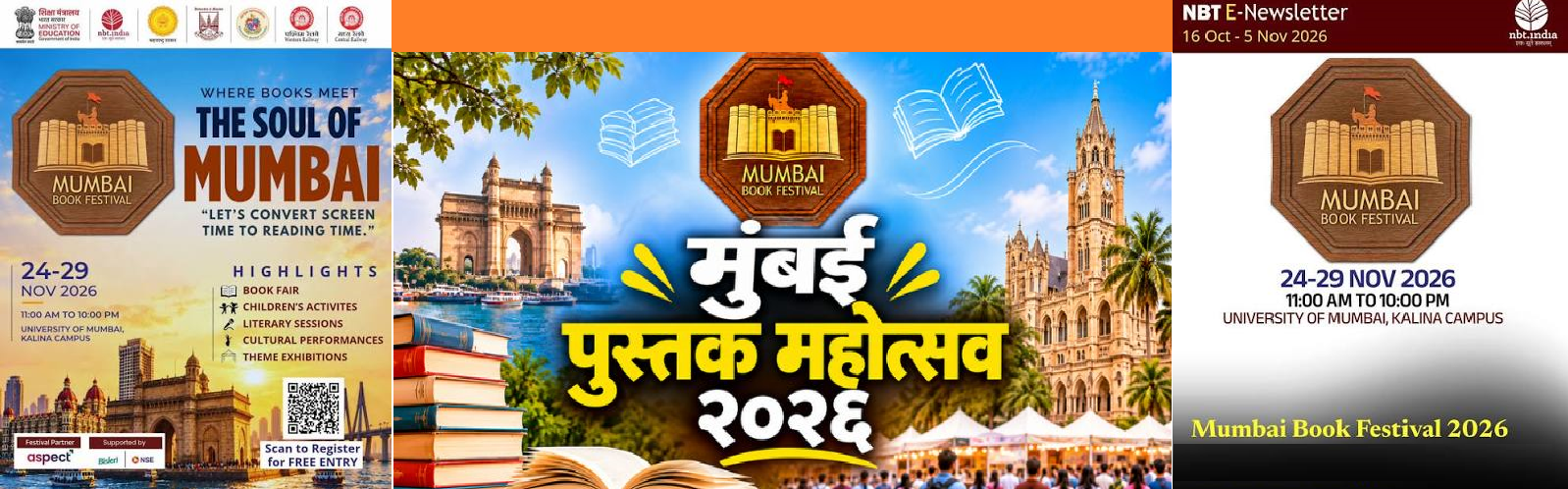
‘Saffronised’ Mumbai Book Festival: RSS, Hindutva and Sanatan Literature Take Centre Stage; Left-Wing Activist Alleges ABVP Intimidation.
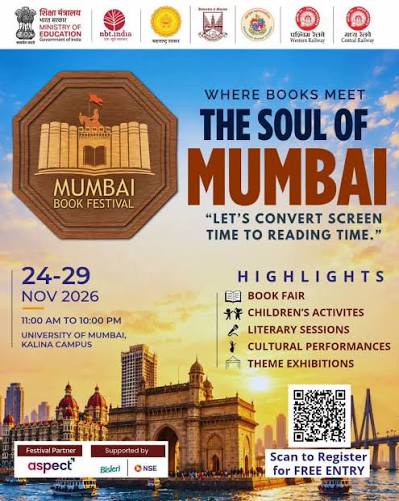 Upendra Bharti | HENB | Mumbai | Nov 27, 2026:: The first-ever Mumbai Book Festival has triggered a political and ideological debate over the growing visibility of Hindu nationalist, RSS and Sanatan Dharma-related literature, with a political activist describing the event as “completely saffronised” and alleging that members of the Akhil Bharatiya Vidyarthi Parishad (ABVP) attempted to intimidate organisers of a stall selling Marxist literature.
The six-day literary extravaganza, being organised by the National Book Trust (NBT), under the Union Ministry of Education, at the University of Mumbai’s Kalina Campus from November 24 to 29, has witnessed a substantial presence of literature relating to Hinduism, Sanatan Dharma, the Rashtriya Swayamsevak Sangh (RSS), yoga, spirituality and India’s religious and cultural traditions.
The noticeable presence of such literature has drawn criticism from sections of the Left-leaning political and literary fraternity, which has questioned what they perceive as the ideological character of the festival.
However, the allegations of intimidation at a Marxist bookstall have brought a separate dimension to the controversy, raising questions about ideological disagreements and the freedom of different literary and political traditions to coexist at public book festivals.
Hindu nationalist and Sanatan literature reportedly dominate several stalls
Prashant Pundir, a Mumbai-based writer, poet and political activist, raised the issue through a post on X on November 25, describing the festival as “completely saffronised”.
Speaking to the Media, Pundir maintained that his observation was not restricted to the presence of a few individual stalls but concerned the overall ideological character of the festival, particularly in Hangar 2.
According to him, a substantial section of the exhibition space was occupied by literature associated with the RSS and the broader Hindu nationalist movement.
He specifically referred to books on RSS founders and ideologues, including M.S. Golwalkar and K.B. Hedgewar, copies of the Manusmriti, and a wide range of publications dealing with Hinduism, Sanatan Dharma, yoga, spiritual traditions and various Hindu gurus.
Pundir also narrated an experience of enquiring about a copy of the Manusmriti at one of the stalls. He alleged that the seller was enthusiastic about selling the book, even offering him a discount and explaining the importance of reading the ancient text to understand Indian culture.
He acknowledged that other literary traditions and ideological perspectives were also represented at the festival. However, he argued that the scale and visibility of RSS and Hindutva-related publications were disproportionate and had substantially shaped the event’s overall character.
“I haven’t seen a book festival with this kind of overwhelming presence of Hindutva literature before,” he reportedly observed.
Literature from different religious traditions also present
Despite his criticism, Pundir acknowledged that the festival was not exclusively devoted to Hindu nationalist publications.
He pointed out that several stalls were selling Urdu literature, including works by renowned poets Jaun Elia and Ahmad Faraz. Books relating to Buddhism, Christianity and Sikh religious personalities were also available.
Additionally, a stall displaying literature concerning Palestine and Israel was reportedly present.
Pundir conceded that these literary traditions had not been excluded from the festival. His objection, however, centred on what he described as the disproportionate representation of RSS and Hindutva-related publications compared with other ideological and religious literature.
The observations have highlighted the larger debate over the representation of competing political, cultural and intellectual perspectives at literary events.
ABVP members visit Marxist literature stall; organiser confirms incident
Meanwhile, allegations of intimidation and disruption at a stall selling Marxist and progressive literature have added to the controversy.
According to Pundir, members of Jan Chetna, along with activists associated with the Disha student organisation, were operating a stall offering Marxist publications and progressive literature.
He alleged that on November 24, a group of people identified as members of the ABVP, the student organisation affiliated with the RSS, approached the stall and attempted to create disturbances and provoke confrontations.
Pundir claimed that the incident involved attempts to intimidate the stall organisers and disrupt their activities.
He expressed concern that a book festival, which should provide space for different intellectual and political traditions, was witnessing such confrontational behaviour.
However, the allegations of physical intimidation need to be distinguished from the account of the stall organiser, who confirmed that ABVP members had visited their stall but did not describe any actual violence.
Stall organiser says ABVP members wanted to create a scene
Supreeth Ravish, who organises the stall selling progressive and revolutionary literature, confirmed to the Media that ABVP members had approached them.
According to Ravish, the visitors appeared intent on creating a scene at the stall.
He also indicated that such confrontations had become relatively routine in the prevailing political atmosphere.
The stall organiser maintained that they were operating within the law and were prepared to comply with any legitimate instructions issued by the festival authorities.
He reportedly questioned why the ABVP members were attempting to create a disturbance instead of approaching the concerned authorities if they had objections to the literature being displayed.
Ravish further stated that the National Book Trust had not communicated any specific violation or objection concerning their stall.
He maintained that the organisers would abide by any formal directions issued by the NBT and challenged those raising objections to follow the appropriate institutional procedure.
Importantly, he did not report any physical violence at the stall, although he confirmed the visit by ABVP members and the ensuing confrontation.
What literature was being sold at the Marxist stall?
The stall was reportedly offering a collection of books representing progressive, revolutionary and critical literary traditions. The Hindutva activists present at the festival noticed anti-Hindu propaganda in many books available at the Marxist stalls.
Its collection included science publications, novels by renowned Marathi Dalit writer Baburao Bagul, and poetry by prominent Marathi literary personalities such as Kusumagraj, Vrinda Karandikar and Narayan Surve.
Ravish defended the nature of the collection, arguing that such literature encourages readers to think critically about contemporary society, question prevailing circumstances and engage with issues of social transformation.
He expressed the hope that the publications would encourage people to come together and work towards changing the existing state of affairs.
Pundir, meanwhile, said he had received information about the incident directly from the people operating the stall. He admitted that he was unaware of whether a formal complaint had subsequently been lodged with the police, university authorities or the festival organisers.
He also expressed scepticism about whether complaints involving student organisations such as the ABVP would result in meaningful action.
VHP, Sanatan Sanstha, BAPS and Gita Press among Hindu organisations represented
Beyond the controversy surrounding the Marxist stall, the festival has also drawn attention for the participation and representation of several organisations associated with Hindu religious, cultural and spiritual activities.
According to the supplied information, organisations and institutions including the Vishva Hindu Parishad (VHP), Sanatan Sanstha, BAPS, Ramakrishna Mission and Gita Press have participated directly or through their publications being made available at different stalls.
Their presence has added to the visibility of literature concerning Hindu religious traditions, Sanatan Dharma, spirituality, cultural heritage and the teachings of Hindu saints and spiritual personalities.
This wider representation of Hindu religious and cultural publications has become an important feature of the festival, particularly against the backdrop of the criticism raised by sections of the Left-leaning literary and political fraternity.
A departure from the usual ideological character of literary gatherings?
The controversy has also brought into focus a broader question concerning the ideological composition of book festivals in India.
Literary gatherings have traditionally provided platforms for a wide spectrum of political, social, religious and cultural viewpoints. However, critics of the prevailing literary establishment have frequently alleged that Left-liberal, secular and anti-national narratives receive disproportionate visibility at several intellectual and cultural platforms, while Hindu civilisational perspectives and nationalist literature receive comparatively less attention.
Against this backdrop, the substantial visibility of RSS-related publications, Hindu religious texts, Sanatan Dharma literature and books on India’s spiritual traditions at the Mumbai Book Festival has been viewed by sections of Hindu cultural circles as a notable development.
The presence of publications relating to Hindu ideologues, religious scriptures, spiritual organisations and traditional knowledge systems has also demonstrated the demand for literature beyond conventional Left-liberal intellectual frameworks.
While Pundir has characterised this development as an instance of excessive saffronisation, others may view the wider availability of such publications as an expression of the growing readership and public interest in India’s Hindu civilisational and cultural heritage.
Nevertheless, the presence of different ideological traditions at a public literary event should ideally be accompanied by mutual respect and an atmosphere in which readers can freely explore, purchase and discuss books representing contrasting viewpoints.
Six-day festival attracts publishers, authors and readers
The Mumbai Book Festival 2026 is the first edition of the event and is being organised by the National Book Trust in collaboration with the Government of Maharashtra, the Brihanmumbai Municipal Corporation (BMC) and the University of Mumbai.
The festival, scheduled from November 24 to 29, features more than 200 publishers, over 600 bookstalls and participation by more than 100 authors, alongside literary discussions, book launches, cultural performances, thematic exhibitions and children’s activities.
Maharashtra Chief Minister Devendra Fadnavis inaugurated the festival on November 24. According to the NBT, nearly one lakh book lovers attended the opening day.
The Chief Minister also announced that Mumbai would host the book festival annually, giving the city a dedicated platform for literary and cultural engagement.
The festival is open to visitors between 11 am and 10 pm, with free entry.
NBT’s response awaited
As the controversy gains attention, the National Book Trust’s position on the alleged confrontation at the Marxist literature stall remains unclear. No official response from the NBT concerning the allegations was reported in the account published by some Media posts.
The incident has therefore left several questions unanswered, including whether the ABVP members had raised any specific objection to the publications, whether the festival authorities were formally approached and whether any complaint was subsequently lodged.
Ultimately, the Mumbai Book Festival has emerged not merely as a platform for publishers and readers but also as a reflection of the competing ideological and cultural currents shaping India’s contemporary literary landscape.
While the visible presence of Hindu nationalist and Sanatan Dharma-related literature has provoked criticism from Left-leaning activists, the reported confrontation at the Marxist stall has underlined the importance of ensuring that ideological differences do not translate into intimidation or disruption.
A genuinely inclusive book festival should provide equal opportunities for diverse literary traditions to reach readers, allowing books, arguments and ideas—not intimidation—to determine the course of intellectual engagement.
…
_Agency Inputs.


[…] 26 November 2026, VHP accused the TVK government of defying a Supreme Court order in the Deepathoon …, sought…
[…] 25 November 2026, four people were reported arrested in Murshidabad as Chief Minister Suvendu Adhikari declared cow pr… and…
[…] established event is narrow but significant: a member of Savarkar’s family sent Sonia Gandhi a legal notice alleging that…
[…] 24 November 2026, a spontaneous street protest took place in Diamond Harbour. Demonstrators opposed the persecution of Hindus in…
[…] West Bengal, two political moves have emerged: Samik Bhattacharya has called for statewide street protests, while Suvendu Adhikari has…