

Government Of India should stop the grants immediately. Let them get finance from elsewhere. Sincerely, Rajalakshmi Paramasivam

Struggle for Hindu Existence
*Hindu Rights to Survive with Dignity & Sovereignty *Join Hindu Freedom Movement to make Bharat Hindu Rashtra within this lifetime *Jai Shri Ram *Jayatu Jayatu Hindu Rashtram *Editor: Upananda Brahmachari.
Hindu Faith Mocked, Gen Z Women Harassed: NCW Exposes ‘Toxic Culture’ at TCS Nashik
NCW Flags ‘Deeply Toxic’ Workplace at TCS Nashik, Cites POSH Violations and Religious Harassment Allegations Against Hindus.
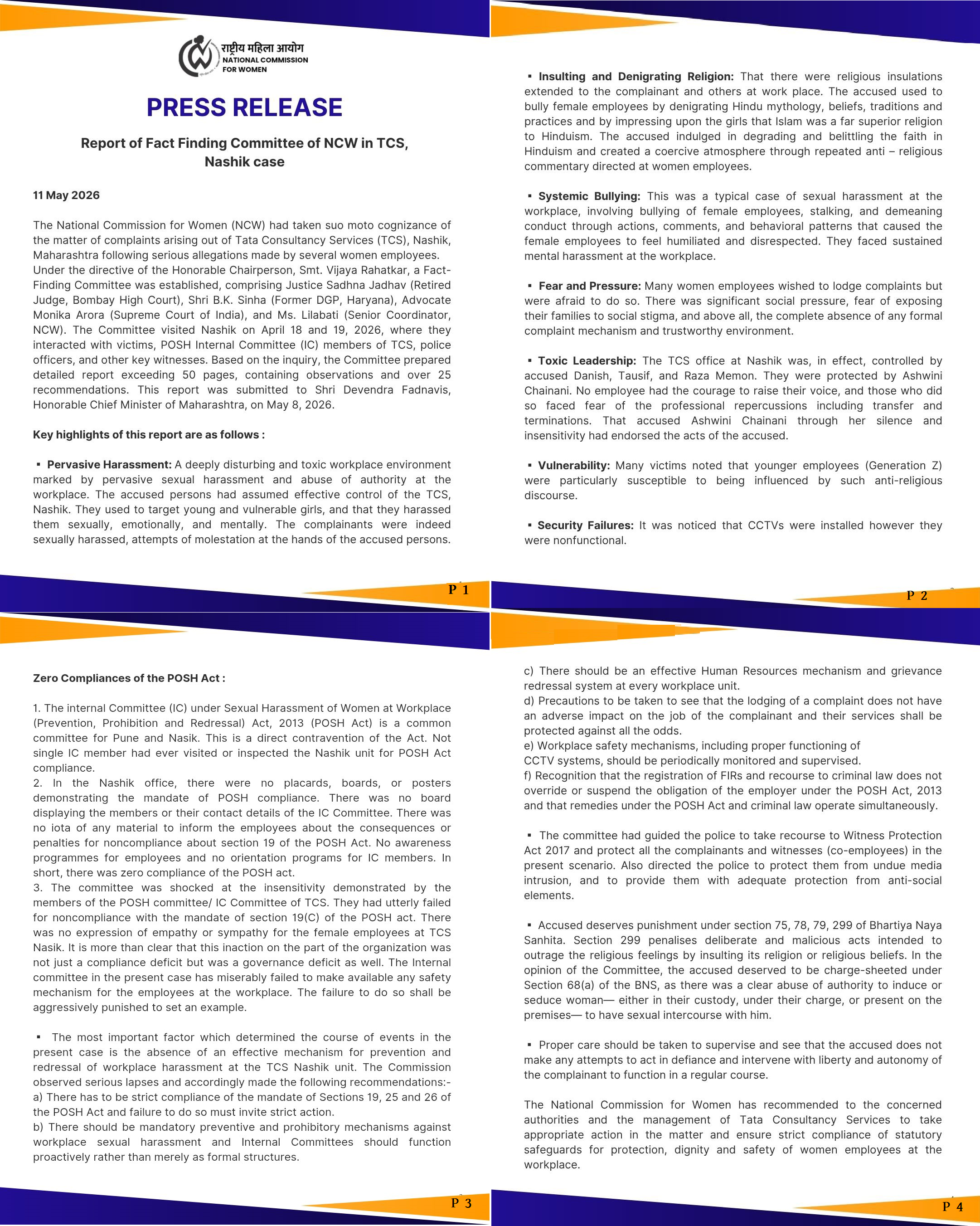
Upendra Bharti | HENB | Nashik, Maharashtra | May 12, 2026:: The National Commission for Women (NCW) has released a detailed report on the alleged sexual harassment case at Tata Consultancy Services’ (TCS) Nashik unit, describing the workplace as “deeply disturbing” and “toxic,” while highlighting serious lapses in the implementation of the Prevention of Sexual Harassment (POSH) Act.
The report, submitted to Maharashtra Chief Minister Devendra Fadnavis, alleges that young Hindu women employees—particularly those from Generation Z—were subjected to sustained sexual, emotional, and religious harassment by accused individuals who allegedly exercised unchecked authority within the office.
According to the NCW, the accused “used to target young and vulnerable girls” and subjected them to “sexual, emotional, and mental harassment,” including alleged attempts of molestation. The Commission stated that the complainants had indeed faced sexual harassment and that the organisation failed to create a safe and responsive grievance redressal mechanism.
Key Accused in Police Custody
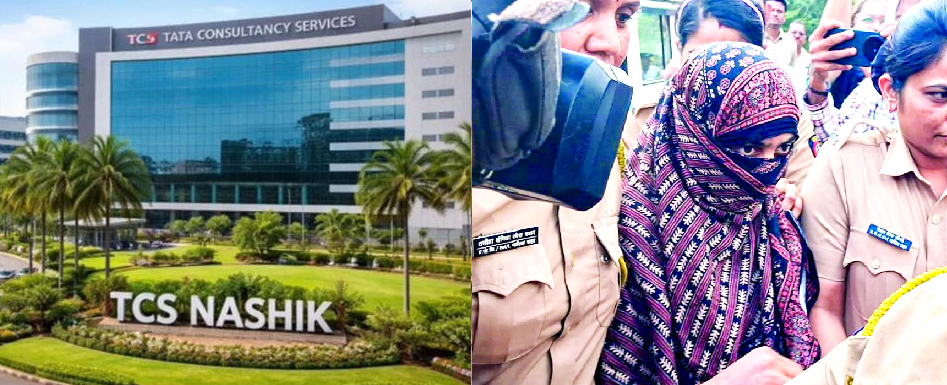
The principal accused in the case was taken into police custody last week and is currently being presented before the Nashik Road Court. Authorities are continuing their investigation into the allegations.
While the NCW report does not pronounce criminal guilt—which remains subject to judicial proceedings—it raises serious concerns regarding workplace conduct, governance failures, and institutional negligence at the Nashik office.
Allegations of Religious Harassment of Hindus
One of the most contentious aspects of the report relates to allegations of religious targeting within the workplace.
The NCW stated that female employees were allegedly bullied through repeated derogatory remarks about Hindu beliefs, mythology, traditions, and practices. The report further claimed that the accused attempted to portray Islam as “a far superior religion to Hinduism,” thereby creating what the Commission described as a “coercive atmosphere.”
“The accused indulged in degrading and belittling the faith in Hinduism and created a coercive atmosphere through repeated anti-religious commentary directed at women employees,” the report stated.
The Commission also noted that younger employees, particularly Gen Z workers, were considered more vulnerable to such influence and pressure.
These allegations have intensified public debate online, with some social media users framing the controversy in communal terms and invoking narratives such as “Love Jihad” and forced religious conversion. However, no official investigative agency has confirmed such claims, and authorities have not announced any charges related to religious conversion.
POSH Mechanism Found ‘Ineffective and Non-Functional’
A major focus of the NCW report was the alleged failure of the company’s internal POSH compliance system.
The Commission found that the Internal Committee (IC), mandated under the POSH Act, was “largely ineffective and non-functional,” making it difficult for victims to file complaints or seek institutional support.
Among the deficiencies highlighted were:
- Absence of POSH awareness posters and display boards in the office
- Lack of visible information regarding IC members and complaint procedures
- Failure to communicate penalties for non-compliance under Section 19 of the POSH Act
- No visits or inspections by POSH committee members to assess workplace compliance
- Non-functional CCTV systems despite their installation
The NCW sharply criticised the conduct of the POSH committee members, calling their response insensitive and inadequate.
“The committee was shocked at the insensitivity demonstrated by the members of the POSH committee/IC Committee of TCS,” the report stated. “This inaction was not just a compliance deficit but a governance deficit as well.”
Corporate Accountability Under Scrutiny
The case has triggered widespread debate about workplace safety, corporate accountability, and the effectiveness of internal complaint mechanisms in large private organisations.
Women’s rights advocates and legal experts have pointed out that the allegations, if proven, reflect systemic failures in implementing mandatory workplace protections under Indian law.
The POSH Act, enacted in 2013, requires employers to establish Internal Committees, conduct regular awareness programmes, ensure confidentiality during investigations, and create safe reporting channels for employees facing harassment.
The NCW’s findings suggest that several of these mandatory safeguards were either absent or poorly enforced at the Nashik office.
Public Reaction Deeply Polarised
The controversy has generated intense public reaction across social media platforms and political circles.
Many users have demanded strict action against both the accused individuals and the management responsible for oversight failures. Others have questioned the impartiality and effectiveness of the NCW, arguing that workplace harassment cases should be handled without communal framing.
At the same time, sections of online discourse have taken a sharply polarised turn, with inflammatory anti-Muslim rhetoric emerging alongside demands for stronger protections for women employees.
Observers have cautioned against communalising the issue before the completion of legal proceedings, emphasising that the focus should remain on workplace safety, due process, and accountability.
Awaiting Official Response
As of now, TCS has not issued a detailed public response to the latest NCW report. Further legal and administrative action is expected as investigations continue.
The case is likely to remain under close scrutiny, not only because of the serious allegations involved, but also due to the broader questions it raises about corporate governance, employee safety, and institutional accountability in India’s technology sector.
…
_Agency Inputs.
One comment on “Hindu Faith Mocked, Gen Z Women Harassed: NCW Exposes ‘Toxic Culture’ at TCS Nashik”
Leave a Reply

[…] immediate dispute is framed as a demand to shut Jamia Millia Islamia if alleged anti-Hindu and anti-national activity persists.…
[…] Akhil Bharatiya Sant Samiti, Ganga Mahasabha and Akhada Parishad plan to frame a Hindu Code of Condu…. This establishes…
[…] from a government that speaks in its name. In fact, the dignity of the Kumbh requires both. The Dhami…
[…] discipline matters because Left parties allege obstruction and vandalism of their bookstalls during Durga Puja events across We…. Allegation,…


Pingback: TCS Nashik Workplace Culture: POSH and Faith Respect – DharmaRenaissance Blog