

Government Of India should stop the grants immediately. Let them get finance from elsewhere. Sincerely, Rajalakshmi Paramasivam

Struggle for Hindu Existence
*Hindu Rights to Survive with Dignity & Sovereignty *Join Hindu Freedom Movement to make Bharat Hindu Rashtra within this lifetime *Jai Shri Ram *Jayatu Jayatu Hindu Rashtram *Editor: Upananda Brahmachari.
Bhojshala Complex’s Disputed Area Declared Hindu Temple By Madhya Pradesh High Court.
Madhya Pradesh High Court Declares Bhojshala Complex a Hindu Temple; Cites Ayodhya Principles in Landmark Verdict.
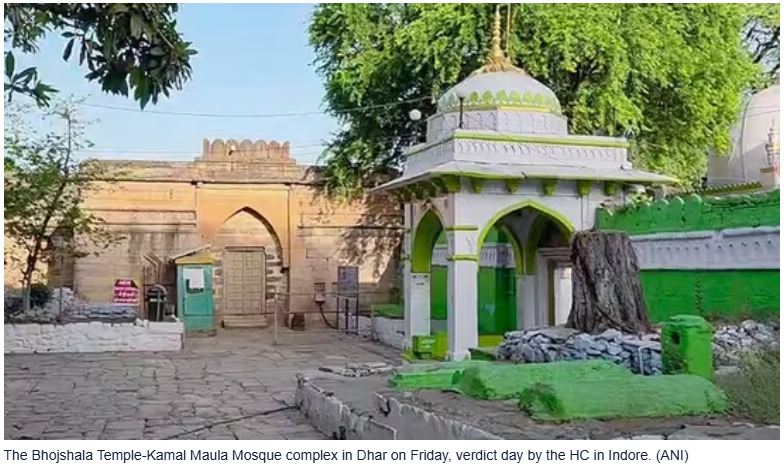
 Upananda Brahmachari | HENB | New Delhi | May 15, 2026: In a significant and potentially far-reaching judgment, the Madhya Pradesh High Court on Friday declared the disputed Bhojshala-Kamal Maula Mosque complex in Dhar to be a Hindu temple dedicated to Goddess Vagdevi, also revered as Goddess Saraswati. The ruling, delivered by a division bench comprising Justice Vijay Kumar Shukla and Justice Alok Awasthi, effectively overturns the Archaeological Survey of India’s (ASI) 2003 arrangement that had permitted Muslims to offer Friday prayers at the site.
The court’s 242-page verdict draws substantially from the legal and evidentiary principles articulated by the Supreme Court in its landmark 2019 Ayodhya judgment, particularly regarding the determination of the historical and religious character of disputed sites.
Court Declares Bhojshala a Temple
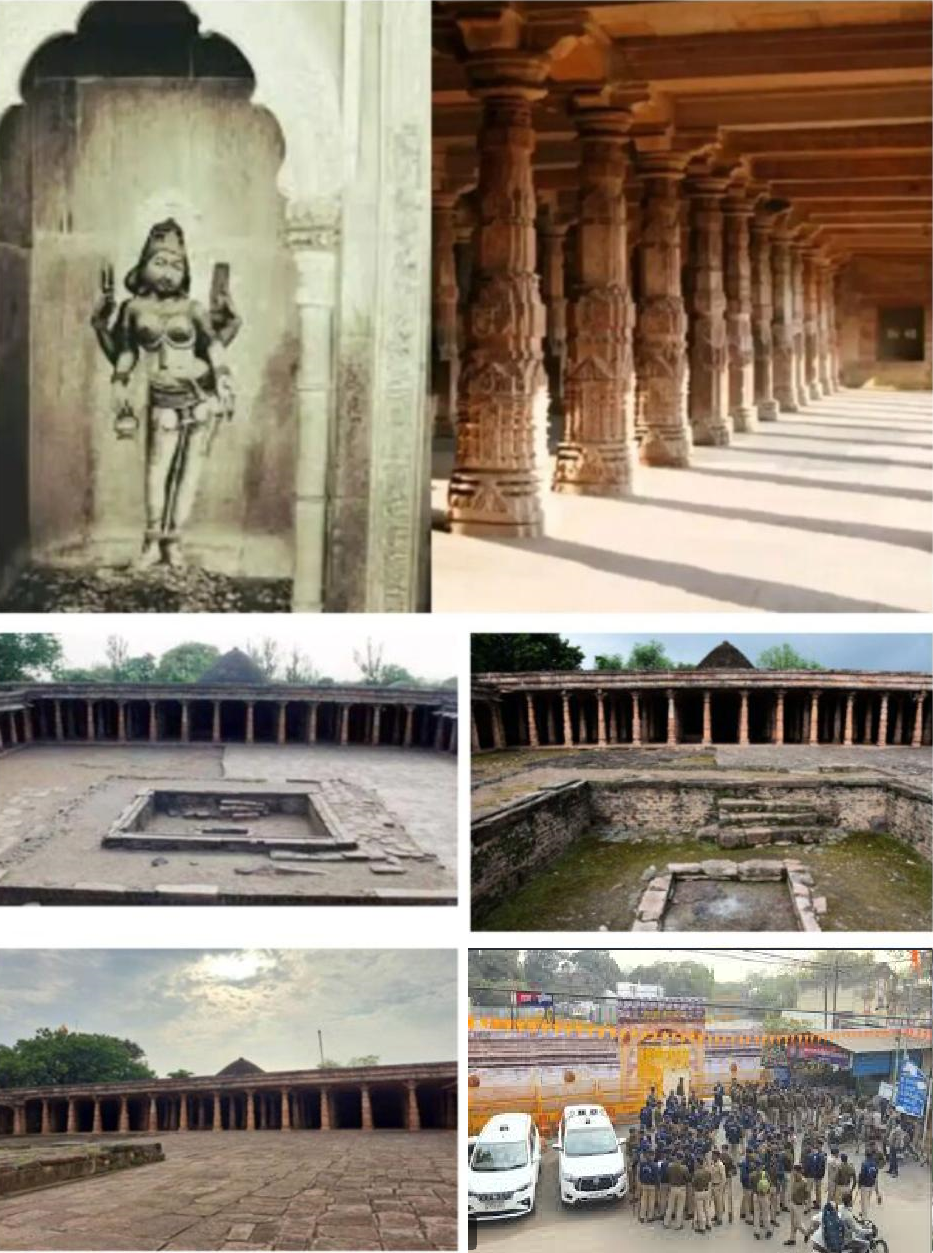
The High Court concluded that the disputed structure historically functioned as a temple and centre of Sanskrit learning associated with the Parmar dynasty ruler Raja Bhoj. The bench observed that historical records, archaeological findings, architectural features, and literary references collectively established the Hindu character of the site.
In its judgment, the court stated:
“We have noted continuity of Hindu worship at the site here has never been extinguished. We record findings that historical literature and places establish the character of the disputed area was Bhojshala as centre of Sanskrit learning associated with Raja Bhoj of Parmar dynasty.”
The court further noted that there were clear indications that the site housed a temple dedicated to Goddess Saraswati and functioned as a Sanskrit teaching institution during the reign of Raja Bhoj between 1010 and 1055 AD.
Reliance on Ayodhya Judgment Principles
A notable aspect of the ruling is the High Court’s reliance on the framework established by the Supreme Court in the Ayodhya dispute. While acknowledging that the Bhojshala matter differed legally from a title suit, the bench said the principles laid down in the Ayodhya verdict were relevant for determining the historical and religious character of the disputed structure.
The judgment observed:
“For determining the character of the disputed area we have to keep in mind the aforesaid 10 principles laid down by the Apex Court in the Ayodhya case.”
The court emphasized that its conclusions were based on historical literature, ASI reports, architectural evidence, inscriptions, and records documenting continued Hindu worship at the site.
2003 ASI Order Cancelled
The ruling nullifies the ASI’s 2003 administrative arrangement under which Hindus were permitted to worship at the complex on Tuesdays while Muslims were allowed to offer namaz on Fridays.
With Friday prayers now discontinued at the premises, the court clarified that although the ASI would continue to retain supervisory and conservation control over the monument, the right to perform religious rituals would remain with the Hindu side.
The bench stated that “The Archaeological Survey of India (ASI) shall have full supervisory control over the preservation and conservation” of the complex.
At the same time, the court urged the Muslim community to approach the Madhya Pradesh government for the allocation of separate land in Dhar district for the construction of a mosque.
Historical and Religious Significance
The Bhojshala complex has remained one of central India’s most contentious religious sites for decades. Hindus believe the structure was originally built by Raja Bhoj as a temple dedicated to Goddess Saraswati and served as an important centre of Sanskrit scholarship and learning.
The Muslim side, however, has maintained that the site functioned for centuries as the Kamal Maula Mosque and that Islamic prayers had long been conducted there.
The dispute intensified in recent years amid renewed legal efforts by Hindu petitioners seeking exclusive worship rights at the complex.
ASI Survey and Findings
A major turning point in the case came after the High Court ordered a scientific survey of the disputed structure on March 11, 2024. The ASI began its survey on March 22, conducting a comprehensive 98-day investigation before submitting an extensive report exceeding 2,000 pages.
According to submissions made before the court, the ASI report suggested that a substantial pre-existing structure from the Parmar period existed beneath or prior to the present mosque structure. The report also indicated that parts of the existing structure were constructed using reused temple materials and architectural fragments.
The Hindu side argued that sculptures, inscriptions, coins, and archaeological remains discovered during the survey supported the claim that the site was originally a temple.
The Muslim side, however, strongly disputed the ASI’s conclusions, alleging before the court that the report was “biased” and prepared to bolster the Hindu petitioners’ claims.
Saraswati Idol in British Museum
In another notable observation, the High Court directed the government to consider formal efforts to bring back the ancient idol of Goddess Saraswati currently housed in the British Museum in London.
The idol, according to historical accounts cited before the court, was originally installed at Bhojshala during Raja Bhoj’s reign and later removed during the colonial period.
The bench observed:
“The petitioners have made number of representations before the Government, which may consider the representations to bring back the idol.”
Although the court stopped short of issuing a mandatory directive for repatriation, its remarks are expected to intensify demands for the idol’s return to India.
Verdict Reserved After Extensive Hearings
The High Court had reserved its judgment on May 12 after prolonged hearings involving historical evidence, religious claims, legal submissions, and thousands of pages of documentary material presented by both sides.
The case attracted national attention due to its resemblance to other religious site disputes and its potential implications for future litigation involving historical places of worship.
Legal experts suggest that the judgment may eventually be challenged before the Supreme Court, especially given the constitutional and communal sensitivities surrounding the dispute.
Advocate Vishnu Shankar Jain Welcomes the Verdict
Advocate Vishnu Shankar Jain, representing the Hindu petitioners in the Bhojshala dispute, welcomed the Madhya Pradesh High Court’s verdict and described it as a “historic correction of centuries-old injustice.” Jain stated that the judgment vindicated the Hindu side’s long-standing claim that Bhojshala was originally a temple dedicated to Goddess Vagdevi (Saraswati) and a prominent centre of Sanskrit learning established during the reign of Raja Bhoj. Referring to the court’s reliance on archaeological findings, historical records, and the principles laid down in the Ayodhya judgment, Jain said the ruling reaffirmed that “faith must be supported by evidence, and in this case the evidence overwhelmingly established the Hindu character of the site.” He also welcomed the court’s observations regarding the repatriation of the ancient Saraswati idol from the British Museum, calling it an important step toward restoring the site’s original spiritual and cultural identity.
Political and Social Implications
The verdict is expected to trigger strong political and social reactions across the country. Hindu organizations have welcomed the decision as recognition of historical and civilizational claims linked to Raja Bhoj and the Saraswati temple tradition.
Muslim groups, meanwhile, are likely to examine legal options, including a possible appeal before the Supreme Court.
The ruling also reopens broader national debates over archaeology, religious heritage, and the interpretation of medieval history in resolving contemporary disputes over places of worship.
As security arrangements remain heightened in Dhar district, authorities are expected to closely monitor the situation to maintain communal harmony following the judgment.
…
..
_ Inputs from ANI and NDTV.
One comment on “Bhojshala Complex’s Disputed Area Declared Hindu Temple By Madhya Pradesh High Court.”
Leave a Reply

[…] immediate dispute is framed as a demand to shut Jamia Millia Islamia if alleged anti-Hindu and anti-national activity persists.…
[…] Akhil Bharatiya Sant Samiti, Ganga Mahasabha and Akhada Parishad plan to frame a Hindu Code of Condu…. This establishes…
[…] from a government that speaks in its name. In fact, the dignity of the Kumbh requires both. The Dhami…
[…] discipline matters because Left parties allege obstruction and vandalism of their bookstalls during Durga Puja events across We…. Allegation,…


Pingback: Bhojshala Temple-Status Ruling: How the Evidence Was Weighed – DharmaRenaissance Blog