

[…] 13 October 2026, multiple complaints were reported against CPI(M) leader and advocate Bikash Ranjan Bhattacharya in W…. The complainants…

Struggle for Hindu Existence
*Hindu Rights to Survive with Dignity & Sovereignty *Join Hindu Freedom Movement to make Bharat Hindu Rashtra within this lifetime *Jai Shri Ram *Jayatu Jayatu Hindu Rashtram *Editor: Upananda Brahmachari.
Fundamentals of Hindutva and Fundamentalism in Christianity, Islam and Marxism.
Architectures of Fundamentalism: Hindutva, Christianity, Islam and Marxism.
M Nageswara Rao
 The term Hindutva is used in its original indigenous sense as a synonym for Sanatana Dharma, following Chandranath Basu’s 1892 work of the same name, and not in its later politicised or ideological sense. Likewise, the reductive colonial term “Hinduism” is avoided, since it falsely recasts Sanatana Dharma as merely another “ism” or ideology.
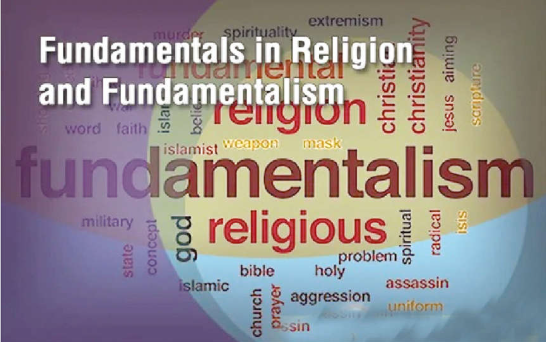
The character of “fundamentalism” depends upon the character of the underlying fundamentals themselves. Since the foundational assumptions of Hindutva differ radically from those of Christianity, Islam, and Marxism, the forms and consequences of “fundamentalism” arising from them are also fundamentally different.
Fundamentalism, in general, refers to strict adherence to foundational doctrines, scriptures, or principles regarded as absolute, infallible, and universally binding. It is characterised by doctrinal rigidity, resistance to reinterpretation, hostility toward pluralism, and insistence upon conformity to a singular truth. Yet the meaning and consequences of fundamentalism vary profoundly across civilisations because civilisations themselves are built upon radically different conceptions of reality, truth, humanity, and social order.
This distinction is blurred when all fundamentalism is treated as structurally the same. That flattens traditions built on different foundations. The issue is not sectarian disagreement within religions or ideological systems, but the deeper architecture from which such disagreements arise.
Internal variations within Hindu traditions do not alter the Dharmic framework, just as denominational differences within Christianity and Islam do not alter their prophetic monotheistic foundations, or variants within Marxism its underlying structure. The analysis must therefore begin with first principles, not secondary historical variation.
In Christianity and Islam, the foundational structure is built around the belief in a single exclusive God, a final and universally binding revelation, an authoritative prophet or saviour, and the claim that salvation depends upon acceptance of a particular creed. Humanity is divided into believers and unbelievers — Christians and Heathens, Muslims and Kafirs — with an accompanying theological imperative to expand the faith universally through conversion, mission, or conquest. Intolerance is not incidental to such systems but follows directly from their exclusivist foundations. Historically, crusades and jihads emerged from these exclusivist foundations. Religious truth is therefore treated as singular, final, and universally binding upon all mankind.
Marxism, though formally atheistic, reproduces many structural characteristics of prophetic monotheism. It substitutes historical materialism for theology, revolutionary ideology for revelation, ideological orthodoxy for scripture, and party authority for ecclesiastical authority. Humanity is divided into morally antagonistic categories — proletariat and bourgeoisie — while “class war,” much like the Crusades and Jihad, is framed as a redemptive historical mission culminating in the destruction of one class and the establishment of an earthly utopia. Marxist systems therefore display many of the same tendencies toward doctrinal absolutism, ideological conformity, suppression of dissent, and intolerance toward dissenting viewpoints that historically characterised Christianity and Islam.
Consequently, fundamentalism in Christianity, Islam, and Marxism signifies rigid adherence to exclusive truth claims and hostility toward competing worldviews. Since truth and salvation are believed to depend upon conformity to a singular authorised doctrine, deviation becomes heresy, unbelief, apostasy, or counter-revolutionary error requiring suppression. Hindu civilisation is founded upon entirely different assumptions. It is not organised around one prophet, one exclusive revelation, one compulsory creed, or one universally binding theological doctrine. Its foundational principles include Dharma, karma, rebirth, moksha, spiritual inquiry (vicāra), self-realisation, and recognition that truth may be approached through multiple paths and disciplines. Hindu civilisation consequently gave rise to numerous philosophical schools, theological systems, forms of worship, yogic disciplines, and symbolic structures, all emerging within a shared metaphysical framework.
The Hindu worldview is therefore founded upon a principle of plurality within metaphysical unity, rather than upon exclusivist conformity to a singular prophetic or ideological truth. Its philosophical orientation may be described as a “diversity-of-unity” framework. In the Dharmic framework, diversity arises organically from an underlying spiritual unity and therefore remains intrinsically connected to it. Unity is understood not as institutional or doctrinal uniformity, but as an underlying metaphysical coherence from which plurality naturally arises.
Within this framework, plurality remains connected to foundational principles rather than existing as disconnected relativism. Diverse philosophical systems, modes of worship, yogic disciplines, and theological interpretations are understood as differentiated approaches to the same ultimate reality operating within a shared Dharmic worldview. Diversity is therefore regarded not merely as tolerated variation, but as a legitimate expression of underlying spiritual unity.
Accordingly, Hindu religion organically produced diverse Darsanas such as Vedānta, Sākhya, Yoga, Nyāya, and Mīmāsā; theological and devotional traditions such as Saiva, Vaishnava, Sakta, and Smārta; as well as broader spiritual currents such as Tantra and Bhakti — all as distinct yet interconnected expressions of a shared Dharmic civilisation.
By contrast, Christianity, Islam, and Marxism largely operate upon a principle that may be described as “uniformity-is-unity.” In these systems, unity is preserved through conformity to authorised revelation, scripture, prophet, church, religious law, or ideological doctrine rather than through acceptance of plurality arising from an underlying spiritual unity. Truth is regarded as singular, final, and exclusively mediated through one authorised doctrinal structure. Consequently, unity is sought through conformity of belief rather than accommodation of plurality.
Since truth is considered singular and exclusive, divergent doctrines are often viewed not as alternative approaches to truth but as deviations from it. Plurality therefore becomes a theological or ideological problem rather than a natural manifestation of reality. From this structural orientation emerge tendencies toward doctrinal policing, ideological conformity, missionary expansion, religious aggression, and centralisation of authority, historically expressed through crusades, jihads, inquisitions, forced conversions, and ideological purges.
The contrast may be illustrated through an ecological analogy. Hindu diversity-of-unity resembles a forest ecosystem, where diverse forms of life coexist organically within an underlying order without requiring homogenisation. Diversity is not treated as disorder but as a natural expression of a deeper unity. Systems based upon uniformity-is-unity resemble a regulated park, or monoculture, whose coherence depends upon selective cultivation, continuous supervision, and removal of whatever does not conform to the authorised design. Diversity outside the prescribed structure is often treated not as legitimate variation but as deviation requiring correction or elimination.
Thus, while Hindu civilisation proceeds from a metaphysics of diversity-of-unity, wherein plurality emerges from an underlying spiritual unity, Christianity, Islam, and Marxism largely proceed from a structure of uniformity-is-unity, wherein unity is maintained through conformity to a singular authorised truth.
For this reason, the expression “Hindu fundamentalism” cannot carry the same meaning that it carries in Christianity, Islam, or Marxism. A Hindu who becomes more deeply rooted in the fundamentals of Hindu religion ordinarily becomes more conscious of plurality, philosophical diversity, coexistence, and the legitimacy of multiple spiritual approaches. Greater rootedness in Hindu fundamentals therefore tends toward pluralistic openness within a Dharmic framework.
By contrast, deeper commitment to the foundational doctrines of Christianity, Islam, or Marxism generally intensifies exclusivism, because these systems are structurally based upon singular truth claims and doctrinal conformity. Their fundamentalism therefore tends toward rigidity, intolerance of dissent, and hostility toward pluralism.
In essence, the more deeply a person enters the fundamentals of Hindu religion, the more expansive and pluralistic his outlook tends to become, because plurality is understood to arise from an underlying unity. Conversely, the more deeply one enters the fundamental structures of Christianity, Islam, or Marxism, the more exclusivist and doctrinally rigid one tends to become because unity is sought through uniformity of belief and ideological conformity. Therefore, illiterate Christians, Muslims, and Marxists are often more tolerant than the educated ones because education frequently deepens dogmatic exclusivism rather than pluralistic openness and coexistence.
…
(The writer is a retired IPSofficer and former Director of the CBI)
This article was first published in Hans India on May 25, 2026.
2 comments on “Fundamentals of Hindutva and Fundamentalism in Christianity, Islam and Marxism.”
Leave a Reply


[…] a reactionary state. This is worrying. Already, Hindu radicals have occupied public discourse and have won favours from some…
no you are a fool
Wishing all success to his journey
[…] Hindu Ekta Rath Yatra 3.0 has been announced under Bageshwar Dham’s Dhirendra Shastri as a 500-km mobilisation through five…


Pingback: Decoding Hindutva as Sanatana Dharma: Comparing Christian, Islamic, and Marxist Fundamentalism – DharmaRenaissance Blog
Pingback: Hindutva, Sanatana Dharma, and the Fundamentalism Test – DharmaRenaissance Blog