

you misspelled Israel

Struggle for Hindu Existence
*Hindu Rights to Survive with Dignity & Sovereignty *Join Hindu Freedom Movement to make Bharat Hindu Rashtra within this lifetime *Jai Shri Ram *Jayatu Jayatu Hindu Rashtram *Editor: Upananda Brahmachari.
Roll Back the ‘Anti-Hindu’ Maharashtra Devasthan Inams Abolition Draft Act, 2026: Maharashtra Mandir Mahasangh.
Hindutva Organisations Oppose Maharashtra’s Proposed Temple Land Law, Demand Formation of ‘Sanatan Board’.
Upendra Bharti | HENB | Mumbai | May 27, 2026:: A fresh political and religious controversy has erupted in Maharashtra over the proposed Maharashtra Devasthan Inams Abolition Draft Act, 2026, with several Hindutva organisations strongly opposing the legislation and accusing the state government of selectively targeting Hindu temple lands while exempting Waqf properties.
Leading the opposition is the Hindu Janajagruti Samiti (HJS), a Hindutva organisation ideologically aligned with the BJP-led Mahayuti government, which has formed the Mandir Mahasangh comprising various temples across the state. The group has demanded the immediate withdrawal of the draft law and called for the establishment of a “Sanatan Board” on the lines of the Waqf Board to manage and safeguard Hindu temple properties across the state.
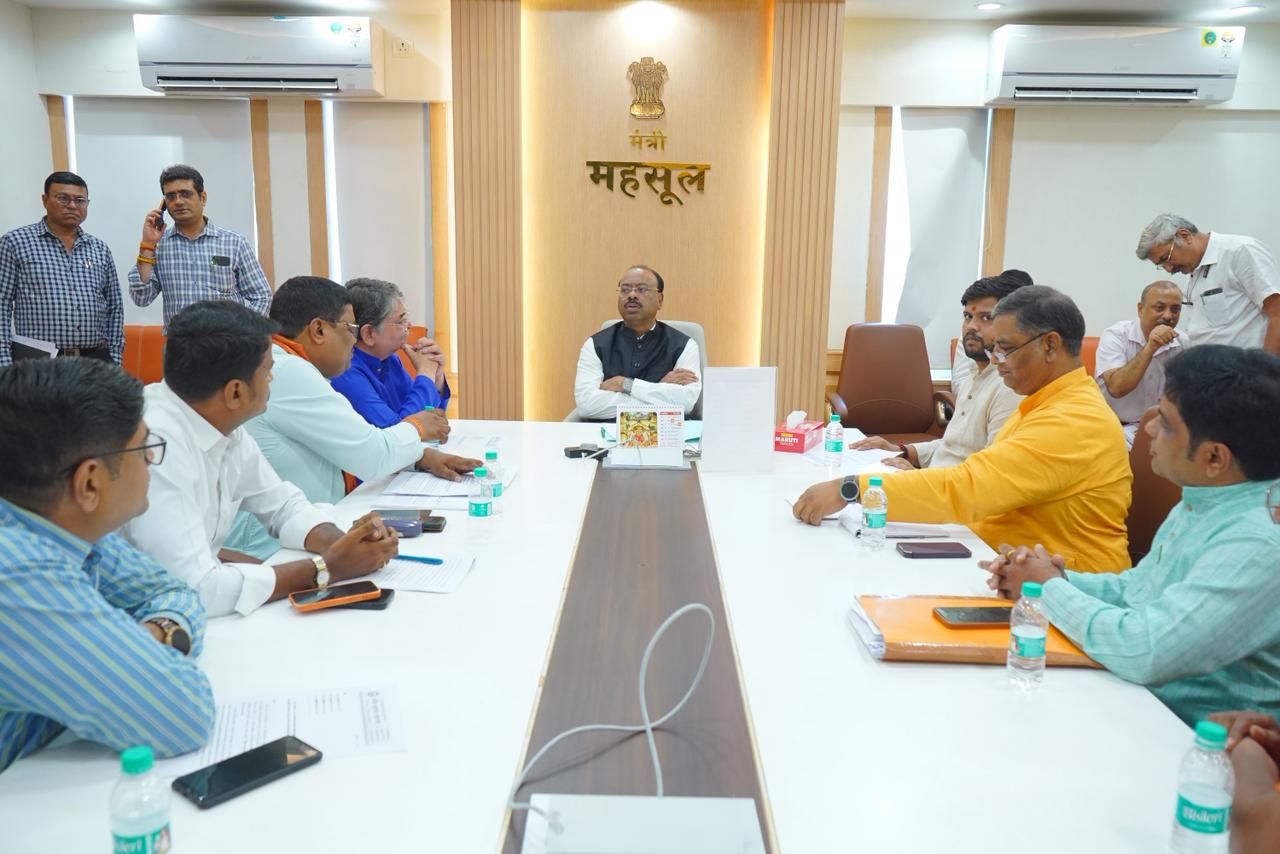
HJS Delegation Meets Revenue Minister
On Tuesday, an HJS delegation met Maharashtra Revenue Minister Chandrashekhar Bawankule to express strong objections to the proposed legislation. The delegation included HJS organiser Sunil Ghanwat and national spokesperson Ramesh Shinde.
According to Ghanwat, the organisation sought additional time to submit formal objections to the draft Act. He stated that Minister Bawankule assured the delegation that the deadline for submitting objections would be extended until June 30.
Speaking after the meeting, Ramesh Shinde alleged that the proposed law amounted to a “direct attack on Hindu temples and temple lands.” He claimed that the legislation threatened the autonomy, religious rights, and traditional practices associated with temples and Hindu devotees.
“The draft law is aimed at weakening the traditional rights of Hindu religious institutions over temple lands and properties,” Shinde said while addressing the media on the sidelines of the meeting.
State-Level Conference Against the Draft Law
The HJS has also intensified its campaign against the legislation by mobilising temple trusts, legal experts, and Hindu organisations across Maharashtra.
On Monday, a state-level “Devasthan Land Protection Conference” was organised in Dadar, Mumbai. Representatives from various temple trusts, legal professionals, and Hindu organisations attended the gathering and unanimously passed a resolution demanding that the Maharashtra government immediately and unconditionally withdraw the proposed legislation.
Speakers at the conference alleged that the government’s move to bring nearly 400,000 hectares of Devasthan Inam land under the proposed law constituted a “one-sided attack” on Hindu religious institutions.
Several temple trustees questioned why properties governed under the Waqf Act had allegedly been excluded from the scope of the legislation while Hindu temple lands were being subjected to acquisition and ownership restructuring.
What the Proposed Law Seeks to Do
The Maharashtra Devasthan Inams Abolition Draft Act, 2026 seeks to abolish historical land grants — commonly known as Devasthan Inams — that were given by erstwhile rulers and princely states to temples and religious institutions.
Under the proposed framework, permanent ownership rights classified as “Occupant Class I” would be granted to existing tenants, cultivators, and occupants who possessed the land prior to January 1, 2011, subject to payment of a prescribed fee.
The Maharashtra government has argued that the law is intended to resolve long-standing disputes between temple trusts and cultivators over land ownership and usage rights.
Addressing the media, Revenue Minister Chandrashekhar Bawankule defended the proposed legislation, stating that the existing disputes had negatively affected both temple authorities and farmers.
“Lakhs of acres are caught in disputes between the Devasthan and farmers, and this situation benefits neither party,” Bawankule said. “This law will resolve the issue. We will consider all suggestions to make the law better.”
However, critics of the draft law maintain that the legislation disproportionately impacts Hindu institutions while excluding Waqf properties from similar scrutiny or restructuring.
Demand for ‘Sanatan Board’
A major demand emerging from the protests is the creation of a statutory “Sanatan Board” to oversee and protect Hindu temple properties, similar to the functioning of Waqf Boards that administer Muslim charitable and religious properties.
HJS leaders argued that Hindu religious institutions require an independent and legally empowered body to safeguard temple lands from alleged encroachments, administrative interference, and state control.
The demand is expected to intensify political debate in Maharashtra, particularly as issues relating to temple administration, religious rights, and land ownership continue to gain prominence in state politics.
Legal and Public Reactions
The controversy has also attracted legal commentary and public debate. Supreme Court Advocate-on-Record Amita Sachdeva reportedly explained in a video message why she believes the proposed legislation could adversely affect Hindu temples and their control over traditional religious assets.
Her remarks have been widely circulated among supporters opposing the draft Act, further amplifying the campaign against the legislation on social media and public platforms.
Meanwhile, legal experts note that any final legislation may face judicial scrutiny if allegations of unequal treatment between religious institutions gain momentum.
Political Implications
The issue places the BJP-led Mahayuti government in a delicate position, as it attempts to balance agricultural land reform concerns with the sentiments of Hindu religious groups that form a significant part of its ideological support base.
With objections continuing to pour in and organised opposition growing across Maharashtra, the proposed legislation is likely to remain a contentious political and legal issue in the coming months.
..
_Agency Inputs.
2 comments on “Roll Back the ‘Anti-Hindu’ Maharashtra Devasthan Inams Abolition Draft Act, 2026: Maharashtra Mandir Mahasangh.”
Leave a comment

[…] 26 September 2026, a dispute had formed around the reported participation of HfHR activists in a New York protest…
[…] known procedural facts are that a division bench rejected a PIL seeking Durga Puja on the High Court rooftop,…
[…] discipline does not weaken Hindu advocacy. It makes it credible. In the current confrontation, Hindu groups are demanding scrutiny…
[…] clearest lesson from the Madras High Court is narrow but important: a return to Hinduism must be established through…


Pingback: Temple Lands at Risk? Why Maharashtra’s 2026 Devasthan Inams Draft Act Alarms Dharmic Bodies – DharmaRenaissance Blog
Pingback: A Rights-First Blueprint for Maharashtra Devasthan Inam Reform – DharmaRenaissance Blog