

[…] 18 October 2026, Goa Police were reported to have registered an FIR against 300 unidentified people after “Murd…. Those…

Struggle for Hindu Existence
*Hindu Rights to Survive with Dignity & Sovereignty *Join Hindu Freedom Movement to make Bharat Hindu Rashtra within this lifetime *Jai Shri Ram *Jayatu Jayatu Hindu Rashtram *Editor: Upananda Brahmachari.
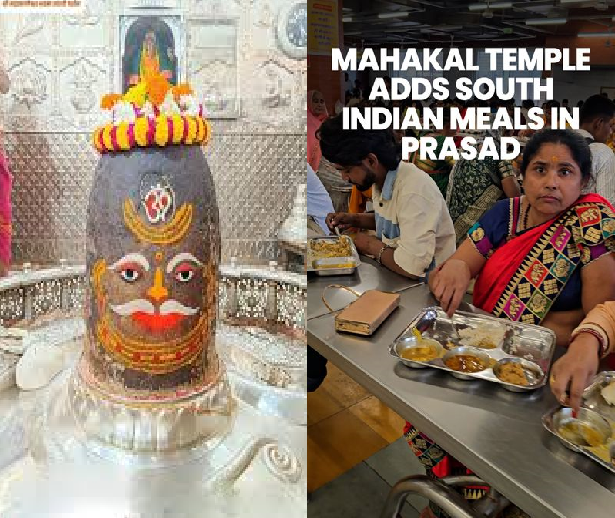
Ujjain’s Mahakaleshwar Annakshetra Includes South Indian Cuisine to Promote Cultural Inclusivity.
South Indian Cuisine Finds a Sacred Place at Ujjain’s Mahakaleshwar Annakshetra: A New Chapter in the Tradition of Anna-daan and Cultural Unity.
Upendra bharti | HENB | Ujjain (Madhya Pradesh), July 28, 2026:: In a heartwarming initiative that beautifully blends India’s diverse culinary traditions with its timeless spiritual values, the Shri Mahakaleshwar Temple in Ujjain has introduced South Indian cuisine as part of the prasadi meals served at its revered Annakshetra. The move has been widely appreciated by devotees, who see it not merely as a change in the menu but as a reflection of the inclusive spirit of Sanatan Dharma, where diversity flourishes within unity.
The Mahakaleshwar Temple, one of the twelve sacred Jyotirlingas of Lord Shiva, is among the most significant pilgrimage destinations in India. Every day, thousands of devotees from every corner of the country visit the ancient shrine to seek the blessings of Baba Mahakal. For many pilgrims, the spiritual journey does not end with darshan; it continues with the sacred experience of receiving prasadam at the temple’s Annakshetra.
Traditionally, the Annakshetra has served wholesome prasadi meals consisting of dal, rice, roti, vegetables, and other simple yet nourishing preparations. These meals are provided free of cost, embodying the ancient Indian tradition of Anna-daan—the selfless offering of food to all without distinction.
With the addition of South Indian delicacies to the Annakshetra menu, devotees can now enjoy dishes inspired by the rich culinary heritage of southern India. The initiative has added a fresh dimension to the temple’s hospitality while preserving the sanctity and devotional significance of the prasadi meal.
Anna-daan: The Highest Form of Charity
In the Sanatan tradition, Anna-daan (the donation of food) is regarded as one of the greatest acts of charity. Ancient scriptures repeatedly proclaim that feeding the hungry is equivalent to serving the Divine Himself.
The Taittiriya Upanishad instructs devotees:
“Annam Na Nindyat, Tad Vratam” — “Never disrespect food; this is a sacred vow.”
Likewise, another revered maxim states:
“Annadanam Mahadanam” — “Among all forms of charity, the gift of food is the greatest.”
Food sustains life itself, and when offered with devotion, compassion, and humility, it becomes an act of worship rather than mere service. This philosophy has inspired temples across India for centuries to maintain community kitchens that welcome every devotee irrespective of caste, language, region, or economic background.
Prasad: More Than Food
In Hindu philosophy, prasadam is not simply food served at a temple. It is food first offered to the deity and then distributed among devotees as divine grace. Receiving prasadam symbolizes the blessings of God and reminds devotees that every meal is ultimately a gift from the Divine.
The Bhagavad Gita (3.13) emphasizes this spiritual principle:
“The righteous who partake of food offered in sacrifice are freed from all sins, whereas those who cook merely for themselves partake only of sin.”
Thus, the meal served at the Mahakaleshwar Annakshetra carries profound spiritual significance. It nourishes both the body and the soul while fostering humility, gratitude, and equality among devotees.
A Celebration of India’s Cultural Diversity
The introduction of South Indian cuisine also reflects the truly national character of the Mahakaleshwar Temple. Pilgrims visiting Ujjain come from Tamil Nadu, Kerala, Karnataka, Andhra Pradesh, Telangana, Maharashtra, Gujarat, West Bengal, Uttar Pradesh, and every other part of the country.
Offering dishes familiar to devotees from southern India is a thoughtful gesture of hospitality that acknowledges India’s extraordinary cultural diversity while reinforcing the idea that Sanatan Dharma transcends regional identities.
Although India’s cuisines differ in taste, ingredients, and cooking styles, they are united by a shared spiritual ethos—preparing food with purity, gratitude, and devotion. Whether it is idli, dosa, pongal, or the traditional North Indian dal-roti, every offering becomes sacred when dedicated to the Almighty.
The Living Spirit of “Vasudhaiva Kutumbakam”
The expanded menu also echoes the timeless Indian ideal of “Vasudhaiva Kutumbakam”—“The whole world is one family.” The Annakshetra is a living example of this philosophy, where devotees from different languages, customs, and social backgrounds sit together and partake of the same sacred meal without discrimination.
Such community dining has long served as a powerful expression of equality, fraternity, and spiritual unity. In the presence of the Divine, all distinctions dissolve, leaving only the shared identity of being devotees.
Serving Thousands with Devotion
The Mahakaleshwar Temple’s Annakshetra continues to serve thousands of pilgrims every day through the dedicated efforts of temple authorities, volunteers, and staff. Their service exemplifies the ancient ideal of “Seva Parmo Dharma”—selfless service as the highest duty.
The introduction of South Indian cuisine is expected to enrich the experience of pilgrims while strengthening the temple’s reputation as a sacred institution that embraces devotees from every region of India.
As more pilgrims gather at the abode of Baba Mahakal, the aroma of freshly prepared prasadam now carries not only the fragrance of devotion but also the taste of India’s cultural harmony. The initiative stands as a gentle yet powerful reminder that while India’s languages, customs, and cuisines may vary, its spiritual heritage remains one—united in faith, service, compassion, and the timeless tradition of sharing food as an offering to the Divine.
…
_Inputs from ANI Video.
One comment on “Ujjain’s Mahakaleshwar Annakshetra Includes South Indian Cuisine to Promote Cultural Inclusivity.”
Leave a Reply


Pingback: Cultural Inclusivity at Mahakaleshwar Annakshetra – DharmaRenaissance Blog