
Struggle for Hindu Existence
*Hindu Rights to Survive with Dignity & Sovereignty *Join Hindu Freedom Movement to make Bharat Hindu Rashtra within this lifetime *Jai Shri Ram *Jayatu Jayatu Hindu Rashtram *Editor: Upananda Brahmachari.
Burdwan Hindu Protest Over Conversion Row Turns Violent; Pastor Forced to Withdraw Complaint.
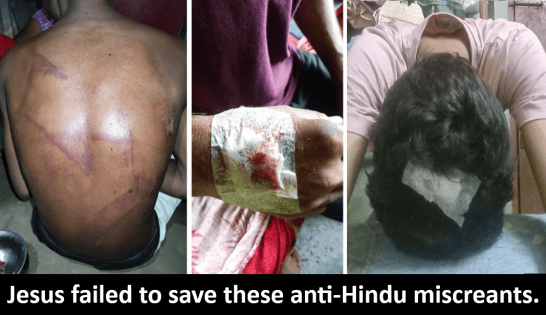
Hindutva Groups Assault Christian Worshippers in Bengal’s Burdwan Over Alleged Conversion Network; Pastor Forced to Withdraw Police Complaint.
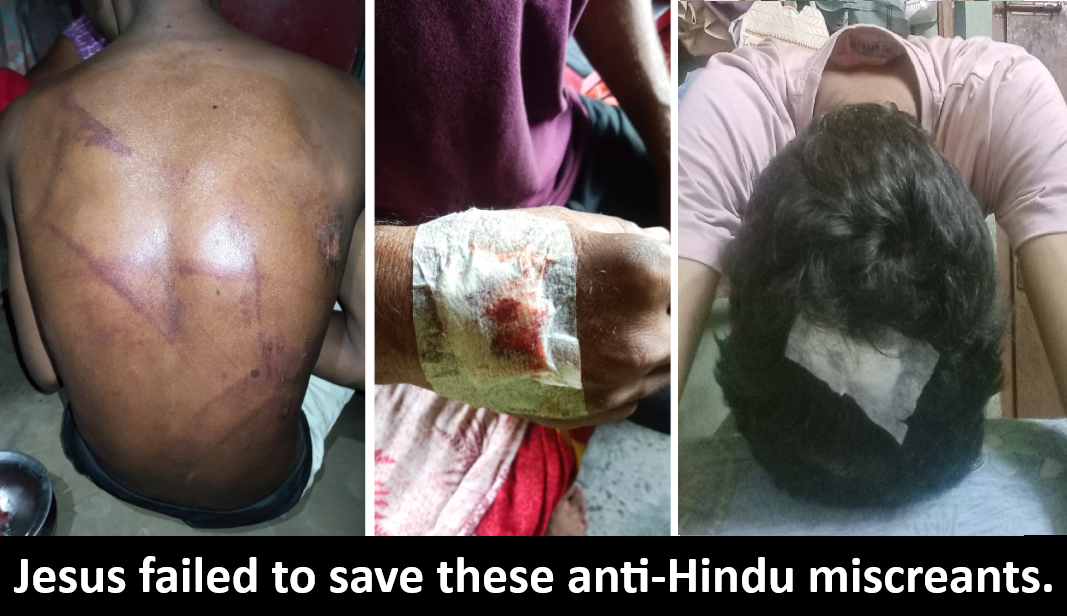
Sankirtan Das | HENB | Burdwan, West Bengal | Nov 10, 2026: A violent confrontation between members of Hindu organisations and a Christian congregation in Rayan village of West Bengal’s Purba Bardhaman district has triggered serious concerns over alleged religious conversion activities, communal tensions and the conduct of local police. Around 40 men allegedly stormed a house church on November 1 while a Sunday prayer service was nearing its conclusion, physically assaulting the pastor and several Christian worshippers. The attackers reportedly accused the church operators of targeting economically vulnerable Hindus through financial inducements, promises of medical assistance, alleged faith healing and other questionable methods to bring them into Christianity.
The incident took a more serious turn when the Christian congregation alleged that, despite submitting a written complaint at Burdwan police station, its members were intimidated into withdrawing it after some of the alleged attackers entered the police station and threatened to kill the complainant in the presence of police personnel. The police, however, have denied that any such intimidation took place inside the station and maintained that the complaint was voluntarily withdrawn.
According to ground-level information gathered by HENB, the confrontation emerged against the backdrop of growing objections by local Hindu organisations to what they describe as an organised and discreet Christian evangelisation network operating among economically disadvantaged Hindu families in the area.
Hindu Organisations Raise Concerns Over Alleged Conversion Activities
Members of Hindu organisations operating under the banner of Samagra Hindu Samaj (SHS), including representatives of VHP (Vishwa Hindu Parishad) and HJM (Hindu Jagran Manch), reportedly objected to the activities of certain church operators who were allegedly approaching poor and vulnerable Hindu families including Tribal people with offers of financial assistance and medical support (faith healing).
The Hindu groups alleged that women associated with the local church network were playing a particularly active role in approaching Hindu households, identifying families struggling with financial hardship and health-related problems, and encouraging them to seek refuge in Jesus Christ and Christianity.
According to the allegations raised by the Hindu protesters, the evangelisation activities were not always conducted through openly organised religious programmes. Instead, the church operators allegedly maintained discreet contacts with vulnerable families and attempted to influence their religious beliefs by offering assistance during periods of distress.
The protesters also questioned the alleged use of financial inducements and what they described as false claims of faith healing to attract economically weaker Hindus towards Christianity.
They reportedly pointed to the apparent Hindu religious identities of some women associated with the church network, including their wearing of conch-shell bangles (shankha) and red vermilion (sindoor) on their foreheads, as evidence of how the operators allegedly maintained access to Hindu households while conducting their Chruch based Conversion activities.
The Hindu organisations further questioned why the alleged evangelisation activities were concentrated in Hindu-majority localities and why, according to their claims, the church operators were not undertaking similar conversion-oriented outreach in Muslim-dominated areas.
The protesters viewed this alleged selective targeting of Hindu families as a deliberate attempt to exploit economic vulnerability and gradually alter the religious composition of local Hindu communities.
They also objected to the alleged mobilisation of a considerable number of tribal people from neighbouring villages and distant localities to attend Christian prayer gatherings. The Hindu protesters suspected that such gatherings were being used to influence economically disadvantaged tribal communities and other Hindus through organised conversion activities.
However, these allegations concerning inducements, faith healing and the targeting of particular communities remain claims made by the Hindu organisations and have not been independently established.
Around 40 Men Storm Sunday Prayer Gathering
According to accounts given by the survivors to the media, the incident occurred at approximately 10 am on November 1, when members of the Christian congregation assembled at the residence of Sushanta Majila in Rayan village for their regular Sunday prayer service.
Pastor Chottu Ruidas was leading the congregation. The prayer meeting was reportedly approaching its conclusion, with worshippers participating in communion, when approximately 40 men arrived at the premises, raising slogans of ‘Jai Shri Ram’.
The protesters accused the congregation of conducting religious conversion activities among Hindus through inducements and other questionable means.
Pastor Ruidas identified Bisweshwar Choudhury, described by villagers as an influential and financially well-off resident known for extending assistance to people in need, as one of the persons accompanying the group.
According to Ruidas, Choudhury approached him during the prayer service and allegedly slapped him. The situation subsequently escalated when other members of the group allegedly joined in assaulting the worshippers.
“Thereafter, the Hindutva protesters accompanying Choudhury started beating us mercilessly,” Ruidas recounted to the media. He alleged that the attackers slapped, kicked and assaulted the congregation with bamboo sticks. Some allegedly removed their belts and used them to whip the worshippers.
The survivors further alleged that the attackers dragged several people out of the house and assaulted them. Those attempting to escape by taking shelter in neighbouring houses were reportedly pursued and beaten.
According to the survivors, the confrontation was accompanied by repeated accusations that the Christians were attempting to convert Hindus in an area where the local population predominantly followed Hindu traditions.
Worshippers Allegedly Forced to Chant ‘Jai Shri Ram’
The survivors alleged that the attackers not only assaulted them physically but also subjected them to religious intimidation.
They were reportedly forced to chant ‘Jai Shri Ram’ and were told: “This is a Hindu area; worshipping Jesus will not be tolerated.”
The attackers allegedly questioned the presence of a Christian prayer gathering in a Hindu-dominated locality and accused the church operators of deliberately targeting Hindu families.
The protesters reportedly declared that they would not tolerate what they regarded as anti-Hindu propaganda, denigration of Hindu deities and misrepresentation of Hindu religious traditions by Christian preachers.
They also objected to alleged attempts to undermine Hindu rituals and traditions, including religious practices associated with the bathing in Ganga, and reportedly insisted that those who had converted should return to their ancestral religious traditions through Ghar Wapsi after bathing in Ganga .
The Christian survivors subsequently recalled being told:
“This is our government. A Hindu government. A Hindu country. Worshipping Jesus is not allowed. They have to bathe in the Ganga, and we will perform ‘Ghar Wapsi’.”
These statements, as recounted by the pastor, reflected the increasingly confrontational religious atmosphere surrounding the incident.
The Hindu protesters, meanwhile, maintained that their objection was directed against alleged conversion propaganda and activities they considered offensive to Hindu Dharma, rather than against the mere existence of Hindu-Christian differences.
Minor Boy Suffers Serious Head Injury; Pastor’s Sister Knocked Unconscious
Several members of the congregation reportedly sustained injuries during the assault.
Ruidas particularly recalled the condition of a 17-year-old boy who suffered a serious head injury and began bleeding profusely.
According to the pastor, the attackers allegedly told the injured boy: “We have treated you. Now go to a doctor and get it fixedor tell this Jesus for a recovery.”
The pastor’s account also indicated that the boy had aggressively challenged the Hindu protesters during the confrontation.
Ruidas himself was reportedly targeted repeatedly. When the violence intensified, other worshippers attempted to protect him by locking him inside a kitchen.
However, the attackers allegedly broke open the kitchen door, dragged him outside and continued assaulting him.
His elder sister reportedly threw herself over him in an attempt to shield him from the attackers. She fell to the ground but was allegedly kicked repeatedly until she lost consciousness.
Ruidas subsequently took his sister to a nearby dispensary for medical attention.
The pastor said that he had attempted to telephone the police while hiding inside the kitchen but could not establish contact.
He subsequently managed to inform Pastor Jose Bernard, who took up the matter with the police.
Police Reach Village After Emergency Call; Christian Congregation Detained
Pastor Jose Bernard confirmed to the media that he had telephoned Burdwan police station two or three times after receiving information about the attack. He alleged that the police initially failed to respond seriously to his calls.
He eventually contacted the emergency helpline 112, following which police personnel arrived at Rayan village.
Bernard’s wife and minor daughter were also among those attending the prayer service and witnessed the violence.
By the time the police reached the premises, several members of the attacking group had reportedly left.
According to Bernard, the remaining protesters allegedly attempted to turn the allegations against the Christian worshippers, claiming that the congregation had initiated a confrontation with them.
The Hindu protesters, on the other hand, alleged that the church operators had deliberately invited a substantial number of tribal people from neighbouring and distant villages to the prayer gathering as part of their alleged efforts to influence economically vulnerable tribal and Hindu populations.
What followed became another major point of controversy.
Bernard alleged that, instead of immediately taking action against those who had assaulted the worshippers, the police detained members of the Christian congregation.
According to his account, the detained persons included 20 women, three minors and eight men.
The injured detainees were initially taken to Bardhaman Medical College and Hospital. A doctor reportedly examined them while they were still inside the vehicle. They were subsequently taken to the police station and kept in two separate rooms.
The detention of women, minors and injured worshippers, rather than the immediate arrest of those accused of assault, became a major grievance raised by the Christian pastors.
Pastor Alleges Death Threat Inside Police Station; Complaint Withdrawn Under Pressure
The disturbing allegation emerging from the incident concerns the circumstances under which the written police complaint was withdrawn.
Pastor Jose Bernard said that he submitted a written complaint at Burdwan police station regarding the assault on the congregation.
However, shortly afterwards, a group of men allegedly entered the police station, grabbed him by the collar and threatened to kill him unless he withdrew the complaint.
Bernard claimed that the incident occurred in the presence of police personnel, who allegedly failed to intervene effectively.
“They entered the police station, grabbed me by the collar, physically intimidated me and threatened to kill me if I did not withdraw my complaint. And all of this happened in front of the police,” Bernard told the media.
He further alleged that the police response was limited to telling the men: “There are CCTV cameras here; leave the premises.”
According to Bernard, the attackers’ intimidation, coupled with the absence of effective police protection, eventually compelled him to withdraw the written complaint.
He said that he pleaded with both the alleged attackers and the police to ensure that Christian families in Rayan village would not face further harassment.
The pastor’s account has raised questions about the ability of complainants to seek protection and pursue legal remedies when allegations of intimidation are made against influential local groups.
However, the allegation that the complaint was withdrawn under coercion has been disputed by the police.
Police Inspector Questions Prayer Gathering; Detention Continues Until Late Night
Bernard also made serious allegations against Burdwan police station’s Inspector-in-Charge, Debabrata Mukherjee.
According to him, Mukherjee questioned the congregation about why its members had assembled for prayer in the first place.
When Bernard and other attendees attempted to explain their position, the inspector allegedly questioned why they were taking such risks when people were being assaulted for holding similar religious gatherings in several places.
The pastor’s account suggested that, rather than concentrating exclusively on the alleged perpetrators of violence, the police were also questioning the Christian congregation’s decision to organise the prayer service.
Bernard further alleged that the police officer appeared concerned about the possibility of growing hostility between Hindu residents and Christian preachers because of the latter’s alleged religious outreach activities.
The detained women were reportedly released around 11 pm, while the men were released at approximately 1 am.
Thus, several members of the congregation, including women and minors, remained at the police station for hours following the incident.
Burdwan Police Deny Intimidation Allegations
When contacted by the media, Burdwan police station’s IC Debabrata Mukherjee categorically denied the allegation that members of the attacking group had entered the police station and threatened Pastor Jose Bernard into withdrawing his complaint.
According to Mukherjee, the pastor had submitted a complaint but subsequently retracted it.
“They submitted a complaint and, after some time, retracted it. No one threatened them inside the police station,” the officer said.
He also disclosed that counter-complaints had been filed against the Christian congregation by local residents.
Asked why the injured worshippers had been kept at the police station for several hours, Mukherjee reportedly claimed that their family members had not arrived to take them home.
The officer declined to respond to further questions over the telephone.
The conflicting accounts of the pastor and the police have left several aspects of the incident unresolved, particularly the circumstances surrounding the withdrawal of the complaint, the alleged intimidation inside the police station and the detention of the worshippers.
Elderly Hindu Woman Allegedly Assaulted for Practising Christianity
The violence was not confined to the premises where the prayer meeting was organised.
Another attendee, Sagari Konai, reportedly managed to escape the initial assault and return to her residence. However, according to the pastors, a group of men subsequently reached her home and allegedly assaulted her there as well.
Konai, an elderly widow living with her daughter, sustained a fracture in one of her fingers during the alleged attack.
Ruidas alleged that the attackers forced her to perform sit-ups while holding her ears and apologise for practising Christianity.
She was also allegedly coerced into participating in Hindu religious rituals at a nearby temple.
The alleged treatment of Konai has added another disturbing dimension to the incident, particularly because the woman was reportedly targeted even after leaving the prayer gathering and returning to her residence.
Her case also raises questions about the safety of individual residents who may face pressure or intimidation because of their religious affiliation.
Pastors and Survivors Fear Further Attacks
The incident has reportedly left the Christian congregation deeply traumatised.
Pastor Ruidas said that he continued to experience pain from the injuries he sustained during the assault and was afraid to return to his home in Rayan village.
He is currently staying with Pastor Jose Bernard rather than returning to his residence.
Bernard, meanwhile, said that the incident had profoundly affected his young daughter, who witnessed the violence during the prayer gathering.
The pastor expressed anguish over the exposure of his child to such brutality and hostility.
“She has never been exposed to such brutal hatred unfolding before her eyes. I wonder whether these people are animals,” he said.
The survivors have reportedly been left uncertain about their security and future in the village, particularly in the absence of any clear assurance that they would be protected from further intimidation or violence.
A Wider Question Over Religious Conversion and Community Relations in Bengal
The Rayan incident has brought into focus the increasingly contentious debate surrounding Christian evangelisation activities, alleged religious conversions through inducements and the response of Hindu organisations in parts of rural West Bengal.
For the Hindu organisations involved, the confrontation was rooted in their allegations that economically vulnerable Hindu families were being approached through financial assistance, healthcare-related support and purported faith-healing practices to encourage religious conversion.
They maintain that organised religious outreach should not exploit poverty, illness or social vulnerability, and that Hindu communities have a legitimate right to question activities they consider deceptive or coercive.
Their concerns also reflect a broader apprehension among sections of Hindu society regarding the alleged expansion of conversion-oriented networks in predominantly Hindu and tribal localities.
At the same time, the allegations of physical assault, religious intimidation, coercion and threats against Christian worshippers require impartial investigation. The right to practise Christianity, like the right to follow Hinduism, is constitutionally protected, and allegations of unlawful conversion activities must be examined through evidence and due process rather than violence or intimidation.
The incident also raises serious questions about the responsibility of the local administration. If the allegations of an assault, death threats inside a police station and coercive withdrawal of a complaint are substantiated, they would point to a grave failure of law enforcement. Equally, allegations of conversion through inducements or fraudulent practices warrant investigation in accordance with the law.
The immediate requirement is an impartial investigation into the November 1 violence, the alleged conversion network, the injuries sustained by worshippers, the treatment of Sagari Konai, the detention of women and minors, and the contradictory accounts concerning the withdrawal of the police complaint.
For the residents of Rayan village, the incident has exposed a disturbing breakdown of trust between religious communities and raised questions about whether local disputes over religious activities can be addressed through lawful intervention rather than confrontation, intimidation and retaliatory violence.
Rising Hindu Protests in Rural Bengal Against Alleged Christian Conversion Networks
The incident in Rayan village is also reflective of growing resentment and increasingly vocal protests by sections of Hindu society and Hindu organisations across rural Bengal against alleged organised Christian conversion activities. In several predominantly Hindu and tribal localities, Hindu activists have been raising concerns over what they describe as systematic attempts by evangelical groups to exploit poverty, unemployment, illness and social vulnerability through financial inducements, medical assistance and promises of miraculous healing. These protests are increasingly being organised under local Hindu platforms, with activists demanding administrative scrutiny of church networks, investigation into alleged illegal conversions and protection of indigenous Hindu religious traditions and tribal cultural identities. Hindu organisations maintain that the growing missionary outreach in rural Bengal poses a challenge to the religious and cultural continuity of Hindu communities, particularly among economically disadvantaged sections. They have therefore called for greater Hindu social mobilisation, grassroots awareness and vigilance against deceptive conversion practices, while insisting that religious freedom must not become a cover for coercion, fraud or exploitation.
—
_Agency Inputs/ Video Courtesy: Indian Express.


[…] present concern is not merely demographic. INSIGHT UK has assembled allegations of decades of persecution and dispossession affecting Hindus…
[…] distinction became concrete in a temple-entry dispute in which the Madras High Court said Tamil Nadu Chief Minister Vijay…
[…] distinction matters in Jaunsar-Bawar, where eight Muslim Van Gujjar families were reportedly evicted by Hindutva organisations amid allegations described…
Bhagyalakshmi Temple at Charminar holds deep religious and cultural significance for many devotees in Hyderabad. It is meaningful to learn…
Update:Jamia University orders student union polls within 15 days of constitution approval; two students continue hunger strike.See link: https://www.thehindu.com/news/cities/Delhi/jamia-university-orders-student-union-polls-within-15-days-of-constitution-approval-two-students-continue-hunger-strike/article71625645.ece .