

[…] 14 October 2026, Anand Dubey resigned from Shiv Sena (UBT), citing ideological differences and sayin… Two facts therefore stand…

Struggle for Hindu Existence
*Hindu Rights to Survive with Dignity & Sovereignty *Join Hindu Freedom Movement to make Bharat Hindu Rashtra within this lifetime *Jai Shri Ram *Jayatu Jayatu Hindu Rashtram *Editor: Upananda Brahmachari.
Hindu Decisive Vote Makes a Big Victory for BJP in West Bengal.
Decisive Hindutva Mandate in West Bengal: Identity Politics, Security Concerns, and Middle-Class Realignment Propel BJP to Power.
~ Upananda Brahmachari
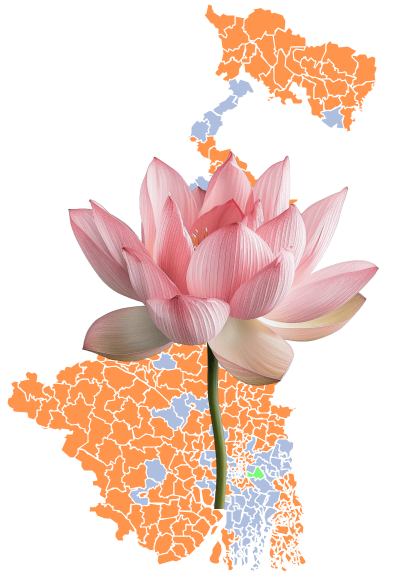 The 15-year regime of Trinamool Congress (TMC) rule is now a matter of history. The 2026 West Bengal Assembly election marks a significant political shift, widely interpreted as a decisive consolidation of Hindu voter support in favour of the Bharatiya Janata Party (BJP). The party is projected to secure a comfortable majority, paving the way for the formation of a ‘first’ saffron-led government in the state. This electoral outcome has been framed by its proponents as a rejection of allegations of corruption, political violence, Islamist uprise, Muslim appeasement and governance failures attributed to the incumbent Trinamool Congress (TMC). The BJP’s victory is thus positioned as a transformative moment in West Bengal’s political history, symbolizing a renewed emphasis on collective political confidence and a challenge to existing patterns of power and opposition within the state including an apprehended threat of demographic change in Bengal..
The majority of Hindu voters in West Bengal have summarily rejected the corruption, hooliganism, anti-nationalist, and pro-Muslim politics of the Trinamool Congress. The BJP’s resounding victory in West Bengal in 2026 is set to create new political history for Bengal, reviving a culture of collective confidence by challenging the rise of corruption, Islamic hooliganism, and the gagging of opposition voices.
Critics say that the rise of the BJP in Bengal is a silent revenge for the rape and murder of a trainee doctor at RG Kar Medical College and Hospital, as well as for the 56 BJP supporters who were killed in post-poll violence in 2021, allegedly perpetrated by the TMC. This is also a silent revenge for the brutal lynching of the innocent father-son duo, Harogobind Das and Chandan Das, in Samserganj by a Muslim mob during Waqf-related agitation, allegedly incited by the TMC in the state.
Electoral Outcome and Structural Shift
The 2026 West Bengal Assembly election concluded with a decisive victory for the Bharatiya Janata Party (BJP), which surely to cross the majority threshold of 148 seats. This outcome signifies not merely a change in government but a substantial shift in the structure of political mobilization within the state. The election evolved into a high-stakes contest in which identity, security, and perceptions of governance converged to reshape voter alignments in favour of the BJP.
A critical institutional dimension of the election was the debate surrounding the SIR (Special Intensive Revision) of electoral rolls. The Trinamool Congress (TMC) framed alleged discrepancies as a matter of democratic exclusion, while the BJP and its supporters interpreted the controversy as indicative of deeper irregularities within the political system. This contest over procedure contributed to a broader politicization of electoral legitimacy.
Cultural Mobilization and Religious Idioms
One of the most significant developments in this election was the expansion of religious-cultural expressions within political mobilization. While slogans such as “Jai Shri Ram” had gained traction earlier, the incorporation of “Joy Ma Kali” and “Joy Ma Durga” marked a strategic localization of political messaging within Bengal’s cultural context. This adaptation enabled the BJP to align broader ideological themes with regionally embedded devotional traditions, thereby enhancing its appeal among diverse segments of Hindu voters.
Public expressions of political identity became increasingly visible during the campaign. Slogans such as “Jai Shri Ram” and “Bharat Mata ki Jai” were widely used in rallies and gatherings, functioning as markers of collective affiliation and political enthusiasm.
The TMC’s campaign foregrounded Bengali identity as a culturally rooted and politically significant construct. Its slogan, “Jato karo hamla, ebar jitbe Bangla,” positioned the election as a defensive assertion of regional dignity. Welfare initiatives—particularly those targeting women and economically vulnerable groups—were central to its appeal, reinforcing a model of governance centered on social protection and state-led redistribution. Simultaneously, the party emphasized its support among minority communities, presenting itself as a guarantor of inclusivity and constitutional safeguards.
In contrast, the BJP advanced a campaign structured around the consolidation of Hindu identity, national integration, and political transformation under the banner of “Porivorton” (change). Its narrative challenged the TMC’s governance record while also seeking to reframe the basis of political mobilization in the state. The BJP’s messaging frequently critiqued what it described as “vote-bank politics,” arguing that electoral alignments based on religious minorities had historically shaped outcomes in West Bengal.
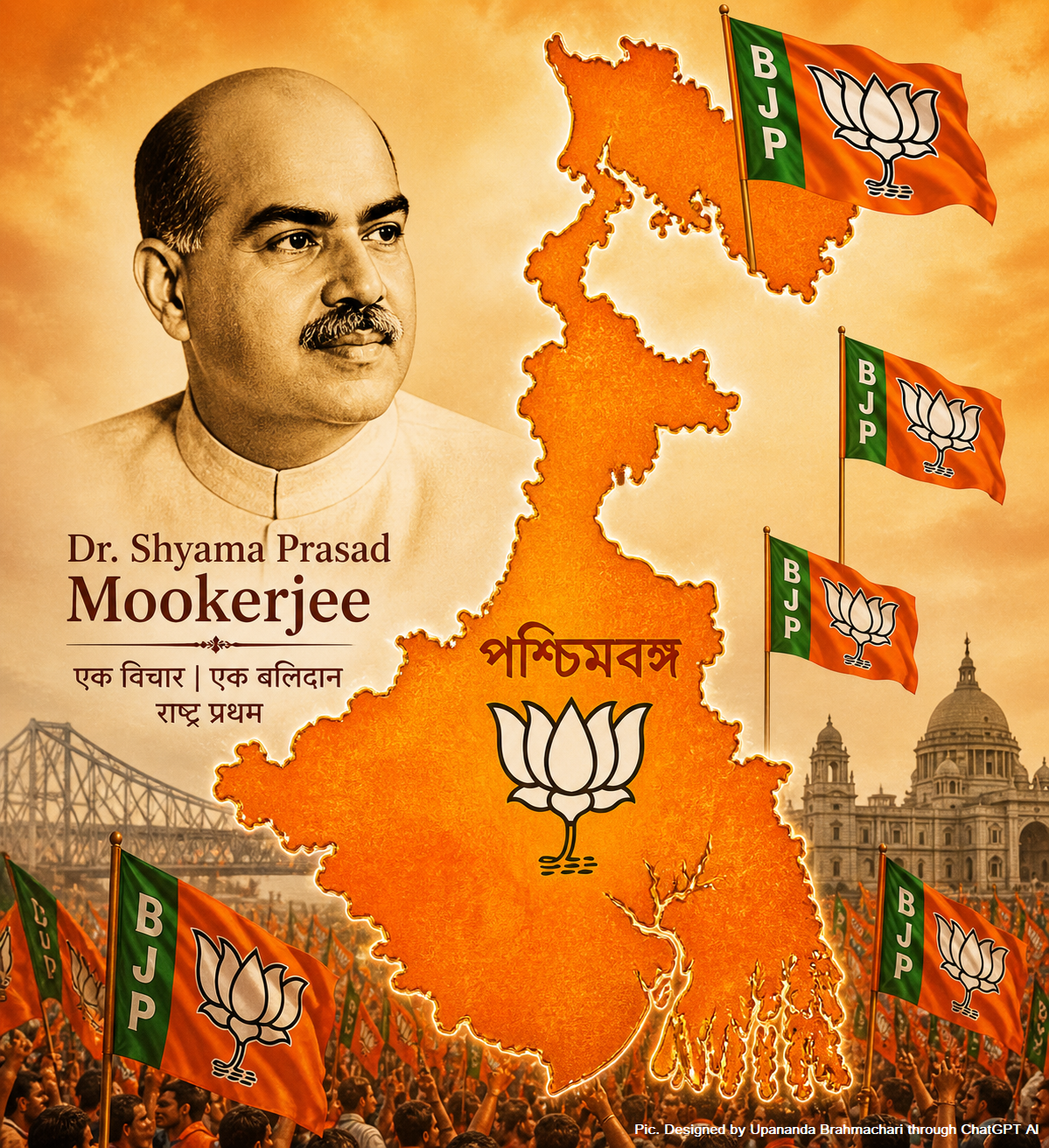
Statements by BJP state president Samik Bhattacharya and Leader of the Opposition Suvendu Adhikari (often discussed alongside senior state leadership figures) contributed to this framing. They characterized the electoral outcome as the “establishment of Shyama Prasad Mookerjee’s followers’ government on his land,” invoking the legacy of Mookerjee as foundational to West Bengal’s political identity. Within this rhetoric, the state was symbolically described as a “Hindu homeland,” and the election was interpreted as a reassertion of that historical vision.
In a similar vein, political discourse from of the BJP leadership led by Suvendu Adhikari introduced the metaphor of an “emergence of ‘Hindu EVM’ against ‘Muslim EVM.’” While not a literal claim about electoral technology, this formulation functioned rhetorically to suggest a shift away from conventional patterns of minority-focused electoral mobilization toward a consolidated Hindu voting bloc. Such language underscores how electoral behavior was interpreted through the lens of identity consolidation rather than solely through policy preferences.
The campaign also drew upon historical and ideological symbolism associated with Shyama Prasad Mookerjee, portraying the election as a continuation of his vision for the region. Within this narrative, the BJP’s victory was framed as a departure from entrenched patterns of political alignment and as a reconfiguration of electoral identity in West Bengal. References to popular slogans such as “Jai Bangla” and “Khela Hobe” were juxtaposed with the BJP’s own mobilizing idioms, highlighting the symbolic competition embedded in campaign rhetoric.
Security Concerns: Infiltration and Border Dynamics
Concerns regarding infiltration and border security emerged as a central electoral issue. Given West Bengal’s proximity to Bangladesh, the BJP emphasized cross-border migration as both a governance challenge and a demographic concern. This framing positioned the party as a defender of territorial integrity and administrative control.
Developments in neighbouring Bangladesh further shaped voter perceptions. Reports concerning the condition of Hindu minorities there were invoked in political discourse, contributing to a sense of vulnerability among sections of the electorate. This cross-border dimension fostered a preventive political outlook, wherein electoral choice was linked to the safeguarding of social and cultural stability within West Bengal.
CAA, Waqf Debates, and Communal Polarization
Debates surrounding the Citizenship Amendment Act (CAA) and issues related to Waqf properties became politically salient during the campaign. Sections of the BJP argued that these issues had been mobilized in ways that intensified communal tensions. Within this framework, the party positioned itself as advocating legal clarity and institutional balance, while attributing instances of unrest to political mismanagement.
These debates contributed to a broader polarization of the electorate, with identity and legal frameworks becoming intertwined in shaping political preferences.
Narratives of Governance, Violence, and Political Change
Allegations of political intimidation and violence played a crucial role in shaping electoral sentiment. The BJP repeatedly referenced incidents of post-poll violence following the 2021 Assembly election, including reported fatalities among its supporters, to argue that democratic processes in the state were under strain. Such claims were used to construct a narrative in which political change was necessary to restore governance, accountability, and public safety.
Statements by BJP leaders, including Samik Bhattacharya and Suvendu Adhikari, reinforced the perception of a historic turning point. Invoking the legacy of Shyama Prasad Mookerjee, they framed the victory as the establishment of a government aligned with his ideological vision. This narrative also emphasized a perceived shift away from earlier patterns of electoral mobilization.
Massive Support of the Middle Class for the BJP
A notable feature of the 2026 electoral outcome was the visible shift in support among segments of the Bengali middle class toward the Bharatiya Janata Party (BJP). This demographic, often regarded as politically conscious and sensitive to issues of governance, economic stability, and public order, appeared to align more decisively with the BJP’s campaign messaging. The party’s emphasis on administrative reform, law and order, and broader structural change resonated with middle-class voters seeking predictability and institutional accountability. Consequently, this shift in allegiance contributed significantly to the consolidation of support that underpinned the BJP’s electoral success in West Bengal.
Organizational Strength and Mass Mobilization
The role of the Rashtriya Swayamsevak Sangh (RSS) and the broader Sangh Parivar was instrumental in sustaining grassroots mobilization. Their efforts contributed to what supporters described as a jana jagaran (mass awakening), facilitating ideological outreach and voter engagement across constituencies.
The election witnessed an exceptionally high voter turnout of approximately 92 percent, indicating a heightened level of political participation. This level of engagement suggests that voters perceived the election as consequential not only for governance but also for broader questions of identity and belonging.
Conclusion: Reconfiguration of Electoral Politics
The BJP’s victory in the 2026 West Bengal Assembly election can be understood as the result of multiple converging factors: cultural mobilization, security concerns, institutional debates, and organizational strength. Together, these elements contributed to a reconfiguration of the state’s electoral landscape.
Ultimately, the election reflects an evolving political dynamic in which identity, governance, and historical narratives intersect. The outcome suggests that these forces, when effectively mobilized, have the capacity to significantly reshape voter behaviour and redefine political alignments in West Bengal.
In this emerging phase of West Bengal’s political trajectory, the aspirations of ordinary citizens appear to centre on peace, prosperity, and social harmony, reflecting the enduring cultural ethos of tolerance within Bengali society.
___
..
Writer can be contacted at upananda.br@gmail.com
One comment on “Hindu Decisive Vote Makes a Big Victory for BJP in West Bengal.”
Leave a Reply

[…] 13 October 2026, multiple complaints were reported against CPI(M) leader and advocate Bikash Ranjan Bhattacharya in W…. The complainants…

[…] a reactionary state. This is worrying. Already, Hindu radicals have occupied public discourse and have won favours from some…
no you are a fool
Wishing all success to his journey


Pingback: West Bengal 2026: What the Political Realignment Means – DharmaRenaissance Blog