

[…] Hindu OBC Front held a conference marking Rani Rashmoni’s 233rd birth anniversary, called for …. These elements reinforce one…

Struggle for Hindu Existence
*Hindu Rights to Survive with Dignity & Sovereignty *Join Hindu Freedom Movement to make Bharat Hindu Rashtra within this lifetime *Jai Shri Ram *Jayatu Jayatu Hindu Rashtram *Editor: Upananda Brahmachari.
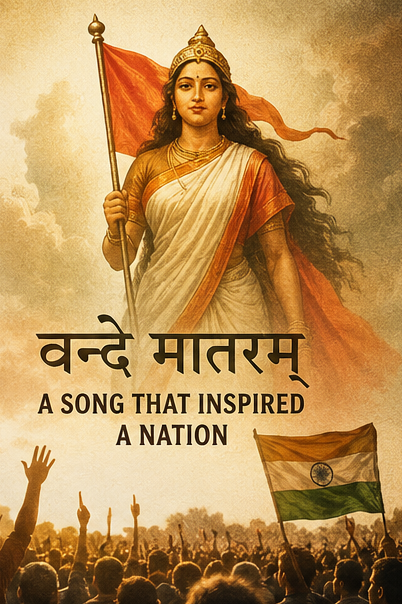
Respect and Sing Vande Mataram: The Song That Inspired a Nation.
How the Prevention of Insults to National Honour (Amendment) Bill, 2026, has reignited the decades-old debate over “Vande Mataram”, nationalism, constitutional freedoms, and India’s political discourse.
~ Upananda Brahmachari
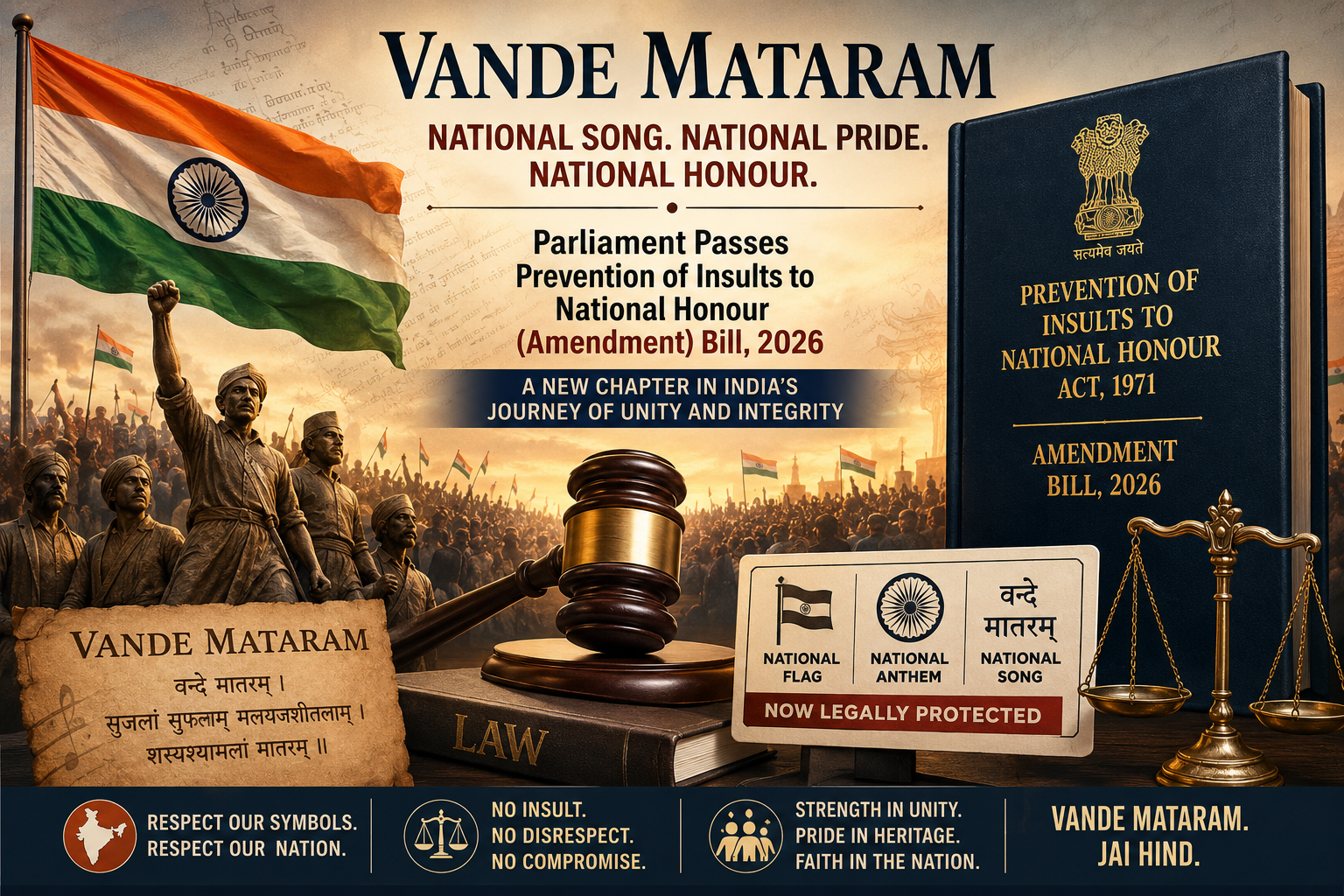
 The passage of the Prevention of Insults to National Honour (Amendment) Bill, 2026, by Parliament has reopened one of India’s oldest and most emotionally charged debates—the legal, constitutional, and cultural status of the national song, “Vande Mataram.” By extending statutory protection to the national song under the Prevention of Insults to National Honour Act, the Narendra Modi-led Central Government has described the move as a historic correction that strengthens national unity and honours one of the most powerful symbols of India’s freedom movement.
The legislation marks the first major amendment to the Prevention of Insults to National Honour Act, 1971, a law enacted to criminalise insults to the National Flag, the Constitution of India, and the National Anthem. While the 1971 Act safeguarded these national symbols, it did not extend similar legal protection to “Vande Mataram,” despite its central role during India’s struggle for independence. The 2026 Amendment seeks to bridge that gap by bringing the national song within the ambit of the law, making deliberate acts of insult, obstruction, or disrespect punishable under the statute.
The amendment has immediately triggered a nationwide political debate, with the ruling Bharatiya Janata Party (BJP) presenting it as a landmark step towards reinforcing national honour and strengthening India’s collective identity. Government leaders argue that “Vande Mataram” inspired generations of freedom fighters, revolutionaries, and ordinary citizens during the anti-colonial movement and deserves legal protection equal to that accorded to the National Anthem and the National Flag. According to the Centre, the legislation reflects its broader commitment to placing national honour and national integrity at the highest pedestal.
The Opposition, however, has questioned both the intent and the timing of the legislation. Congress and several regional parties have argued that patriotism cannot be legislated through criminal provisions and have expressed concerns over possible misuse of the law. Opposition leaders contend that while respect for national symbols is essential, criminalising perceived acts of disrespect could raise significant constitutional questions relating to freedom of speech and expression under Article 19 of the Constitution. However, the prevention of insults to national honour must remain a non-negotiable matter under all circumstances.
Civil rights organisations, constitutional experts, and legal scholars have also entered the debate. Several experts believe the amendment may eventually be tested before the Supreme Court, particularly regarding the interpretation of what constitutes an “insult” to the national song and whether penal provisions could conflict with established constitutional protections relating to free expression. Others argue that clearer legal definitions and implementation guidelines will be necessary to prevent arbitrary enforcement.
The renewed debate has once again brought the complex history of “Vande Mataram” into public focus. Written by Bankim Chandra Chattopadhyay in the 1870s and first published in his novel Anandamath, the song became a rallying cry during India’s freedom struggle. Revolutionaries marched to its tune, political gatherings echoed with its refrain, and it evolved into one of the most recognisable symbols of India’s nationalist movement. At the same time, sections of political leaders and religious minorities historically expressed reservations over certain verses containing devotional imagery associated with Goddess Durga, leading the Constituent Assembly to accord “Jana Gana Mana” the status of the National Anthem while recognising only the first two stanzas of “Vande Mataram” as the National Song.
The controversy surrounding “Vande Mataram” has resurfaced repeatedly over the decades through disputes over compulsory singing in educational institutions, government offices, and legislative assemblies. Several judicial pronouncements have emphasised that while citizens should show due respect to national symbols, constitutional freedoms also remain an essential feature of Indian democracy. The latest amendment has once again placed this delicate balance at the centre of national discourse.
Supporters of the legislation argue that extending legal protection to the National Song completes an unfinished chapter of independent India’s nation-building process. They describe the amendment as recognition of the immense contribution of “Vande Mataram” to the freedom movement and believe it reinforces a shared national consciousness transcending regional and linguistic identities.
Critics, however, caution that the legislation could further polarise an already sensitive debate over nationalism and identity. They argue that patriotism is best nurtured through education, civic participation, and constitutional values rather than criminal sanctions, warning that the interpretation of “disrespect” may become contentious in politically charged situations.
The amendment also fits within the Central Government’s broader emphasis on national integration, constitutional symbolism, and cultural heritage. In recent years, the Union Government has repeatedly highlighted national identity through initiatives connected with Azadi Ka Amrit Mahotsav, the Har Ghar Tiranga campaign, promotion of constitutional values, and renewed emphasis on commemorating freedom fighters and civilisational heritage. Government leaders maintain that protecting “Vande Mataram” through legislation is another step in preserving the legacy of India’s freedom movement for future generations.
As the law comes into force, attention is expected to shift from Parliament to the courts, educational institutions, political platforms, and civil society. The implementation of the amendment—and the constitutional debates that may follow—will determine whether the legislation becomes a defining moment in strengthening national unity or another milestone in India’s continuing conversation on patriotism, constitutional freedoms, and the meaning of national honour in a diverse democracy.
For majority Indians, “Vande Mataram” is regarded as the lifeblood of the country’s nationalist movement and a powerful symbol of India’s struggle for independence. Supporters believe that the song embodies the spirit of patriotism, national unity, and sacrifice. They argue that, over the decades, some Muslim organisations and their secular allies have opposed or sought to limit the full singing of Vande Mataram, leading to recurring public and political debates. According to this perspective, contemporary opposition to the national song risks encouraging divisive forces and weakening national integrity and social harmony. They further contend that the growing call to sing Vande Mataram and accord it due respect reflects the prevailing patriotic sentiment across the country and reinforces a shared sense of national identity.
Vande Mataram. Jai Hind.
_Inputs from PRS Legislative Research.
One comment on “Respect and Sing Vande Mataram: The Song That Inspired a Nation.”
Leave a comment

[…] Hindu Origin Indian Americans are often the target of discrimination in the US., https://hinduexistence.org/2022/09/17/hindu-origin-indian-americans-are-often-the-target-of-discrimi… […]
you misspelled Israel
[…] 26 September 2026, a dispute had formed around the reported participation of HfHR activists in a New York protest…
[…] known procedural facts are that a division bench rejected a PIL seeking Durga Puja on the High Court rooftop,…


Pingback: Vande Mataram, National Honour and Freedom of Conscience – DharmaRenaissance Blog